




Blog
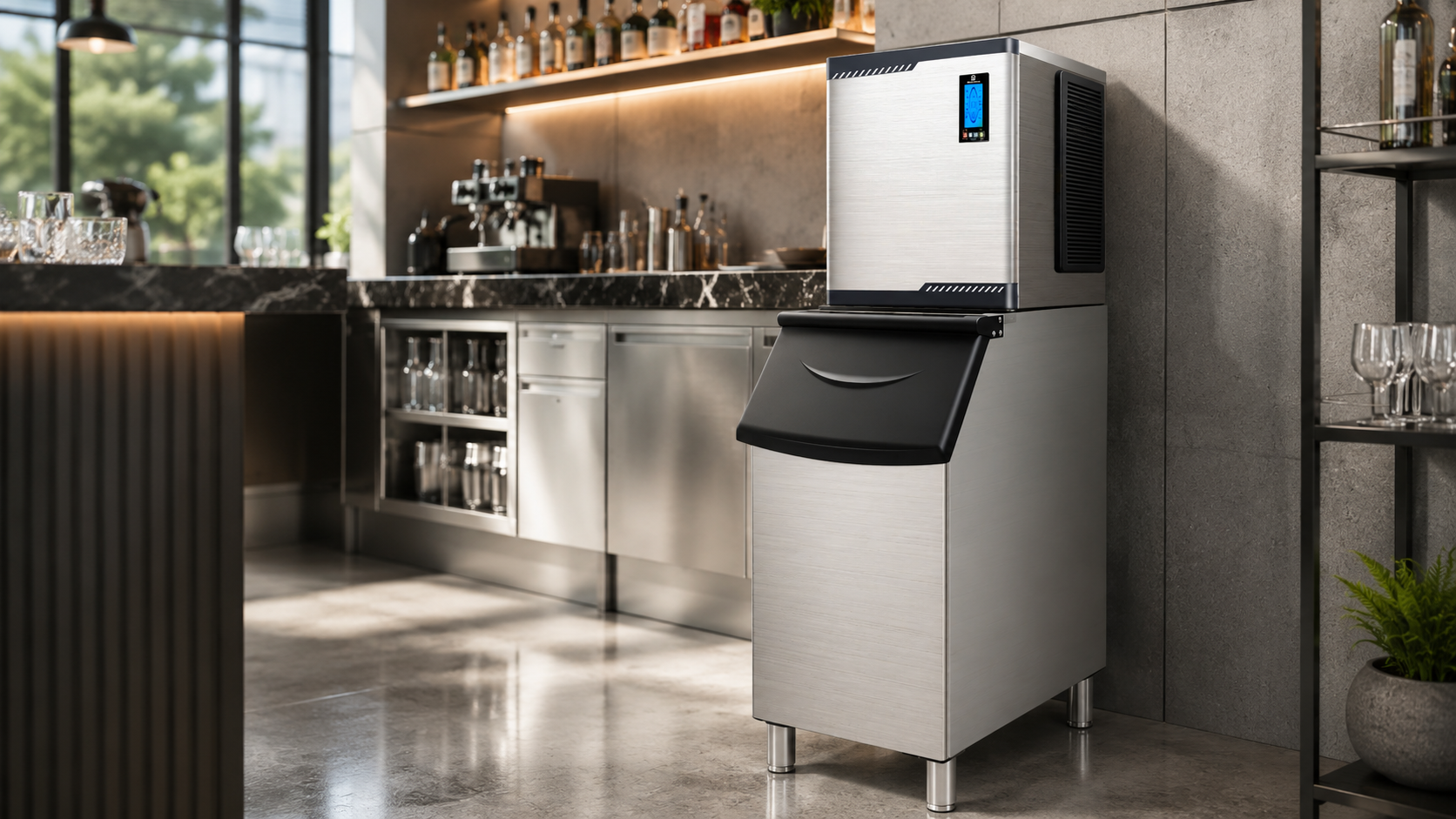
A commercial ice maker buying guide is most useful when it follows the order in which mistakes get expensive. Start with how much ice you need at peak. Then choose the ice, the machine layout and the way it rejects heat. Check the utilities at the install site, the rules on efficiency, refrigerants and sanitation, and finally the supplier terms that decide what happens when something fails. Work through the eight steps below in sequence. Each one narrows the options for the next, so by the time you compare quotes you are only comparing machines that fit your menu, your room and your utility connections.
The Eight-Step Decision Path at a Glance
- Size for peak demand and hot-weather output.
- Match the ice type to what you serve.
- Choose a configuration that fits the floor plan.
- Decide how the condenser gets rid of heat.
- Check electrical, water, drain and clearance at the install site.
- Know the federal efficiency and refrigerant rules.
- Check sanitation design and safety listings.
- Get supplier, warranty and service answers in writing.
Step 1: Size for Peak Demand and Hot-Weather Output
A daily total is only the starting point. Count ice for every use: fountain and iced drinks, water glasses, bar wells, blended drinks, seafood and produce displays, and ice used to hold or chill food. Then find your busiest two or three hours. That window, not the 24-hour total, is when kitchens actually run out, because the machine can only refill the bin at its hourly production rate.
Rated output also depends on test conditions. The U.S. Department of Energy test procedure for automatic commercial ice makers, described in its 2022 Federal Register test procedure rule, uses 90°F ambient air and 70°F supply water as its rating conditions. Some product sheets headline a figure measured in a cooler room with colder water, so always look for the hot-condition number.
Smartool publishes both. The BF500 is rated at 500 lb ±5% per 24 hours at 70°F (21°C) room air and 50°F (10°C) water, and 375 lb ±5% at 90°F (32°C) air with 70°F (21°C) water, a 25% difference. The BF360 moves from 360 lb to 275 lb under the same change. If the machine will sit in a kitchen, a bar storeroom or any space that is not air-conditioned in summer, size against the lower number. Our guide to protecting a commercial ice machine from summer heat covers placement and airflow in more depth.
A Quick Peak-Demand Worksheet
- Ice per serving: weigh a cup or glass filled the way your staff fill it, then subtract the empty weight. Do this for each main drink size.
- Peak-window ice: servings in your busiest three hours multiplied by ice per serving, plus any display or holding ice used in that window.
- Production during the window: hot-condition rating divided by 24, multiplied by 3. A 375 lb rating makes about 47 lb in three hours.
- Storage needed at the start of the rush: peak-window ice minus production during the window.
- Daily requirement: total daily servings multiplied by ice per serving, plus fixed daily uses, plus a safety margin you are comfortable with.
For drink-by-drink math with well ice, back-bar storage and cocktail examples, use the bar ice machine sizing guide.
Step 2: Match the Ice Type to What You Serve
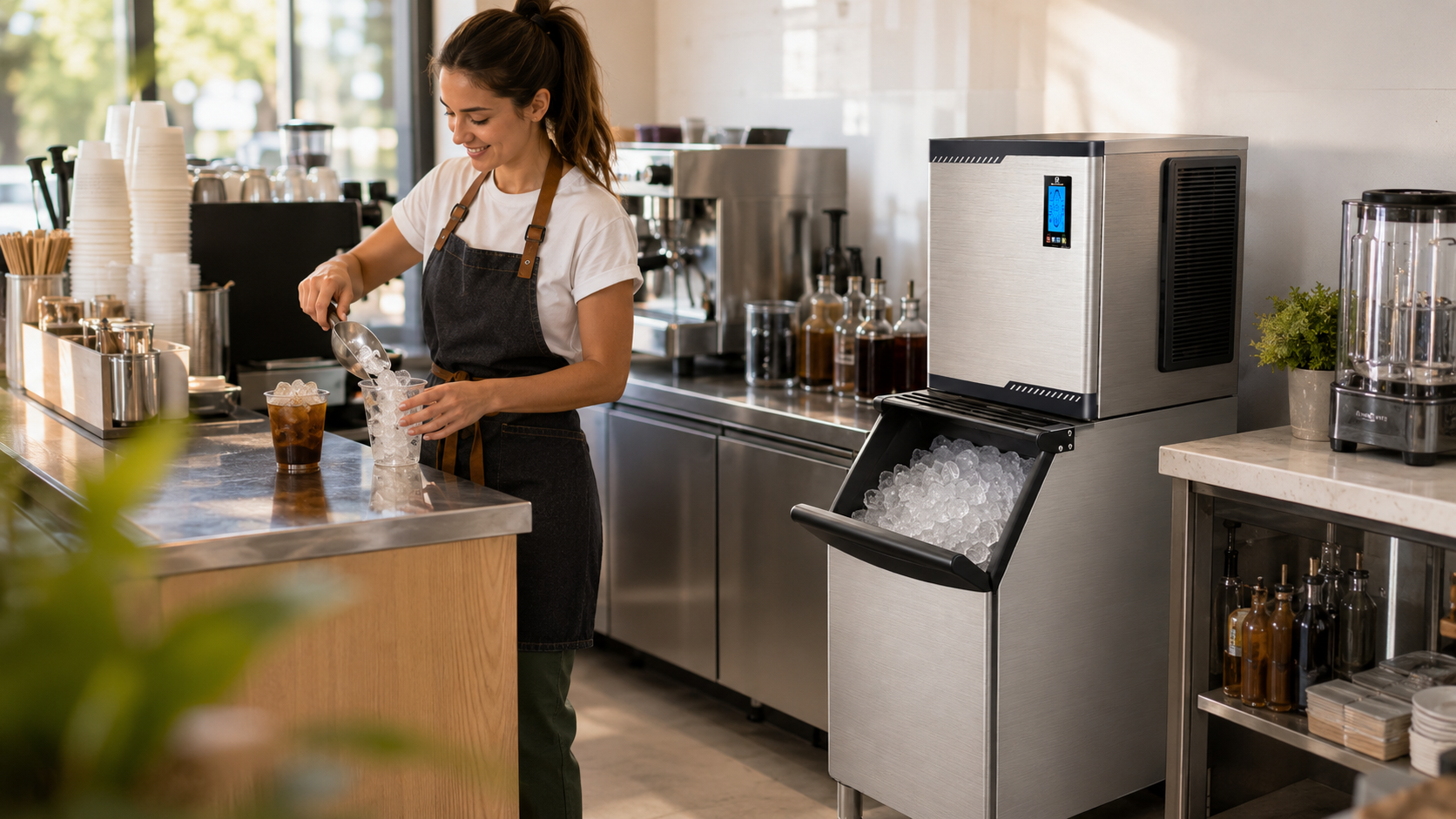
Ice shape affects melt rate, how much drink fits in the glass and how the ice behaves in displays. Full and half cubes are the default for drinks and bagging. Nugget ice is soft and chewable, and flake ice molds around seafood and produce. The shape also decides the machine family. The Federal Energy Management Program notes in its air-cooled ice machine purchasing guidance that cube ice is typically made in batch-type machines, while flake and nugget ice come from a continuous process.
If you are still choosing between shapes, Smartool’s knowledge base explains how ice shape affects ice machine selection, and our overview of the types of ice machines matches each shape to the equipment that makes it. Smartool BF heads make square cubes with 12 thickness levels. They suit drinks, bar service and general chilling, not menus that depend on nugget or flake ice.
Step 3: Choose a Configuration That Fits the Floor Plan
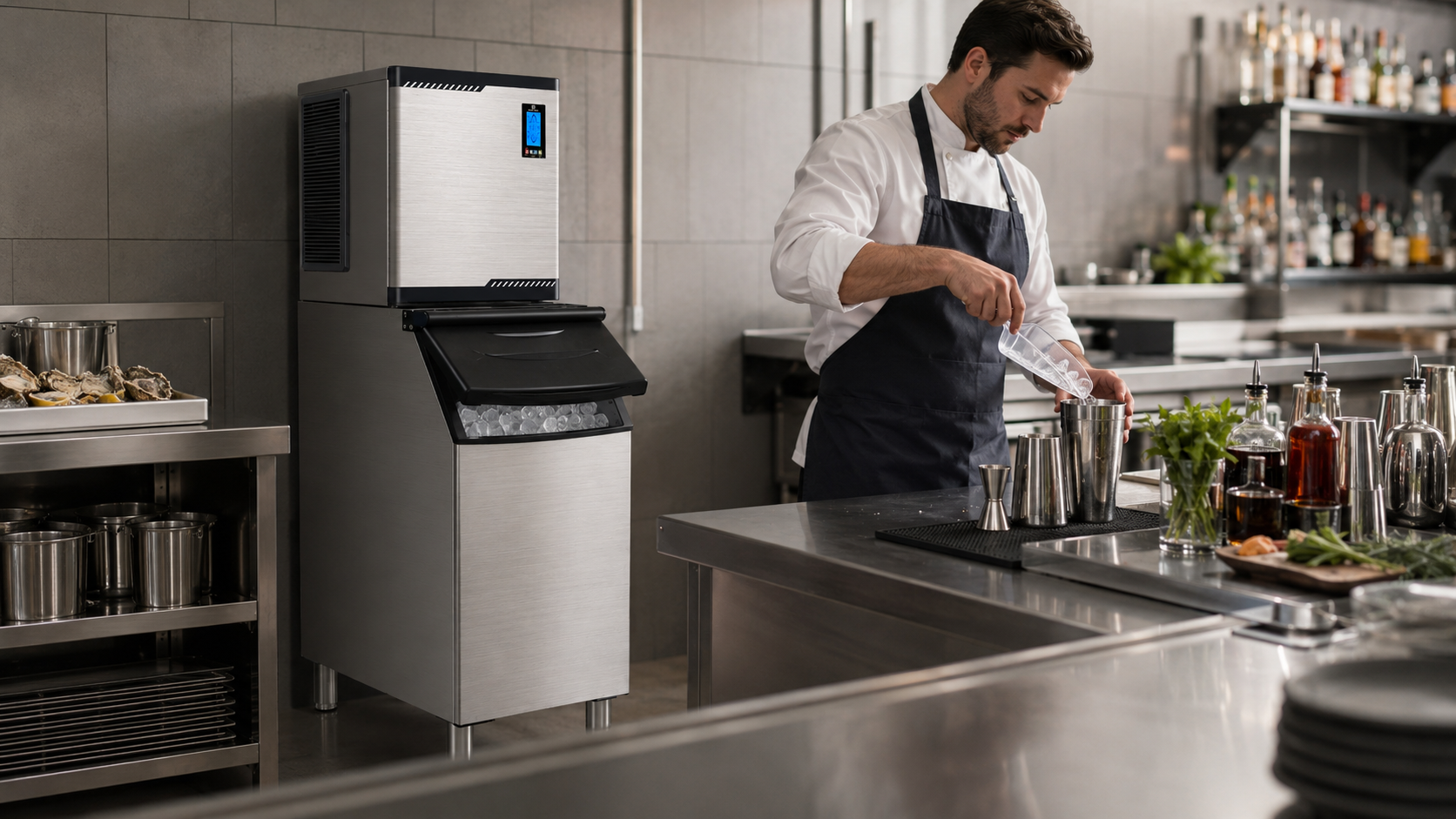
- Modular head: an ice-making head that sits on a separate storage bin or dispenser. It gives the most output per square foot but needs a matched bin.
- Undercounter or self-contained: head and bin in one cabinet that fits under a bar or counter, with lower daily output.
- Countertop dispenser: makes and dispenses ice hands-free for self-serve drink stations and patient areas.
- Remote condenser versions: modular heads whose condenser sits outside or on the roof, keeping heat out of the room.
Storage ties back to Step 1: the bin carries you through the rush and the head refills it afterward. FEMP also points out that for ice-making head units a smaller bin is usually more energy efficient, so buy the bin your peak window needs rather than the largest one that fits. Our modular vs undercounter ice machine comparison walks through footprint, output and bin pairing. Smartool’s BF500 and BF360 are split-type heads, so plan storage, drain routing and ventilation from the model spec sheet before you order.
Step 4: Decide How the Condenser Gets Rid of Heat
- Air-cooled: fans push heat into the room. Simplest to install, but the room has to handle that heat and needs clearance for airflow.
- Water-cooled: condenser water carries heat away. It suits hot, enclosed spaces but adds condenser water on top of the potable water that becomes ice.
- Remote air-cooled: the condenser is mounted outdoors. It keeps heat and fan noise out of the space at the cost of refrigerant line work by a licensed technician.
Water-cooled machines face tighter scrutiny on water use. For federal buyers, the FEMP water-cooled ice machine purchasing requirements say these machines must connect to a cooling tower, and single-pass cooling with city water is not allowed. Local water and sewer rules may restrict once-through cooling too. Our air-cooled vs water-cooled ice machine cost comparison works through the water and energy math.
Step 5: Check the Install Site Before You Compare Prices
Most installation delays trace back to a utility that was never checked. Walk the site with the spec sheet in hand and record the following.
- Electrical: the required voltage, frequency and circuit. Some heads need 208–230V; the Smartool BF500 and BF360 run on 110–120V/60Hz. Have an electrician match the circuit to the spec sheet.
- Water supply: a potable line with a shutoff valve, inlet pressure within the manufacturer’s range, and filtration suited to your local water hardness and sediment.
- Drain: a gravity drain with enough fall, plus the air gap or indirect connection your plumbing inspector requires.
- Air and clearance: room for the condenser to breathe and for staff to reach panels during cleaning.
- Room temperature: the ambient range the machine is rated for. BF models operate from 41°F to 100°F (5–38°C).
Drain routing is also a food safety question. The FDA Food Code 2022, the model state, local and tribal regulators use for their own food safety rules, says liquid waste drain lines may not pass through an ice machine or ice storage bin. For clearance, Smartool’s ice machine maintenance guide recommends keeping more than 30 cm (about 12 inches) free at the back and sides and keeping the unit away from heat sources.
Step 6: Know the Efficiency and Refrigerant Rules
Three federal programs shape what you can buy and what it costs to run. The Department of Energy sets energy conservation standards for automatic commercial ice makers that harvest between 50 and 2,500 lb of ice per 24 hours, so covered machines must stay under maximum energy use limits set by harvest rate and equipment type.
ENERGY STAR is voluntary and narrower. Its current commercial ice maker specification covers air-cooled batch-type and continuous-type machines in ice-making head, remote condensing and self-contained designs; water-cooled models are not eligible. Look up the exact model number in the ENERGY STAR product finder rather than relying on a logo in a brochure.
Refrigerant rules changed in 2026. Under the EPA Technology Transitions HFC restrictions by sector, new self-contained batch machines up to 1,000 lb per 24 hours and continuous machines up to 1,200 lb must use refrigerants with a global warming potential of 150 or less from January 1, 2026. Larger self-contained units and remote systems face prohibitions on listed high-GWP HFCs from January 1, 2027. Ask which refrigerant is on the nameplate and how the machine fits its size class.
Step 7: Check Sanitation Design and Safety Listings
Health codes treat ice as food. The same Food Code requires ice used as food or as a cooling medium to be made from drinking water, and it calls for ice makers and ice bins to be cleaned routinely to prevent slime, mold and soil buildup. A machine with smooth, reachable food-zone surfaces and an automatic cleaning cycle makes that schedule easier to keep. Build the labor into your plan using our guide on how to clean a commercial ice machine.
Two listings are worth checking by model number. NSF/ANSI 12 is the sanitation standard for automatic ice making equipment, and you can search NSF’s certified listings for automatic ice making equipment by company.
Electrical safety is a separate question: a mark from a lab in OSHA’s Nationally Recognized Testing Laboratory program means that lab tested the product to the applicable safety standards. Our ETL vs NSF certification guide explains which mark answers which question.
Step 8: Questions to Ask the Supplier Before You Sign
By this point you know the output, ice type, configuration and utilities you need. These seven questions turn a sales conversation into a document you can compare line by line.
- What is the daily output at 90°F air and 70°F water, and how much ice does the machine make in my three-hour peak window?
- Can you send the spec sheet and installation manual with electrical, water pressure, drain, clearance and ambient range requirements?
- Which refrigerant does this model use, and which EPA size class does it fall under?
- Which listings does this exact model carry, with listing numbers I can look up?
- What does the written warranty cover for the whole machine, the compressor, parts and labor, and for how long is each covered?
- Who responds when it fails in my city, how fast, and how are parts shipped if no technician is nearby?
- How long are parts stocked, and is there an evaluation period for business buyers?
Price the answers, not just the machine. Our breakdown of how much a commercial ice machine costs adds installation, energy, water, cleaning and downtime to the purchase price, and the commercial equipment warranty and service guide shows how to compare coverage terms side by side.
How Smartool Answers the Service Questions
Smartool’s after-sales policy covers the machine and compressor for three years in North America, with parts and labor included for the first year. On-site service is available in major cities with advance reservation, with a response usually within 48 hours; other areas get video diagnosis and mail-in parts. Video guidance and phone consultation are free, and email requests get a reply within one working day. Once the warranty ends, original factory parts are supplied at cost.
Commercial Ice Maker Buying Guide Checklist
| Step | Get this in writing | Red flag |
|---|---|---|
| 1. Demand | Output at 90°F air / 70°F water and your peak-window math | Only a single “up to” capacity with no test conditions |
| 2. Ice type | Ice shape and size options, thickness adjustment | One machine promised for every shape |
| 3. Configuration | Head, bin or dispenser pairing and bin capacity | Bin sized by what fits, not by the rush |
| 4. Cooling | Condenser type and condenser water use, if any | Water-cooled pushed without a heat or airflow reason |
| 5. Site | Voltage, circuit, water pressure, drain and clearance specs | No spec sheet until after the order |
| 6. Rules | Refrigerant, EPA size class, ENERGY STAR model listing when the logo appears | “Energy efficient” with no listing or kWh data |
| 7. Sanitation and safety | Cleaning procedure, NSF/ANSI 12 and NRTL listing numbers | Certification logos with no searchable listing |
| 8. Support | Warranty by component, service response, parts availability | Verbal promises only |
Where the Smartool BF500 and BF360 Fit
Both models are split-type square-cube heads on standard 110–120V/60Hz power, with 12-level ice thickness control, automatic cleaning, water shortage and ice-full alerts, a 48-hour timer and an LCD display.
- Higher volume: the Smartool BF500 500 lb split-type ice maker is rated 500 lb ±5% per 24 hours at 70°F/50°F and 375 lb ±5% at 90°F/70°F, with a 1050W power rating.
- Mid volume: the BF360 360 lb split-head ice maker is rated 360 lb ±5% and 275 lb ±5% under the same conditions, with a 700W power rating.
For a full spec table, serving math and a fit/no-fit matrix, read our BF500 and BF360 commercial ice machine review.
To compare the rest of the range, browse Smartool ice machines or the factory-direct commercial ice makers page for volume and distributor buying.
Once you have your peak-window numbers and a site walk-through, request a commercial ice maker quote with your daily and peak ice needs, available voltage, drain location and room temperature. That lets the Smartool team recommend a model and quantity against the conditions it will actually run in.
Related posts
Are Ice Cream Vending Machines Profitable? Cost & Payback
Work out ice cream vending machine profit cup by cup: mix cost, commission, card fees, power, labor, permits and the daily sales needed to pay back the machine.
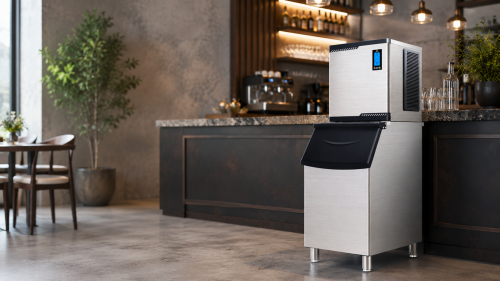
Modular Ice Machine vs Undercounter: Which Setup Fits?
Compare modular ice machines, undercounter ice makers and countertop dispensers on height, airflow, drains, bins and cost, with a site decision matrix.
One thought on “Commercial Ice Maker Buying Guide: 8 Steps Before You Buy”
Comments are closed.