




Blog
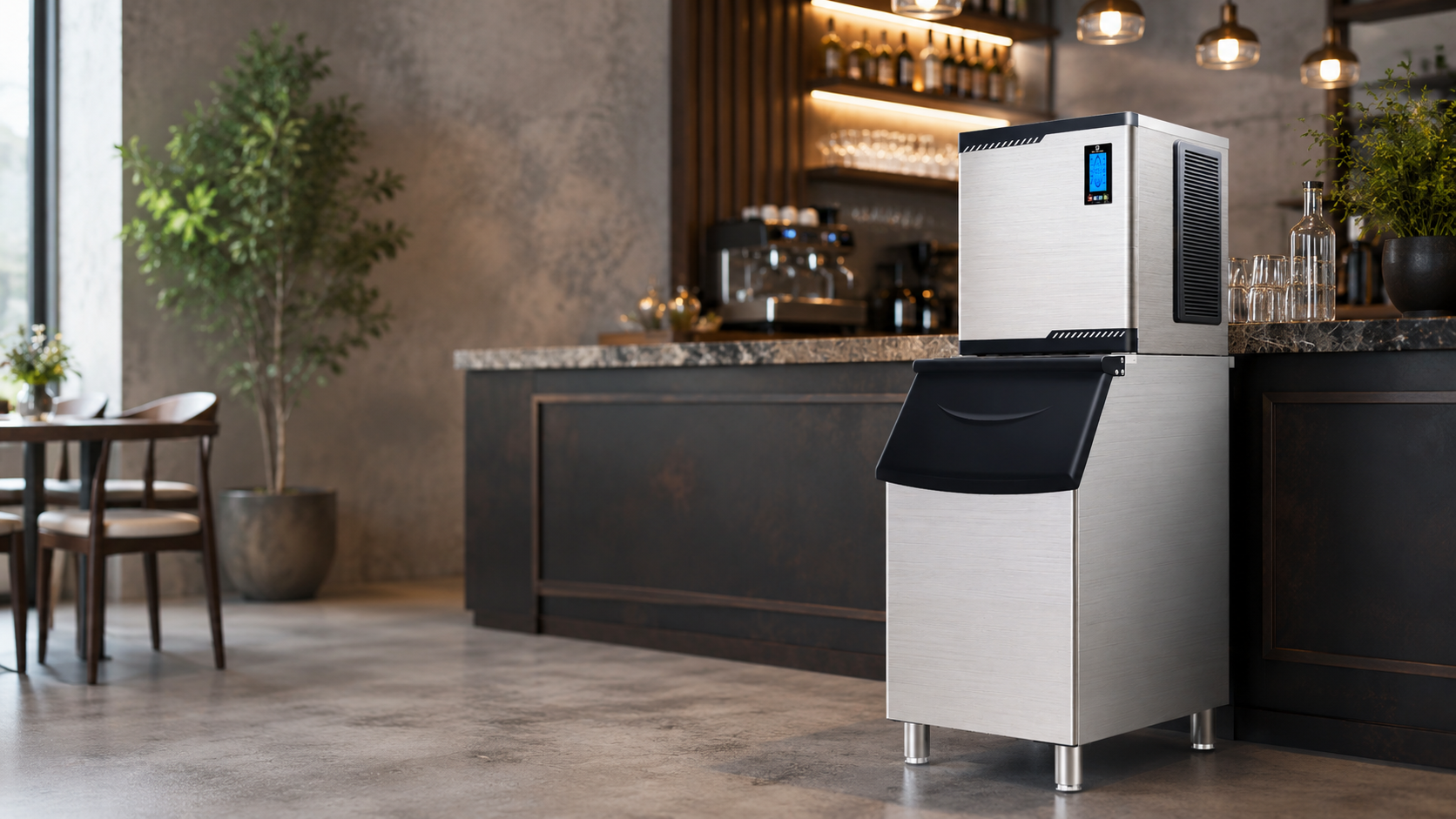
A modular ice machine is an ice-making head with no storage of its own: it sits on a separate bin or dispenser that holds the ice it drops. An undercounter ice maker is a self-contained unit that makes and stores ice in one cabinet beneath a counter, and a countertop dispenser makes ice and delivers it through a chute. Output matters, but four site constraints usually decide the configuration first: where the heat can go, how much height and floor you have, where the drain runs, and how much ice must be stored between rushes.
Modular vs Undercounter vs Countertop: Side-by-Side Matrix
The matrix compares the three configurations on the points that decide an installation. Output is shown as the relative tier each configuration usually occupies. Read the harvest rate on each spec sheet for real numbers.
| Factor | Modular (head on a separate bin or dispenser) | Undercounter self-contained | Countertop dispenser |
|---|---|---|---|
| Ice storage | Chosen separately and sized to the job | Built in, fixed by the cabinet | Built in, small, dispensed on demand |
| Output tier | Mid to highest; can scale to several heads | Lowest to mid | Lowest to mid |
| Height to plan | Bin + head + top clearance | Counter opening | Counter height + unit height |
| Heat and noise | Wherever the head goes, including a back room | At the counter | At the counter |
| Airflow | Clearance around the head; remote condensing moves the condenser elsewhere | Needs an approved air path when built in | Clearance around the cabinet |
| Drains | Head and bin | One drain; a pump where no floor drain is near | Unit and drip tray |
| Hands near stored ice | Scoop from bin, or none with a dispenser base | Scoop | None; ice drops into the cup |
| Changing capacity later | Swap or add a head, keep a compatible bin | Replace the unit | Add or replace units |
| Typical home | Back-of-house production, banquets, high-volume bars | Single bar station, small café, clinic room | Self-serve drinks, offices, hotel floors, healthcare |
What a Modular Ice Machine Is
Federal efficiency rules call the modular head an ice-making head: a machine without an integral storage bin that is generally designed to accommodate a variety of bin capacities. The same DOE definitions and standards for automatic commercial ice makers describe a self-contained unit as one where the ice-making mechanism and storage share an integral cabinet, and a remote condensing unit as one with the condenser in a separate section.
Two practical points follow. First, a head’s energy figure leaves out the bin; the DOE definition notes that storage bins add energy use the head’s energy consumption figure does not include. Second, the bin is its own purchase and has to suit both the head’s footprint and the amount of ice you need in storage before service. The bar ice machine sizing guide shows how to calculate that banked quantity.
Undercounter and Self-Contained Ice Makers
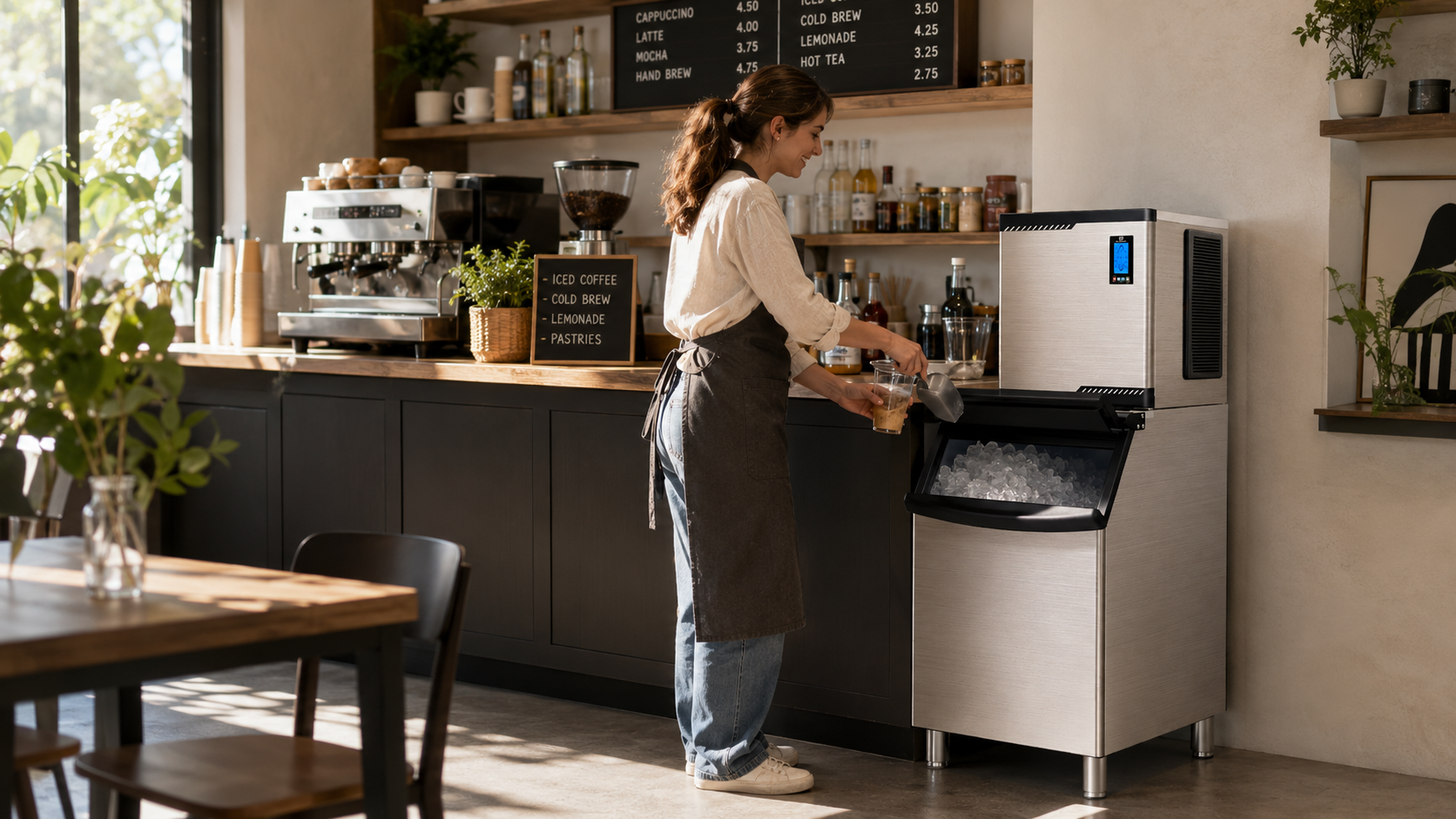
An undercounter ice maker is a self-contained unit built to fit beneath a counter, so the scoop stays within reach of the bartender or barista. Self-contained describes construction, not size. DOE’s efficiency standards set classes for self-contained units as well as for ice-making heads with harvest rates up to 4,000 lb per 24 hours. Undercounter models sit at the compact end of that class.
The fixed cabinet is the main limit. When the peak outruns the built-in storage, there is no larger bin to swap in, and compressor heat and noise stay at the counter. Built-in placement also needs the air path the manufacturer approves, which on many undercounter designs runs through the front grille.
Countertop Ice Dispensers
A countertop dispenser makes ice and delivers it through a chute, often alongside water. Nobody reaches into stored ice, which suits self-serve drink areas, offices, hotel floors and healthcare settings. Storage is small, so these units handle steady cup-by-cup demand rather than bucket filling. A dispenser can also sit under a modular head, with the head producing ice and the dispenser storing and delivering it.
Installation Compared: Height, Stacking, Airflow, Drains and Access
Footprint, Ceiling Height and Stacking
For a modular setup, measure from the floor to the lowest obstruction above it, whether a ceiling, shelf, hood or sprinkler head. Compare that with bin height plus head height plus the top clearance in the installation manual. Some manufacturers approve stacking two heads on one bin with an adapter; plan it only where the head’s manual lists it, and add the second head’s height, drain and airflow.
Undercounter units flip the problem. The counter height and cabinet depth are fixed, so the unit has to fit the opening with its air path, water line and drain intact. Countertop dispensers need a counter rated for their filled weight and a drain route below.
Ventilation and Heat
Air-cooled ice makers need clearance so air can move across the condenser, and blocked inlets or outlets lower efficiency, according to the Federal Energy Management Program guidance on air-cooled ice machines. Smartool’s ice machine maintenance guide specifies more than 30 cm (about 12 in) at the back and sides, away from heat sources.
When no nearby room can absorb the heat, the condenser choice matters as much as the configuration. The air-cooled vs water-cooled ice machine cost comparison works through air, water and remote condensers.
Drains
Every configuration needs a drain plan. Modular setups usually drain the head and the bin, undercounter units have one drain, and dispensers drain their drip trays. The FDA Food Code 2022 prohibits a direct connection between the sewage system and a drain from equipment that holds food, and it treats ice as food. Ice equipment drains therefore need an indirect connection, such as an air gap over a floor sink. Where no floor drain is near an undercounter location, ask whether the manufacturer approves a drain pump.
Service Access
Modular heads are generally serviced through front and top panels, so leave working room above the head, not just around it. Bins are cleaned through the door. Undercounter units have to be opened or pulled out in place, which gets harder once they are boxed into millwork. Keep cleaning access in the plan for every configuration, because the ice zone needs regular cleaning.
Bin Matching
Match the bin to three things: the head’s footprint, using the bin top or adapter the head’s manufacturer lists; the ice you need banked before the peak; and energy. On the last point, the same FEMP guidance notes that in most cases a smaller bin is more energy efficient. Buy the bin your banked-ice calculation calls for, not the largest one that fits.
Cost and Flexibility by Configuration
Prices vary too much by region, brand and site to quote usefully. The cost lines each configuration brings are more predictable:
| Cost line | Modular | Undercounter | Countertop dispenser |
|---|---|---|---|
| Equipment | Head plus bin or dispenser | One unit | One unit |
| Installation | Water line, head and bin drains, electrical, adapter if needed | Water line, drain or pump, electrical, built-in air path | Water line, drain, electrical, counter support |
| Energy | Head rating plus bin losses | Single rating | Single rating |
| Replacement | Head only, if the bin stays compatible | Whole unit | Whole unit |
| Growth | Add or upsize heads | Buy a larger unit | Add units |
Efficiency alone should not decide the configuration. The ENERGY STAR commercial ice makers program covers ice-making head, self-contained and remote condensing designs, so compare efficient models within the configuration the site allows. The guide to commercial ice machine cost turns these lines into a multi-year total.
Where Smartool’s Split-Type Heads Fit
Smartool sells the BF500 as a “Split Type Ice Maker” and the BF360 as a “Split Head Model”. In the matrix above they belong with production heads, not with undercounter units.
They are not undercounter machines. If the plan calls for ice made and stored inside a counter-height cabinet at the bar, that is a different product class. The BF heads fit a back room, service corridor or production area that feeds bars, banquet service and drink stations, with storage, drain and ventilation planned from each model’s spec sheet.
- BF500: the Smartool BF500 500 lb split-type ice maker is rated at 500 lb ±5% per 24 hours at 21°C (70°F) air and 10°C (50°F) water, and 375 lb ±5% at 32°C (90°F) air and 21°C (70°F) water. It makes standard square cubes on 110–120V/60Hz at 1050 W.
- BF360: the BF360 360 lb split-head ice maker is rated at 360 lb ±5% per 24 hours at 21°C and 275 lb ±5% at 32°C. It makes square cubes on 110–120V/60Hz at 700 W.
- Both models: 12-level ice thickness, automatic cleaning, water-shortage and ice-full alerts, a 48-hour timer, LCD controls, a 5–38°C (41–100°F) operating range, noise at or below 65 dB and a 3-year commercial warranty.
Square cubes cover most drink and food-service uses; nugget and flake ice need other machine types, as the guide to types of commercial ice machines explains. Current models are listed in Smartool’s factory-direct commercial ice maker lineup.
Configuration Decision Matrix
Mark your site against each row. The column with the most “Fits” is your starting configuration, but any “Rules out” in that column sends you to the next one.
| Site condition | Modular head + bin | Undercounter self-contained | Countertop dispenser |
|---|---|---|---|
| Peak needs more banked ice than a compact cabinet holds | Fits | Rules out | Rules out |
| Ice must be scooped at the station and there is no back room | Workable if floor and height allow | Fits | Workable |
| Height is less than bin + head + top clearance | Rules out | Fits | Fits |
| No space near service can take compressor heat | Fits, with the head in another room | Rules out | Workable |
| Guests serve themselves | Workable with a dispenser base | Rules out | Fits |
| Large batches for buckets, banquets or displays | Fits | Workable | Rules out |
| One ice source feeds several outlets | Fits | Rules out | Rules out |
| Demand expected to grow within the machine’s service life | Fits | Workable | Workable |
Scenario Picks
Cocktail Bar With a Storeroom Behind the Bar
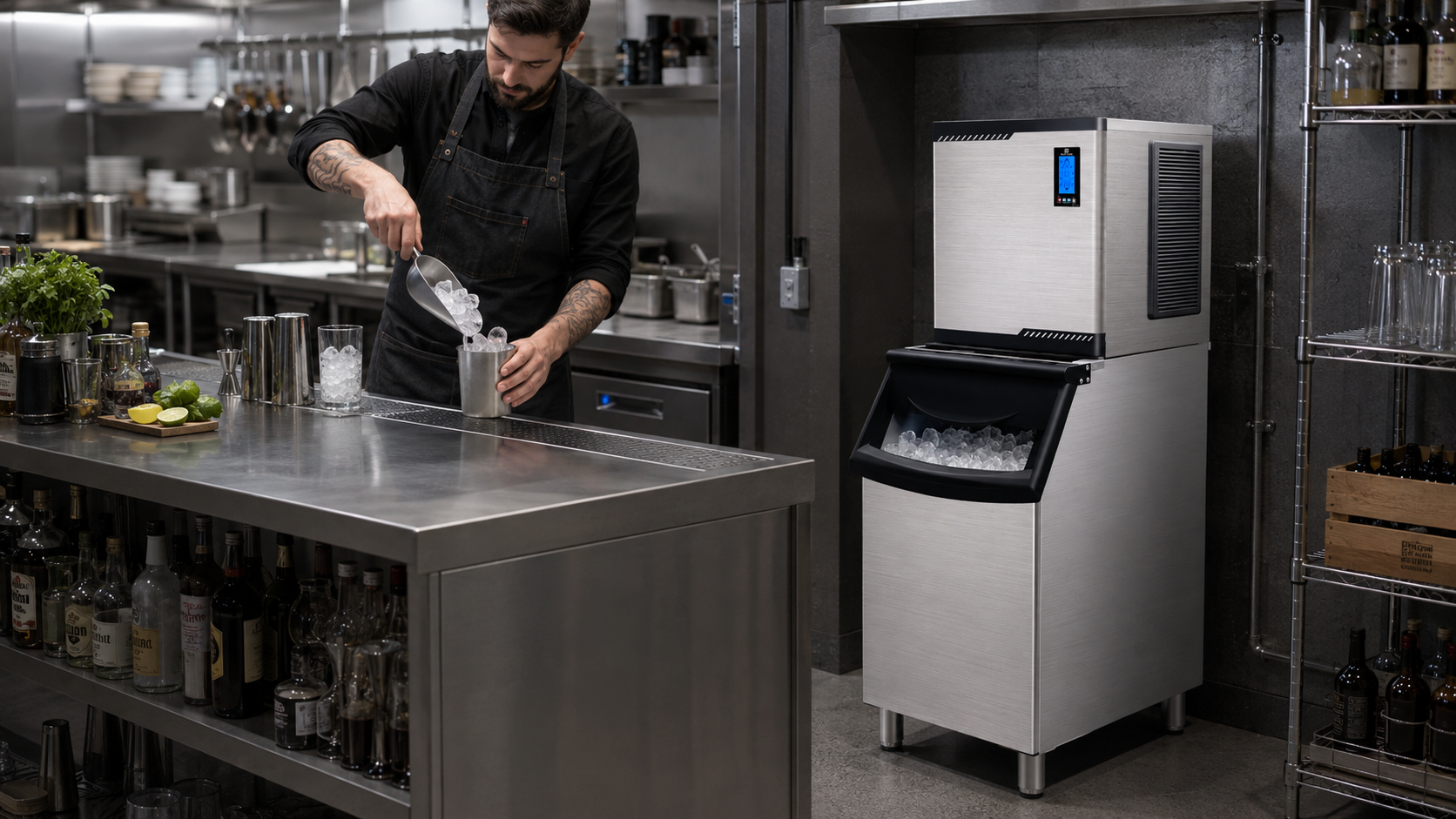
Pick: modular. Put one or two heads on storage in the storeroom, where heat and noise stay away from guests, and carry ice to the wells in dedicated totes. This is the setup the BF500 and BF360 are built for. Size the bin from the ice that must be banked before the rush, not from the daily total.
Small Café or Single Bar Station With No Back Room
Pick: undercounter self-contained, if the peak fits its built-in storage. This is not a BF application. If the numbers exceed what a compact cabinet holds, look for floor space somewhere else for a modular head before adding a second undercounter unit.
Hotel With Banquets and a Breakfast Room
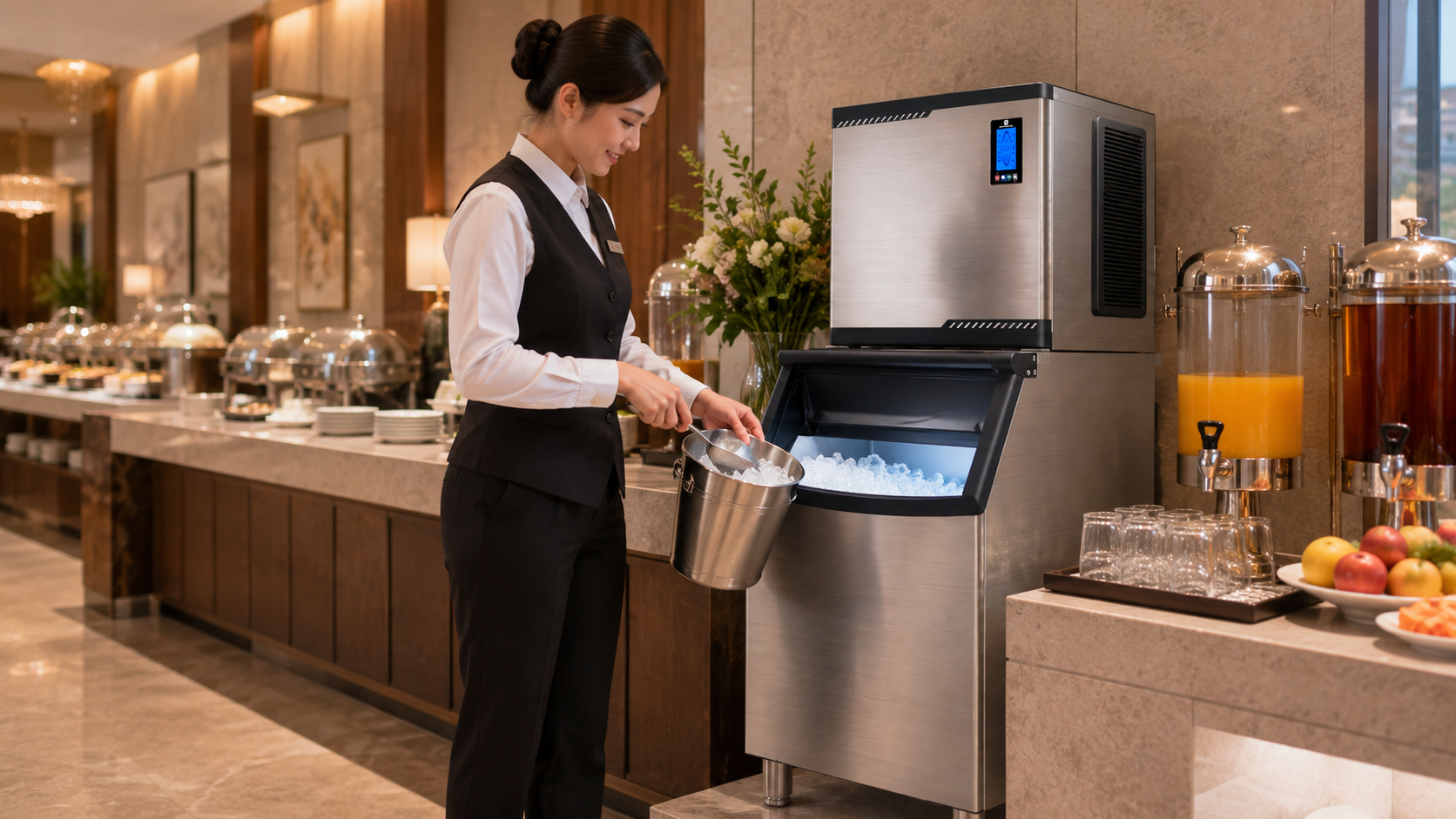
Pick: both. Modular heads on large bins in back-of-house cover banquet staging and bucket filling, while countertop dispensers serve guest floors and self-serve areas where nobody should scoop from open storage.
Clinic, Office or Self-Serve Drink Area
Pick: countertop dispenser. Demand is steady and cup-sized, and hands-free delivery keeps stored ice out of reach.
Restaurant With a Hot Kitchen and a Separate Bar
Pick: modular in the coolest back-of-house space, feeding both the kitchen and the bar, with an undercounter unit at the bar only if carrying ice there is impractical. The commercial ice maker buying guide covers the full decision order, from demand to supplier questions.
Modular Ice Machine Questions
Can a Modular Ice Machine Go Under a Counter?
Rarely. A head sits on top of a bin, and that stack is usually taller than a counter opening. If ice has to be made beneath the counter, the right equipment is an undercounter self-contained unit.
Will Any Bin Work Under a Modular Head?
No. Use a bin, or a bin and adapter, that the head’s manufacturer lists for that footprint and weight, and size it for the ice you need banked rather than picking the largest available.
Does a Modular Ice Machine Need a Floor Drain?
Yes, or an equivalent indirect drain point. Both the head and the bin produce water that has to discharge through an indirect connection, as described in the drains section above.
Plan a Split-Type Head Installation
Send Smartool your floor-to-ceiling height, room temperature, drain location and daily and peak ice figures. The team will match them to a BF500, a BF360 or a paired setup and share the spec sheets for bin, drain and ventilation planning. Request a quote for commercial ice machines to start.
Related posts
Are Ice Cream Vending Machines Profitable? Cost & Payback
Work out ice cream vending machine profit cup by cup: mix cost, commission, card fees, power, labor, permits and the daily sales needed to pay back the machine.
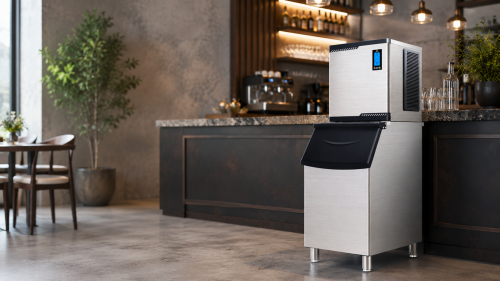
Modular Ice Machine vs Undercounter: Which Setup Fits?
Compare modular ice machines, undercounter ice makers and countertop dispensers on height, airflow, drains, bins and cost, with a site decision matrix.
2 thoughts on “Modular Ice Machine vs Undercounter: Which Setup Fits?”
Comments are closed.