




Blog
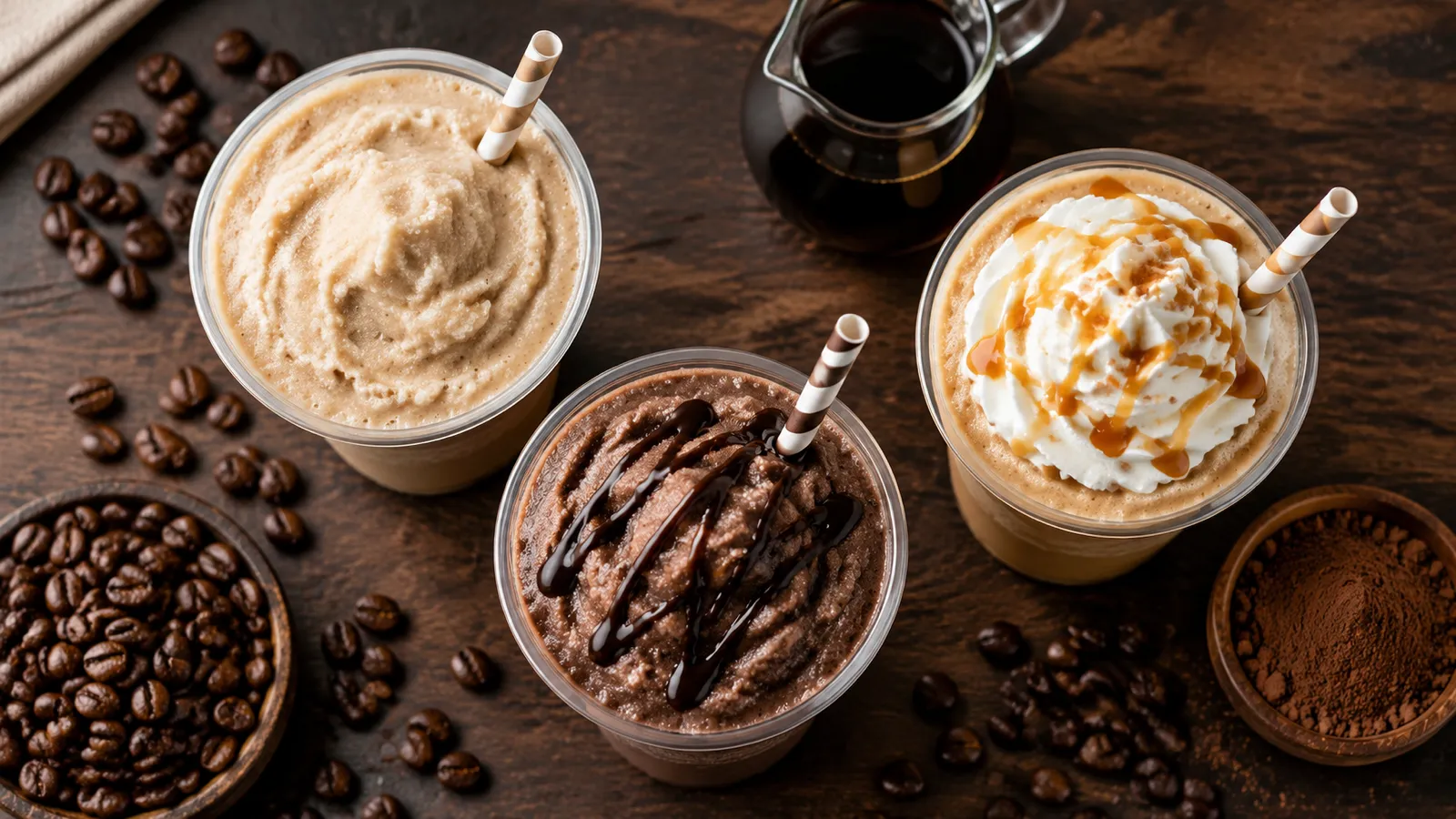
Frappe recipe for slushie machine service: a dairy-free cold brew or espresso base per gallon, mocha and caramel versions, milk at the cup, and caffeine.
A café-grade frappe recipe for slushie machine service has two parts: a sweetened, dairy-free coffee base that freezes in the tank, and milk or cream that goes in at the cup. Make the base from cold brew concentrate or espresso, sugar and water, target the same 12–18 Brix as any slush, and finish each drink at the counter. You get a consistent frozen coffee from a commercial slush machine without putting a perishable dairy mix in the bowl. Below are per-gallon formulas, mocha, caramel and vanilla variations, a caffeine estimate, a cost worksheet and the cleaning routine coffee needs.
Part of our commercial slush machine buying guide series.
Home slushie makers vs commercial slush machines
Most frappe recipes online are written for home countertop slushie makers. Several of those appliances have a dedicated frappé or milkshake setting, and their recipes pour coffee, milk and sugar straight into the vessel because the owner makes a few drinks and washes it right away.
A commercial pour-over slush machine works differently. It holds gallons of product, runs for hours and dispenses on demand through a service. A recipe that suits a single home batch does not carry over to a tank that stays full through a lunch rush and an afternoon lull. For a café, the safer and more consistent setup is a coffee base that behaves like any other slush mix, with the dairy kept out of the machine.
Why the milk goes in at the cup, not the tank
- Milk is a time and temperature controlled food. The FDA Food Code 2022 requires cold-held foods like milk to stay at 41 °F (5 °C) or below. A slush tank that warms during refills or idles through a slow afternoon is hard to keep inside that limit across the whole volume.
- Cleaning frequency goes up. The same code expects food-contact surfaces used with these foods to be cleaned at least every four hours, with limited exceptions. A dairy tank turns a routine end-of-day clean into several teardowns per shift.
- Milk is a major food allergen. Federal law lists milk first among the major food allergens. A dairy-free base lets you serve the same drink with oat or almond milk, or black, without cross-contact from the tank.
- The machine has a stated use. The Smartool RLC18-1 product page lists slushies, frozen margaritas, cocktails and alcohol-based drinks. Dairy is not on that list. A sweetened coffee base is the same kind of sugar-and-water liquid as a slush syrup, but check the user manual or ask your sales rep before you run one.
This is the same approach as our slushie machine milkshake recipe, which keeps dairy out of the bowl for the same reasons.
Frappe base formula per gallon
Both formulas below make one gallon (128 fl oz) of finished base at about 15% sugar by weight, before coffee solids are counted. Coffee strength is set a little above what you would serve iced, because cold dulls flavor and the milk added at the cup dilutes it again.
| Ingredient | Cold brew base | Espresso base |
|---|---|---|
| Coffee | 48 fl oz cold brew concentrate (the kind labeled to dilute 1:1) | 32 fl oz freshly pulled espresso (about 16 double shots) |
| Granulated sugar | 1.3 lb (600 g), about 3 cups | 1.3 lb (600 g), about 3 cups |
| Water | To 1 gallon total, about 67 fl oz | To 1 gallon total, about 83 fl oz |
| Salt (optional) | A pinch, to round off bitterness | A pinch |
| Expected reading | About 15–16 Brix | About 15–16 Brix |
- Dissolve the sugar in about a quart of hot water, or in the hot espresso, until no crystals remain.
- Add the coffee and the rest of the water to reach the gallon mark. Measuring to a marked line is more reliable than adding up volumes, since dissolved sugar takes up space.
- Chill the base in a covered, labeled container in the walk-in or reach-in before it goes into the machine. A cold base reaches serving texture sooner; the RLC18-1 page lists 40–60 minutes for the first batch.
- Check the Brix, then load the tank to the fill line in your manual.
Cold brew concentrates vary a lot in strength. If yours is sold ready to drink rather than as a 1:1 concentrate, use it in place of both the concentrate and the water, and keep the sugar the same. For a decaf menu item, use decaf concentrate or decaf espresso; nothing else changes.

Checking Brix on a coffee base
Sugar is what keeps slush soft. Too little and the base freezes hard on the cylinder; too much and it never sets. Smartool’s slush machine troubleshooting guide puts the working range at 12–18 Brix, and our slushie machine mix guide explains how to read a refractometer and correct a batch.
Coffee adds a wrinkle. Dissolved coffee solids also bend light, so a refractometer reads a coffee base slightly higher than its sugar content alone. A strong concentrate can add a point or more. That is why the formula aims for 15% sugar: even with coffee solids on top, the reading lands mid-range. If you swap in a sugar-free or low-sugar syrup, the base will read low and freeze hard, so use only a sugar-free product made for frozen beverage machines.
Scaling the batch for a 4-gallon tank
The RLC18-1 single-tank slush machine has a 4-gallon (16.5 L) tank, and its product page lists about 34 cups of 16 oz per batch. Because each frappe is about three parts slush to one part milk, the same batch stretches further when it is served this way.
| Finished base | Cold brew concentrate | or Espresso | Sugar | 16 oz frappes (12 oz slush + 4 oz milk) |
|---|---|---|---|---|
| 1 gal | 48 fl oz | 32 fl oz | 1.3 lb | About 10 |
| 2 gal | 96 fl oz | 64 fl oz | 2.6 lb | About 21 |
| 3 gal | 144 fl oz | 96 fl oz | 3.9 lb | About 32 |
| 4 gal | 192 fl oz | 128 fl oz | 5.2 lb | About 42 |
Drink counts are liquid volume only. Ice, whipped cream and the base left in the cylinder at the end of the day reduce them in practice. On a slow coffee day, run a 2- or 3-gallon batch rather than filling the tank and holding product overnight.
Mocha, caramel and vanilla variations
Flavor variations follow one rule: anything clear and dairy-free can go into the tank; anything with milk, cream or butter goes on at the cup. Many chocolate sauces, caramel sauces and white chocolate sauces contain dairy, so read the ingredient list before you add one to a batch.
| Variation | In the tank (per gallon) | At the cup |
|---|---|---|
| Mocha | Whisk about 3/4 cup unsweetened cocoa powder into the hot sugar syrup and strain it fine; keep the sugar as written | Milk, optional chocolate sauce drizzle |
| Caramel | Add a dairy-free caramel syrup and remove granulated sugar to match the sugar it adds (use the grams of sugar on its nutrition label) | Milk, caramel sauce drizzle on top |
| Vanilla | Replace part of the sugar with vanilla syrup, or add 1–2 tbsp vanilla extract | Milk or half-and-half |
| Black frozen coffee | Base as written | Nothing, or oat milk on request |
Cocoa and flavored syrups both add dissolved solids, so re-check Brix after any change and adjust the sugar until the reading is back in range. Cocoa also settles; stir the base before loading, and keep it in its own tank so it does not stain or flavor a fruit slush.
Building the frappe at the counter
- Pour 12 oz of coffee slush into a 16 oz cup.
- Add 4 oz of cold whole milk, half-and-half or a plant milk, and stir once with the straw or a bar spoon. For a layered look, pour the milk first and the slush on top.
- Finish with whipped cream and a drizzle if the menu calls for it, then lid and serve.
The dairy still needs handling. Keep milk in a reach-in at 41 °F or below and pour from a small pitcher that goes back in the fridge between orders. A carton left beside the slush machine through a rush is the most common slip. Whipped cream from a refrigerated dispenser follows the same rule. Train staff to ask about dairy when a guest orders an alternative milk, since a shared pitcher or spoon can still cause cross-contact.
How much caffeine is in each cup
A rough estimate is enough for staff to answer guests, but treat it as a range, not a label claim. MedlinePlus puts an 8-ounce cup of coffee at 95–200 mg of caffeine, and notes that up to 400 mg a day is not harmful for most people.
The cold brew base above holds the coffee equivalent of about twelve 8-ounce cups per gallon, once a 1:1 concentrate is counted at drinking strength. That works out to roughly 1,100–2,400 mg per gallon, or about 9–19 mg per fluid ounce. A 16 oz frappe with 12 oz of slush lands at roughly 105–225 mg, about the same as one to two 8-ounce cups of brewed coffee. The espresso base comes out in a similar band, but espresso varies with dose and beans. If your concentrate supplier publishes a caffeine figure per ounce, use it instead, and offer the decaf version for evening service.
Cost per drink: how to work it out
Ingredient prices differ by supplier and region, so run the numbers with your own invoices. Cost one gallon of base, divide by the number of drinks it makes, then add what goes in each cup:
- Base per gallon: concentrate or espresso cost, plus sugar and any flavor syrup or cocoa. Divide by about 10 drinks per gallon at the 12 oz slush build.
- Per cup: 4 oz of milk or plant milk, whipped cream and sauce if used, plus cup, lid, straw and sleeve.
- Waste: base discarded at the end of the day. Track it for two weeks and add it back in; this is where an oversized batch costs money.
- Labor: the cup build is a pour, a stir and a lid, compared with portioning ice and running a blender for each blended drink. Time both on your own line if speed at the counter is part of the decision.
The cost per cup worksheet in the mix guide uses the same structure for fruit slush, so you can compare the coffee item side by side with what is already on your menu.
Cleaning after coffee
Coffee leaves oils and fine solids that a plain water rinse does not remove. Left on the cylinder, auger and seals, they turn stale and carry a bitter note into the next batch, and they show as a brown film on a clear bowl. Follow your manual for disassembly and use the routine in our guide on how to clean a slush machine, with these additions for coffee:
- Drain the tank and flush it with warm water before the detergent wash, so loose coffee solids do not just move around.
- Wash removable parts with a food-safe detergent and a soft brush, paying attention to the dispensing valve, where cocoa and coffee settle.
- Check gaskets and O-rings for staining or a coffee smell; both are signs that residue is left in the grooves.
- Sanitize, air-dry and reassemble per the manual. If the same tank switches from coffee to a light fruit flavor, do a full clean between them rather than a rinse.
On a multi-tank machine, dedicating one tank to coffee keeps the flavor carryover problem away from your fruit slush entirely.
Frappe slushie machine FAQs
How do you make a frappe in a slushie machine?
Freeze a sweetened, dairy-free coffee base in the tank: 48 fl oz cold brew concentrate, 1.3 lb sugar and water to one gallon. Check that it reads 12–18 Brix, pour 12 oz into a 16 oz cup and top it with 4 oz of cold milk.
Can you put milk in a slushie machine to make a frappe?
In a commercial machine, keep milk out of the tank unless the manufacturer approves dairy for that model. Milk must be held at 41 °F or below and needs more frequent cleaning. Adding it at the cup gives the same drink without those problems.
What frappe mix can you use in a slush machine?
A house base of cold brew or espresso, sugar and water, or a commercial frozen coffee concentrate made for frozen beverage machines. Avoid powdered frappé mixes that contain milk solids unless the machine is approved for dairy.
How do you make a mocha or caramel frappe in a slushie machine?
For mocha, dissolve unsweetened cocoa in the hot sugar syrup and strain it. For caramel, swap part of the sugar for a dairy-free caramel syrup. Re-check Brix either way, and add milk, sauce and whipped cream at the cup.
Adding frozen coffee to a café menu, or planning a dedicated coffee tank? Compare tank counts and footprints across our commercial slushy machines, then request a factory-direct quote for the setup that fits your volume.
Factory-direct from Smartool
Planning a commercial equipment purchase?
Share your site conditions, daily output and budget. Our team will match a model, send the spec sheets and quote factory-direct pricing.

Written by
Senior Engineer, Smartool
Jason is a senior engineer at Smartool. He works on the commercial ice machines, soft serve and slushy machines, and refrigerated prep tables Smartool builds for restaurants, bars, hotels and dessert shops. His guides look at equipment from the engineering side: how to size a machine for a site, what it needs for power, water and airflow, and how to keep it running through busy service. He also helps buyers match the right model to their kitchen before they request a quote.
.elementor-76528 .elementor-element.elementor-element-5c7a0d0{--display:flex;--flex-direction:column;--container-widget-width:100%;--container-widget-height:initial;--container-widget-flex-grow:0;--container-widget-align-self:initial;--flex-wrap-mobile:wrap;}.elementor-76528 .elementor-element.elementor-element-5c7a0d1 .elementor-toc__header-title{text-align:start;}.elementor-76528 .elementor-element.elementor-element-5c7a0d1 .elementor-toc__header{flex-direction:row;}.elementor-76528 .elementor-element.elementor-element-5c7a0d1{--item-text-hover-decoration:underline;}
On this page
Need pricing for your project?
Get a factory-direct quote on commercial ice makers, soft serve and slushy machines, and refrigerated prep tables.
✓ Model matching and spec sheets for your site
✓ US office in City of Industry, CA
✓ Talk to an expert: +1 (872) 221-0051
Browse by topic
Ice Machine Guides
Soft Serve & Ice Cream
Slushy & Frozen Drinks
Buying & Sourcing
Compliance & Maintenance
Related posts

Frappe Recipe for Slushie Machine: A Café Coffee Base
Frappe recipe for slushie machine service: a dairy-free cold brew or espresso base per gallon, mocha and caramel versions, milk at the cup, and caffeine.

How to Start an Ice Cream Vending Machine Business
Start an ice cream vending machine business step by step: operating model, site and location deal, permits, sales tax, power, Wi-Fi, insurance and restocking.