




Blog
Start an ice cream vending machine business step by step: operating model, site and location deal, permits, sales tax, power, Wi-Fi, insurance and restocking.
An ice cream vending machine business looks simple from the outside: one cabinet, a touchscreen and a pickup window. The launch is where new operators get stuck, because the order matters. Sign a location before you talk to the health department and the spot may not qualify. Order the machine before you check the outlet and you may wait on an electrician. This checklist puts the steps in a workable order, from choosing an operating model to the first restock, with sources for the rules you will need to confirm locally.
Part of our commercial soft serve machine buying guide series.
This article covers the process. For cost per cup, monthly operating costs and how many cups a day it takes to pay back a machine, use our guide to ice cream vending machine profit margins. Run those numbers between Step 1 and Step 3.
Step 1: Choose your operating model
Before you look at sites, decide who owns the machine, who services it and who collects the money. Most ice cream vending businesses fall into one of two models.
- Owner-operated route. You buy the machines, place them in host venues, and handle restocking, cleaning and repairs yourself. You keep the sales and pay the venue for the space: the most control and the most work.
- Placement partner. A venue that already sells food, such as a cinema or hotel, buys a machine as an extra sales point or brings in an operator to service it. Its food permit, staff and insurance may cover part of the setup, but write the responsibilities down.
The model also decides who is the legal “operator” for permits and sales tax. California’s tax agency defines the vending machine operator as “the person who stocks the machine and collects money from it.” Maricopa County, Arizona, does not require a separate vending permit for machines run on the premises and under the control of a permitted eating and drinking establishment, though they must still meet the code. For a placement partner, that can change the permit path.
Step 2: Shortlist sites with clear criteria
Our profit guide compares venue types by demand pattern. Once you have a venue in mind, score each specific spot on these points; a busy venue with a bad spot inside it still underperforms.
- Traffic that stops. People who wait or linger near seating, play areas or lobbies have time to buy; people walking past to somewhere else often do not.
- Indoor, climate-controlled floor. Refrigeration works harder in heat and sun, and outdoor spots add weather and security questions.
- Space and power. Room for the cabinet, its service door and ventilation, plus an outlet within reach (Step 6).
- Signal at the exact spot. Test cellular reception and ask about venue Wi-Fi.
- A restocking path. How you move mix and supplies from your vehicle to the machine, and at what hours.
- Exclusivity. Whether another tenant holds an exclusive right to sell frozen desserts.
- Accessibility. Where vending machines are provided, the 2010 ADA Standards (§ 228.1 and § 309) set rules for operable parts such as screens and card readers, including reach range and clear floor space. Ask the venue what it requires.
Step 3: Negotiate the location agreement
Venues usually ask for one of two forms of payment. A commission is a share of sales, which ties the venue’s interest to yours but requires sales reporting. A flat fee is a fixed monthly rent: predictable, but unchanged in a slow month. Some venues combine the two. Model both in the profit worksheet before you agree.
Beyond the payment, get these points in writing:
- Term and renewal, and how either side exits.
- Exact placement, and what happens if the venue wants to move the machine.
- Access: service hours, keys or badges, parking and loading.
- Utilities: who pays for electricity and provides the network.
- Exclusivity: no competing frozen dessert machine at the venue.
- Insurance and liability: required certificates and who is responsible for damage or injury.
- Sales reporting: how commission is calculated and verified.
- Removal: notice periods and who pays to remove the machine.
Make the agreement conditional on getting your health permit for that site, so you are not paying for a spot you cannot use. Have a lawyer review the final draft.
Step 4: Register the business and set up sales tax
The SBA’s launch guide sets the order: choose a business structure, register with your state, get tax IDs, then apply for licenses and permits.
- Structure. A sole proprietorship, LLC or corporation changes your personal liability and taxes. A machine in a public space carries injury and property risk, so discuss the choice with an accountant or attorney.
- Registration and name. The SBA notes that a “doing business as” (DBA) name “doesn’t give legal protection, but it might be legally required” if you trade under a name other than your legal one. See the SBA’s registration guide.
- Federal tax ID. The IRS issues an Employer Identification Number online and states that “you never have to pay a fee for an EIN.”
- Sales tax. Sales tax is a state and local matter. California’s Publication 118 on vending machine food sales says you “generally need a seller’s permit if you make sales through a vending machine,” and that you “need only one permit, regardless of how many machines you operate.” Other states set their own rules, so check with the department of revenue in each state on your route.
Step 5: Get the health permit and pass inspection
Soft serve is a time and temperature controlled food, so it is regulated more closely than snacks. Most local codes build on the FDA Food Code, which requires cold holding at 41 °F (5 °C) or below (§ 3-501.16) and an automatic control that stops a vending machine from selling after a power or mechanical failure until it is serviced (§ 4-204.111). Minnesota’s adopted text of the shutoff rule is one readable example.
Permit procedures differ by state and county. Two examples show the range:
- Maricopa County, Arizona. Its vending machine code says no one may operate a time/temperature control for safety food vending machine “without holding a valid permit,” and asks applicants for a NAMA certification letter or plans and specifications showing the equipment is NSF/ANSI approved.
- Oregon. The state’s vending machine plan review packet states that “approval and licensing from the Local Public Health Authority must be obtained prior to the operation of your unit,” and that additional licensing applies if you store food or beverages at a commissary or warehouse.
Call the environmental health office in each county before you sign a location agreement. Ask about plan review, whether permits are per machine or per operator, site inspection, and licensed mix storage. Ask your supplier early which sanitation and electrical documentation it can provide for your model; our guide to commercial kitchen equipment certification requirements explains what inspectors and venues tend to look for. If your route grows to 20 or more machines, federal calorie disclosure rules under 21 CFR 101.8 also apply.
Step 6: Prepare power, space and Wi-Fi
A refrigerated cabinet runs around the clock, so treat the site as an equipment installation.
- Power. Get the voltage, plug and circuit requirement for the exact unit, then have a licensed electrician check the venue’s outlet. A dedicated circuit avoids nuisance trips. If the venue needs a new circuit, add approval and installation time to your schedule. For Smartool models, confirm the US configuration with your sales rep.
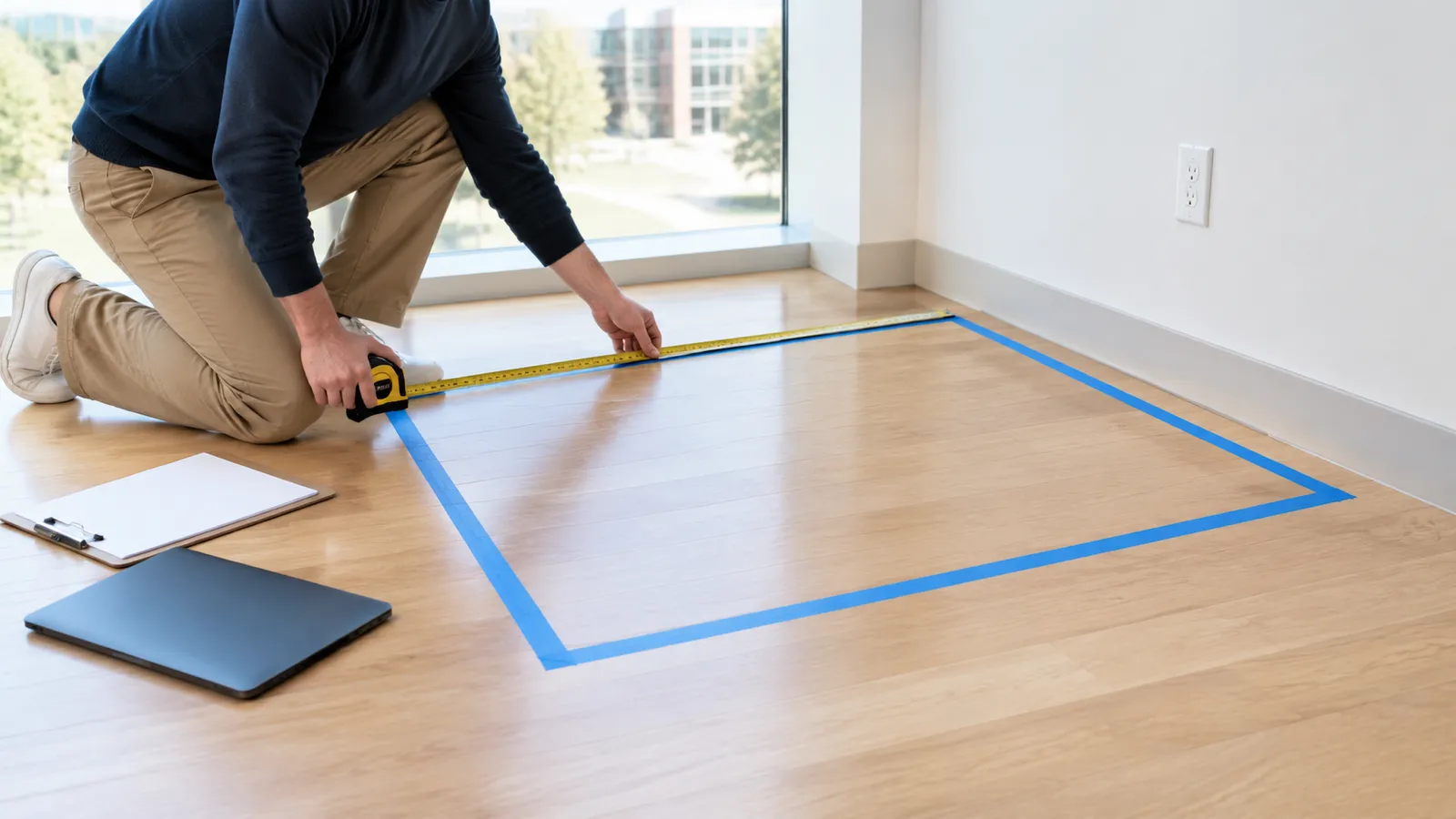
- Space. Smartool lists a 0.45 m² footprint (about 4.8 sq ft) for the BA18-100C3 cabinet. Add the service door swing, ventilation clearance and customer space in front, and check the floor is level.
- Connectivity. Card payments, remote monitoring and alerts need a stable connection. Test venue Wi-Fi and cellular at the exact spot. Confirm the payment methods and network options of the US configuration with your sales rep.
Step 7: Insure the machine and the business
The SBA’s insurance guide lists the common types. Three fit a vending route: general liability, which “protects against financial loss as the result of bodily injury, property damage” and related claims; product liability, for loss when a product causes injury; and commercial property, for damage to equipment you own. If you hire staff, check your state’s workers’ compensation rules. Ask each venue what coverage and certificate wording it requires before you buy a policy.
Step 8: Set a restocking and cleaning routine
Unattended does not mean unvisited. Plan a route schedule before launch and write a visit checklist so every visit is done the same way.

- Every visit: check and log the cabinet and mix temperatures, refill mix, cups and spoons, wipe the dispensing area and pickup window, empty the waste, and check the payment reader and screen.
- Mix handling: keep mix cold from storage to machine, rotate stock by date, and follow the mix maker’s instructions. Our soft serve mix guide covers storage and texture problems.
- Deep cleaning: follow the interval your health department accepts. Smartool lists a 7-day auto-clean cycle for the BA18-100C3, but self-cleaning features do not set the legal interval. Foodservice Equipment Reports notes that even a heat-treatment option “doesn’t replace the need to properly wipe down the machine every day.”
- Preventive maintenance: seals, O-rings and condenser cleaning follow the same logic as any soft serve equipment. See our soft serve machine maintenance schedule.
Keep temperature and cleaning records where an inspector or the venue can see them on request.
Step 9: Use telemetry to run the route
Remote monitoring is what lets one operator run several machines across town. Smartool’s ice cream vending machine page lists cloud real-time remote monitoring for the BA18-100C3. Whatever system you use, set it up to answer four questions:
- Is the machine selling? Sales by hour show peak times and whether the screen or reader is offline.
- When does it need stock? Plan visits from actual consumption, not a fixed calendar.
- Is it safe? Temperature and fault alerts should reach a phone someone answers, with a plan for who responds.
- Is the site worth keeping? Sales history supports renewing, renegotiating or moving a placement, and commission reporting.
Ask your supplier exactly which data the dashboard reports, how alerts are sent and whether any software subscription applies to the US configuration.
Launch checklist
Each line should be done, or dated, before the machine ships.
| Phase | Task | Done when |
|---|---|---|
| Plan | Choose owner-operated or placement partner model | You know who is the legal operator |
| Plan | Build the per-cup and monthly model | Break-even cups per day is written down |
| Site | Score candidate spots on traffic, space, power, signal and access | One first choice and one backup |
| Permits | Call county environmental health | You know the permit, plan review and storage requirements |
| Site | Sign the location agreement | Payment form, access, utilities, insurance and exit terms are in writing |
| Business | Register the business, get an EIN and state tax accounts | Seller’s permit or equivalent is active |
| Equipment | Confirm the US configuration with your supplier | Voltage, payment methods, network and documentation are in writing |
| Site | Electrician checks or installs the circuit; test the network | Outlet and signal are confirmed at the exact spot |
| Business | Buy insurance | Venue has the certificate it asked for |
| Permits | Submit the application and schedule the inspection | Permit is issued and posted as required |
| Operations | Write the visit, cleaning and alert checklists | Temperature log and alert contacts are set up |
| Launch | Install, commission and run test sales | Payments settle and the dashboard shows the sales |
To compare machine formats for your first placement, browse Smartool’s unmanned ice cream machine range. If a staffed counter suits the site better, our guide to choosing an ice cream maker machine for business covers that route.
FAQ
Do I need a permit for an ice cream vending machine?
In most places, yes. Soft serve is a time and temperature controlled food, and many counties require a vending permit, a plan review or both. Requirements vary by state and county, so contact the environmental health office where the machine will stand.
Can I start an ice cream vending business with one machine?
Yes. Starting with one machine lets you learn the restocking rhythm and the local permit process before adding sites. The setup steps are the same for one machine or ten.
Is an ice cream vending machine franchise better than going independent?
A franchise adds a brand, supply chain and site support in exchange for fees and operating rules; going independent means buying equipment directly and finding sites yourself. Under the FTC Franchise Rule (16 CFR 436.2), a franchisor must give you its disclosure document at least 14 calendar days before you sign or pay. Compare it against doing each step in this checklist yourself.
What usually delays a launch?
Permits and power. A plan review, a missing storage license or a new circuit at the venue can each add weeks. Start the health department call and the electrical check before you sign or order.
Planning your first placement? Send us the venue type, the space and power available and your target opening date, and we will help you check the machine against the site. Request a factory-direct quote.
Factory-direct from Smartool
Planning a commercial equipment purchase?
Share your site conditions, daily output and budget. Our team will match a model, send the spec sheets and quote factory-direct pricing.

Written by
Senior Engineer, Smartool
Jason is a senior engineer at Smartool. He works on the commercial ice machines, soft serve and slushy machines, and refrigerated prep tables Smartool builds for restaurants, bars, hotels and dessert shops. His guides look at equipment from the engineering side: how to size a machine for a site, what it needs for power, water and airflow, and how to keep it running through busy service. He also helps buyers match the right model to their kitchen before they request a quote.
.elementor-76528 .elementor-element.elementor-element-5c7a0d0{--display:flex;--flex-direction:column;--container-widget-width:100%;--container-widget-height:initial;--container-widget-flex-grow:0;--container-widget-align-self:initial;--flex-wrap-mobile:wrap;}.elementor-76528 .elementor-element.elementor-element-5c7a0d1 .elementor-toc__header-title{text-align:start;}.elementor-76528 .elementor-element.elementor-element-5c7a0d1 .elementor-toc__header{flex-direction:row;}.elementor-76528 .elementor-element.elementor-element-5c7a0d1{--item-text-hover-decoration:underline;}
On this page
Need pricing for your project?
Get a factory-direct quote on commercial ice makers, soft serve and slushy machines, and refrigerated prep tables.
✓ Model matching and spec sheets for your site
✓ US office in City of Industry, CA
✓ Talk to an expert: +1 (872) 221-0051
Browse by topic
Ice Machine Guides
Soft Serve & Ice Cream
Slushy & Frozen Drinks
Buying & Sourcing
Compliance & Maintenance
Related posts

How to Start an Ice Cream Vending Machine Business
Start an ice cream vending machine business step by step: operating model, site and location deal, permits, sales tax, power, Wi-Fi, insurance and restocking.

Ice Machine Making Loud Noise? What Each Sound Means
Ice machine making loud noise? Match grinding, squealing, clicking or rattling to its likely cause, see what staff can check and when to call a technician.