




Blog
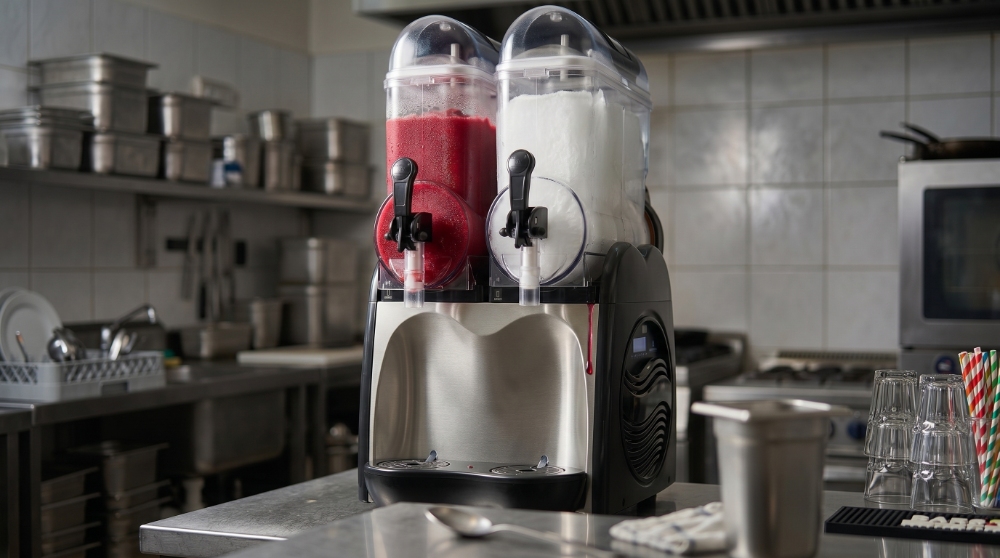
Slush machine not freezing, freezing solid, leaking or noisy? Symptom-by-symptom operator checks, a quick troubleshooting chart and when to call a technician.
Slush machine troubleshooting starts with the symptom, not the parts list. Most service calls trace back to four things operators control: mix concentration, airflow around the condenser, how the tank and seals went back together after cleaning, and whether the machine is sized for the rush. This guide is organized by what you see at the counter: slush that will not freeze, slush freezing solid, leaks, noise, a tap that will not dispense, and a machine that shuts itself off. Each section lists the checks staff can make safely and the point where you should stop and call a technician.
Safety Rules Before Any Check
- Switch off and unplug first before you remove a tank, valve or agitator or clean the condenser. The auger and fan can start without warning, and OSHA’s guidance on controlling hazardous energy explains why unexpected machine startup during servicing causes serious injuries.
- Keep water off the machine body. Wipe the housing and control panel with a damp cloth; never hose or splash it.
- Leave panels closed. Refrigerant lines, compressors and wiring are technician work.
- Let a tripped machine rest. If overload protection shuts the machine off, wait 10–15 minutes before restarting, and avoid cycling power on and off repeatedly.
- Write it down. Note the time, symptom, mix batch and room temperature. It shortens any service call.
Slush Machine Troubleshooting Chart
| Symptom | Operator checks | Stop and call service when |
|---|---|---|
| Not freezing or runny | Mix ratio and Brix, room temperature, condenser dust, tank seating | The compressor never starts, or product stays liquid with correct mix, a clean condenser and a normal room |
| Freezing solid, auger straining | Mix too thin, consistency set too firm, machine left freezing overnight | The auger will not turn in softened product, or the motor hums without turning |
| Leaking | Valve assembly, tank seal seating, drip tray level | Liquid appears under the base or inside the housing, or a tank is cracked |
| Noisy or vibrating | Level feet, debris near the fan, seals seated after cleaning | Grinding or metal-on-metal scraping |
| Not dispensing, sticky tap | Dried sugar in the valve, product too firm, low product level | The valve or handle is cracked or broken |
| Shutting off | Ventilation, fan running, extension cord, shared circuit | It trips again after resting, or the building breaker trips |
Slush Machine Not Freezing or Staying Runny
Check the Mix Concentration
Sugar controls the freezing point of slush. A mix with too much sugar or syrup stays soft and runny, while an over-diluted mix freezes icy and hard. Mix at the manufacturer’s ratio, then measure. Smartool’s model-specific slush machine troubleshooting page sets a target of 12–18 Brix.
A handheld refractometer gives a Brix reading from a few drops. Washington State University’s Brix measurement guide shows how to take and read a sample. Frozen cocktails add a second variable, because alcohol lowers the freezing point further.
Check Room Temperature and Airflow
A slush machine rejects heat from its condenser into the room. If the room is too hot or the air cannot move, the machine cannot pull the product cold enough. Smartool’s RLC18-1 and RL18-3 are rated for rooms of 10–32 °C (50–90 °F); above that range, cooling suffers. Keep about 20 cm (8 in) between the back of the machine and the wall. Keep it away from fryers, ovens, dish machines and direct afternoon sun.
Clean the Condenser
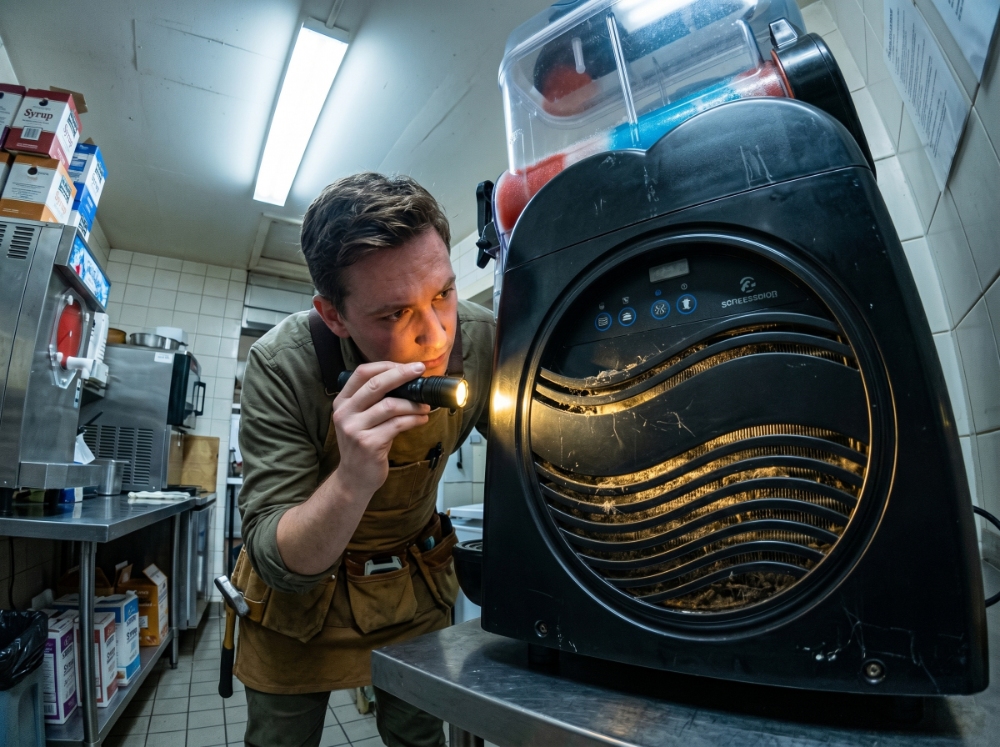
Dust and grease on the condenser fins are among the most common reasons a machine stops keeping up. With the machine unplugged, brush the fins gently with a soft brush and vacuum the loosened dust. Heavy kitchen grease may need a condenser cleaner spray applied according to its label. Do not bend the fins, and do not remove panels to reach parts that are not exposed.
Reseat the Tank and Check the Seal
A tank that is not fully seated, or a seal ring that lets air in, can stop the product from freezing evenly after cleaning. Unplug the machine, drain the product, and reinstall the tank exactly as the manual shows, checking that the seal sits flat. A seal that looks cracked, flattened or stretched is a replacement part, so order it through your supplier rather than improvising.
When It Is a Refrigeration Fault
If the mix is right, the condenser is clean, the room is within range and the product still will not freeze, the problem is likely inside the sealed system: low refrigerant, a restriction or a compressor fault. That is technician territory. Under EPA Section 608 technician certification rules, technicians who service refrigeration equipment that could release regulated refrigerants must be certified. Smartool’s RL18-series compressors use R290 (propane), a flammable refrigerant, which is one more reason never to open the system in-house.
Slush Freezing Solid or the Auger Straining
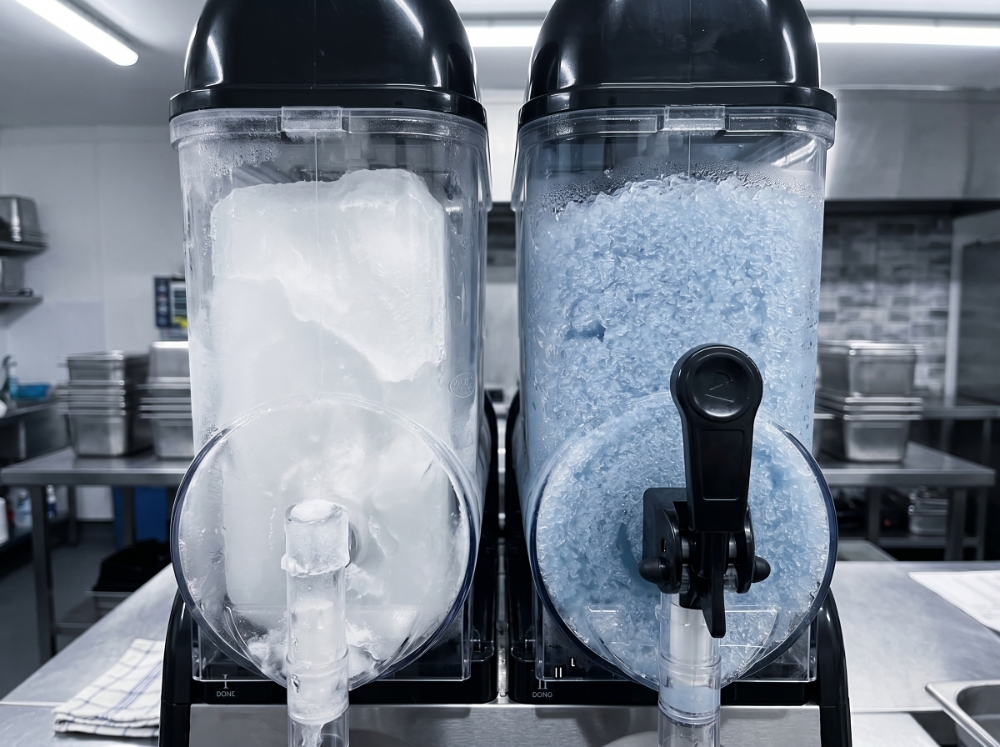
A tank that turns into a block is harder on the machine than a runny one, because the auger keeps pushing against ice. Common causes:
- Mix too thin: extra water or too little syrup raises the freezing point, so the product sets hard.
- Consistency set too firm: a setting that works for one mix can be too cold for a lower-sugar flavor.
- Freezing left on overnight: if the machine has a hold or night mode, use it at close. Otherwise follow the manual’s end-of-day procedure.
Switch off freezing and let the product soften before trying again. Do not chip at ice with a spoon or bar tool, which can crack the tank or catch on the auger. Correct the mix, then restart. If the auger will not turn in softened product, or the motor hums without turning, stop there and call service.
Slush Machine Leaking: Find the Source First
Dry the machine and counter, run it briefly, and watch where liquid appears. The source tells you what to do next:
- From the tap or spout: the valve was reassembled out of order, or its O-ring is dry or worn. Reassemble per the manual and lubricate only where specified.
- Around the base of the tank: the tank or its seal ring is not seated. Drain, reseat and check that the seal lies flat.
- Onto the counter in front: the drip tray is full. Empty it; RL18-series machines raise a red button when the tray needs attention.
- Beads of water on the outside of the tank: condensation in a humid room, which is normal. Wipe it down.
- From under the machine or inside the housing: stop, unplug and call service.
Worn O-rings and seal rings are wear parts. Replace them with the manufacturer’s parts rather than generic rings. A cracked tank should come out of service at once, since it can split further under the weight of frozen product.
Noisy or Vibrating Slush Machine
Learn what normal sounds like. Smartool’s single-tank and three-tank models are rated at ≤ 65 dB, a steady compressor hum with the auger turning. Changes from that baseline point to specific causes:
- Buzzing or vibration: the machine is not level. Adjust the leveling feet until it sits flat and firm.
- Clicking or rattling: something is touching the fan. Unplug and clear debris from the intake.
- Squealing after cleaning: a seal is dry or misseated. Drain, reseat and lubricate as the manual directs.
- Grinding or scraping: worn agitator parts or shaft sleeves. Stop the machine and call service.
Slush Not Dispensing or Tap Sticking
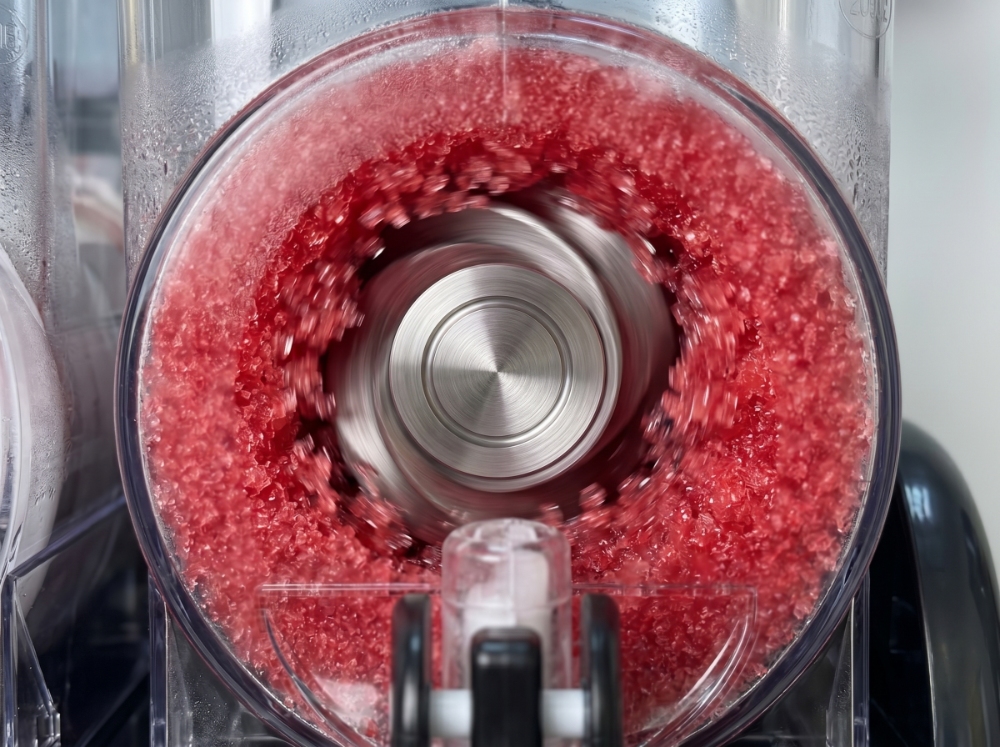
- Handle stiff or sticky: syrup has dried inside the valve. Warm water on the outside frees it temporarily; the real fix is taking the valve apart and washing it at every close.
- Product too firm to flow: lower the consistency setting and check the mix, since an over-diluted batch sets too hard to pour.
- Slow trickle with a low tank: the auger cannot push product that is not there. Top up with pre-chilled mix.
- Nothing comes out and the tank looks solid near the valve: switch off freezing and let it soften. Never push a utensil into the tank while the auger is running.
Machine Shutting Off or Tripping Protection
Slush machines protect their compressor and motor by shutting down under strain. Long periods at high load in a hot, poorly ventilated spot trigger overheat protection, so check that the fan is turning and the condenser can breathe. Unstable voltage causes cut-outs too, and extension cords make it worse.
Current draw matters here. The RL18-3 three-cylinder slushy machine is rated at 14.5 A, and Smartool’s installation guidance for its slush machines calls for a dedicated 15–20 A circuit. If a machine shares a circuit with an ice maker or blender, or the building breaker trips, have an electrician check the circuit before running it again.
When the Real Problem Is Capacity
Some “not freezing” complaints are really capacity problems. The tanks empty during the rush, staff refill with warm mix, and customers get watery slush while the new batch sets. First-batch times are long: Smartool lists 40–60 minutes on its single-tank model and 50–75 minutes on its three-tank model. A refill cannot catch up mid-rush.
Short-term fixes are pre-chilling mix, topping up before tanks run low, and running a best seller in two tanks. If the rush still outruns the machine, look at a larger tank count. Our single vs double vs triple tank slush machine comparison shows how to size by peak-hour cups. The RL18-2 dual-tank slushy machine is the usual step up from a single tank.
Daily and Weekly Routine That Prevents Most Calls
Most of the faults above start with cleaning shortcuts. The FDA Food Code ties cleaning of beverage dispensing components to the manufacturer’s schedule, so the routine that prevents breakdowns is the same one an inspector expects.
- Daily: drain, remove and wash the hopper, dispensing valve and agitator. Run warm water through the machine, sanitize, air dry, and wipe the housing.
- Weekly: inspect the agitator and seals for wear, clear debris, and brush and vacuum the condenser.
- Before storage: clean fully, dry completely, lightly lubricate seals as directed, and cover the machine.
Smartool’s step-by-step slushy machine maintenance guide covers each task in detail, including water temperature for the internal rinse.
What to Send When You Call for Service
A good report often turns an on-site visit into a remote fix. Have the model and serial number, the symptom and when it started, the mix and its Brix reading, room temperature, and a short video of the machine running. Smartool owners can request free video guidance or email support through the Smartool after-sales service policy, which also explains on-site coverage.
Slush Machine Troubleshooting Questions
Why is the slush coming out foamy?
Foam usually means air is getting into the tank through a seal that is misseated or worn. Drain the tank, reseat the tank and seal, and check the seal ring for damage.
Why does the machine click but not start?
First check the outlet, the breaker and any extension cord, and plug straight into a wall outlet. If it still clicks without starting after resting 10–15 minutes, the compressor start circuit needs a technician.
Can I use sugar-free mix in a slush machine?
Only use a sugar-free mix formulated for frozen beverage machines. Without enough dissolved solids, the product freezes hard and icy and strains the auger.
How often should the condenser be cleaned?
Check it weekly and clean it when you see dust or grease, more often in busy kitchens or dusty stores. A clogged condenser shows up first as slow freezing on hot days.
Replacing a Machine That Cannot Keep Up
If troubleshooting points to an undersized or worn-out machine, Smartool can match a single, dual or triple-tank model to your rush, electrical service and counter space. Browse Smartool commercial slushy machines, or request a quote for a replacement slush machine.
Factory-direct from Smartool
Planning a commercial equipment purchase?
Share your site conditions, daily output and budget. Our team will match a model, send the spec sheets and quote factory-direct pricing.

Written by
Senior Engineer, Smartool
Jason is a senior engineer at Smartool. He works on the commercial ice machines, soft serve and slushy machines, and refrigerated prep tables Smartool builds for restaurants, bars, hotels and dessert shops. His guides look at equipment from the engineering side: how to size a machine for a site, what it needs for power, water and airflow, and how to keep it running through busy service. He also helps buyers match the right model to their kitchen before they request a quote.
.elementor-76528 .elementor-element.elementor-element-5c7a0d0{--display:flex;--flex-direction:column;--container-widget-width:100%;--container-widget-height:initial;--container-widget-flex-grow:0;--container-widget-align-self:initial;--flex-wrap-mobile:wrap;}.elementor-76528 .elementor-element.elementor-element-5c7a0d1 .elementor-toc__header-title{text-align:start;}.elementor-76528 .elementor-element.elementor-element-5c7a0d1 .elementor-toc__header{flex-direction:row;}.elementor-76528 .elementor-element.elementor-element-5c7a0d1{--item-text-hover-decoration:underline;}
On this page
Need pricing for your project?
Get a factory-direct quote on commercial ice makers, soft serve and slushy machines, and refrigerated prep tables.
✓ Model matching and spec sheets for your site
✓ US office in City of Industry, CA
✓ Talk to an expert: +1 (872) 221-0051
Browse by topic
Ice Machine Guides
Soft Serve & Ice Cream
Slushy & Frozen Drinks
Buying & Sourcing
Compliance & Maintenance
Related posts

Ice Machine Freezing Up? Causes, Safe Checks and Fixes
Ice machine freezing up? Learn the six common causes, what staff can safely check, what needs a technician, and how to prevent repeat freeze-ups.

How to Use a Margarita Machine or Slush Machine
How to use a margarita machine or slush machine: setup, mixing and filling, freeze time, consistency, dispensing, refills and the closing routine.