




Blog
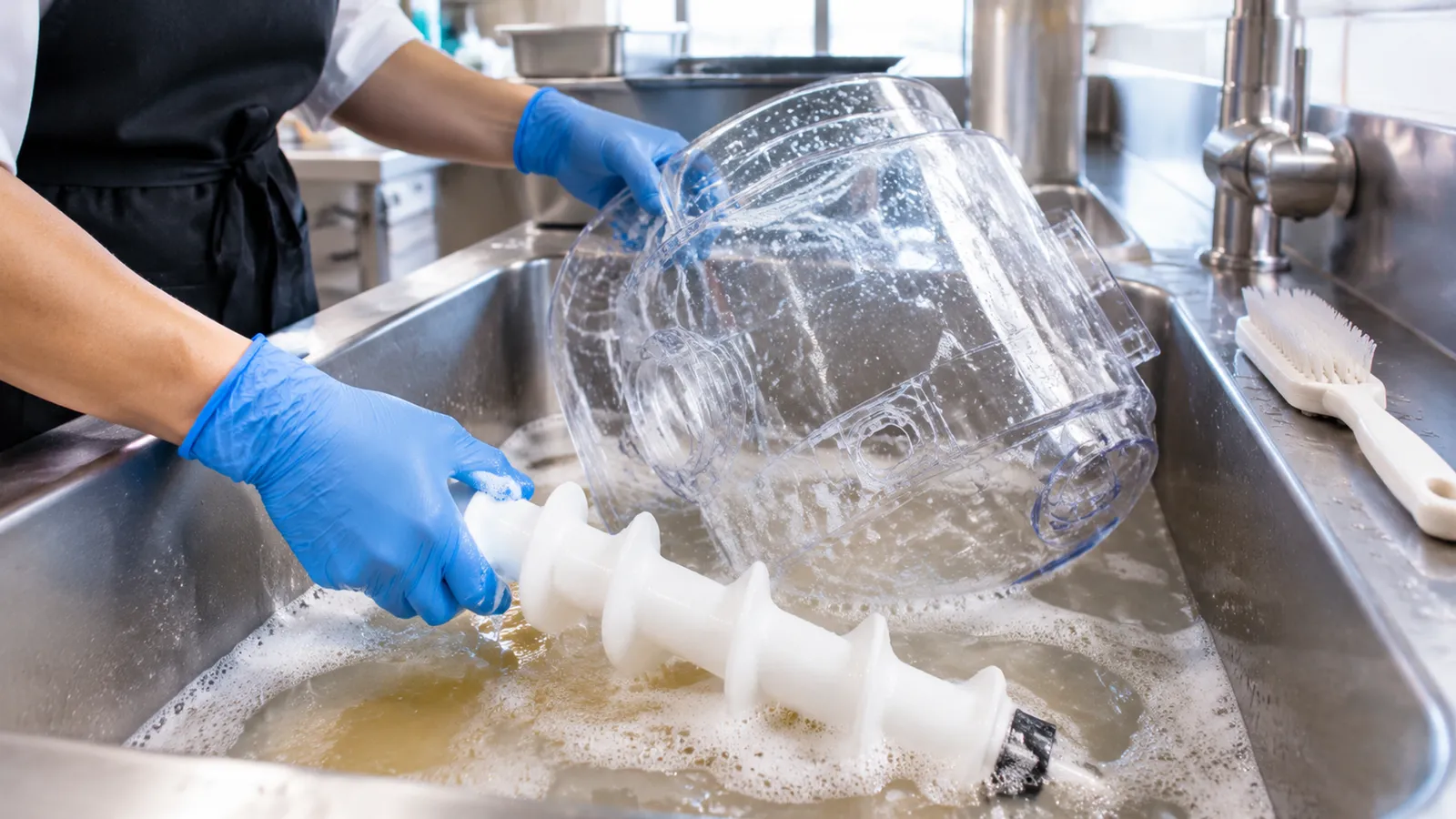
How to clean a slush machine or margarita machine: drain, disassemble, wash, sanitize, lubricate seals and reassemble, plus a weekly routine and log.
Here is how to clean a slush machine in one sentence: drain the product, flush the bowl, take the bowl, auger, seals and dispensing valve apart, then wash, rinse, sanitize and air-dry every part before you lubricate the seals and put it back together. That full routine happens at every close. Once a week, add a deeper check of the auger, the seals and the condenser. The same steps cover how to clean a slushie machine or a margarita machine, with a few extra precautions after alcohol and dairy mixes. Below you will find both routines, a cleaning log and the mistakes behind most sticky taps and leaks.
Part of our commercial slush machine buying guide series.
How often should you clean a slush machine?
Start with the manual. The FDA Food Code 2022, which most state and local health departments adopt in some form, covers beverage dispensing nozzles and enclosed parts of equipment in § 4-602.11(E)(4). They must be cleaned at the frequency the manufacturer specifies or, if the manufacturer is silent, often enough to keep soil and mold from building up. The same section requires cleaning at any time contamination may have occurred. For most operators, the manual is the standard an inspector will check against.
Smartool’s slushy machine maintenance guide sets a practical baseline for its machines: daily cleaning after each use or before closing, a deep clean weekly or every two weeks depending on use, and a full clean, dry and lubrication before any storage of a month or more. Model-specific details live in that guide and your manual; the steps below apply to pour-over slush machines in general.
| Job | What it covers | When |
|---|---|---|
| Daily clean and sanitize | Drain, flush, disassemble bowl, auger, valve and seals, wash, rinse, sanitize, air-dry, reassemble | Every close, and whenever contamination may have occurred |
| Flavor change clean | Same as the daily clean for the bowl being changed | Before a new flavor goes in, and always between a dairy or alcohol mix and a different product |
| Weekly deep maintenance | Inspect auger for wear, check seals for cracks, brush and vacuum the condenser | Weekly or every two weeks, depending on use |
| Storage prep | Full clean, complete drying, light lubrication of shaft and seals, dust cover | Before storage of a month or more |
What you need before you start
- A food-grade neutral detergent and warm water for washing parts.
- A food-contact sanitizer mixed to the concentration on its label, plus test strips for that sanitizer.
- Soft brushes and cloths: a small valve brush and a bottle brush for the tap and auger. No steel wool or scouring pads.
- Food-grade lubricant of the type your manual names for seals and O-rings.
- A clean drying rack or sanitized sheet pan where parts can air-dry without touching the floor.
- A bucket or container for draining product, gloves, and the cleaning log.
How to clean a slush machine: the daily routine
Use this order at close. Where your manual gives a different sequence, dose or time, follow the manual.
- Empty the bowl. Switch off cooling and dispense or drain the remaining product into a container. Discard it rather than saving it for the next day in an unlabeled pitcher.
- Flush with warm water. Smartool’s guide calls for filling the bowl with warm water, about 40–50 °C (104–122 °F), with a small amount of neutral detergent, then running the auger for 1–2 minutes before draining. Repeat with clean water once or twice until the water runs clear. If your machine has a cleaning mode, this is the step it is built for.
- Power off, unplug and disassemble. Remove the lid, the bowl (hopper), the dispensing valve and the auger. Pull the seals and O-rings that the manual says are operator-removable, and slide out the drip tray. Lay the parts out in order so reassembly is quick.
- Wash every part. Use warm water, neutral detergent and a soft cloth or brush. Spend the most time on the inside of the dispensing valve and its crevices, where syrup hardens first. Sweeter or pulpier drinks, like some of our slushie machine recipes, leave more residue here. Brush along the auger flights and around the shaft end.
- Rinse. Rinse each part in clean water until no detergent remains. Sanitizer works on clean surfaces, not on a film of soap or sugar.
- Sanitize. Immerse or wipe the parts with sanitizer at label strength and leave it for the full contact time. Wipe the fixed freezing cylinder and bowl seat with sanitizer too. Food Code § 4-702.11 requires food-contact surfaces to be sanitized after cleaning and before use.
- Air-dry. Let the parts drain and dry on the rack. Food Code § 4-901.11 says cleaned and sanitized equipment should be air-dried and not cloth-dried, so skip the towel.
- Clean the outside. Wipe the housing, lid and control panel with a damp cloth. Empty, wash and dry the drip tray. Never hose or splash the machine body, which risks an electrical short.
- Lubricate and reassemble. Apply a thin film of food-grade lubricant only where the manual specifies, usually the seals and the auger shaft seal. Seat each seal fully, without twists, then refit the auger, bowl and valve.
- Sanitize before the next fill. Whether you reassemble at close or before opening, run a final sanitizer step right before the first batch goes in. Smartool’s guide describes adding diluted food-grade sanitizer, running the machine for about a minute, then draining. Follow the sanitizer label on whether a rinse is needed. Record the clean in the log.

Where a one-touch cleaning mode fits
Some machines include a cleaning function. The RLC18-1 single-tank slushie machine and the RL18-3 three-cylinder slushy machine both list one-touch cleaning, and the RLC18-1 adds a removable drip tray with a red full-tray warning button. Use the mode for the flush steps as the manual describes. It does not take the valve apart or reach the seals, so the daily disassembly still happens.
Weekly slush machine maintenance
The daily clean keeps product safe. The weekly check keeps the machine freezing properly. Smartool’s maintenance guide lists three jobs, done weekly or every two weeks depending on how hard the machine works:
- Auger inspection: look for wear, deformation or looseness, and remove anything tangled around it. A worn auger mixes and cools less efficiently.
- Seal inspection: check the seals at the bowl connection and the dispensing valve for aging, cracks or deformation. Replace damaged seals promptly, since they cause leaks and can reduce cooling.
- Condenser cleaning: with the power disconnected, brush dust off the condenser fins with a soft brush and vacuum it away. A dedicated condenser cleaner handles grease. Work gently, because the fins bend easily.
A dusty condenser is one of the most common reasons a machine stops freezing well. If product stays runny after a clean, or a bowl leaks after reassembly, our slush machine troubleshooting guide sorts the causes by symptom.
Cleaning after alcohol or dairy-based mixes
How to clean a margarita machine
A margarita machine gets the same daily routine, with more attention to the valve. Citrus and sugar leave a sticky residue that hardens in the tap and around the valve O-rings overnight. The alcohol in a frozen batch is far too dilute to act as a sanitizer, so it does not shorten any step. Two habits matter most:
- Start each batch in a clean bowl. Topping up an old cocktail batch with a new one blurs the batch date and time, which some states require on the label. For filling, freeze time and refill steps, see how to use a slush machine.
- Clean the bowl fully before switching it to a non-alcoholic flavor, so a kids’ slush never picks up cocktail residue.
Batch strength, labeling and state liquor rules are covered in our commercial margarita machine guide.
After milkshake, frappé or other dairy mixes
First, confirm that the machine is meant for dairy at all. Smartool’s RL18-series product pages list slushies, cider slushes, margaritas and frozen cocktails as intended drinks, not milk-based products, so ask the manufacturer before you pour a dairy base into any slush machine.
Milk-based mixes are usually time/temperature control for safety (TCS) food. Under Food Code § 4-602.11(C), equipment food-contact surfaces used with TCS food must be cleaned at least every 4 hours through the day, unless one of the exceptions in paragraph (D) applies, such as a cleaning schedule your health department has approved. Ask the local inspector which rule they apply to dairy in a frozen drink machine before you add it to the menu. Clean the bowl fully before it goes back to a non-dairy flavor, because leftover milk residue is a problem for guests with a milk allergy.
Lubricating seals the right way
Seals and O-rings need a light film of lubricant to seat properly and to keep from drying out. Too little and the bowl or valve leaks; too much and the excess ends up in the product. Food Code § 7-205.11 requires lubricants used on food-contact surfaces, or on parts where they could drip into food, to meet 21 CFR 178.3570, the federal rule for lubricants with incidental food contact. In practice, buy the food-grade lubricant your manual names and keep it apart from general-purpose grease.
When you replace a worn seal, Smartool’s troubleshooting reference recommends a small amount of food-grade silicone grease on the new ring. Before storing a machine for a month or more, its maintenance guide calls for a light coat on the auger shaft and seals to keep the rubber from aging.
Slush machine cleaning schedule and log
A written schedule keeps cleaning from depending on who closes. Adjust the intervals to your manual and post the table beside the machine.
| Task | Frequency | Who | Done when |
|---|---|---|---|
| Empty drip tray and wipe exterior | Every shift and at close | Counter staff | Tray empty, no sticky spots on handle or panel |
| Drain, flush, disassemble, wash, rinse, sanitize, air-dry | Daily at close | Closing staff | All parts on the rack, sanitizer contact time met |
| Lubricate seals and reassemble | Daily, at close or before opening | Closing or opening staff | Seals seated flat, no twists |
| Sanitizer run before first fill | Before each first batch | Opening staff | Sanitizer drained per label |
| Full clean between flavors | Every flavor change | Shift lead | Bowl, auger and valve cleaned before new mix goes in |
| Inspect auger and seals | Weekly or every two weeks | Shift lead | No cracks, deformation or looseness; worn parts ordered |
| Brush and vacuum condenser (power off) | Weekly or every two weeks | Trained staff | Fins visibly clear and straight |
Keep a running log next to the schedule. One line per clean is enough:
| Date | Bowl or flavor | Task | Sanitizer and test reading | Initials | Notes (worn seals, leaks, follow-up) |
|---|---|---|---|---|---|
Common slush machine cleaning mistakes
- Running the flush and calling it clean. Swirling water through the bowl does not reach the inside of the valve or the seal grooves. Disassemble daily.
- Using abrasive pads. Steel wool and scouring pads scratch the bowl and valve, leaving grooves where residue and bacteria hold on.
- Sanitizing over soil. Sanitizer poured onto a sugary film treats the film. Wash and rinse first.
- Guessing the sanitizer dilution. Too weak does not sanitize; too strong can leave residue and a taste. Mix to the label and check with test strips.
- Towel-drying parts. A towel puts back what the sanitizer removed. Air-dry on a clean rack.
- Using the wrong grease, or too much of it. Only food-grade lubricant, only a thin film, only where the manual says.
- Twisting a seal on reassembly. A rolled or pinched seal is a leak waiting for the next rush. Seat seals flat before tightening anything.
Slush machine cleaning questions
How often should a slush machine be cleaned?
At the frequency in the manufacturer’s manual, which for most pour-over machines means a full disassembly and clean every day at close, plus a weekly or biweekly deep check. Clean sooner whenever contamination may have occurred, and every 4 hours for dairy mixes unless your health department approves a different schedule.
What should I use as a slush machine cleaner and sanitizer?
A food-grade neutral detergent for washing, then a sanitizer labeled for food-contact surfaces, mixed to label strength. Use the products your manual names where it names them. Household cleaners and abrasive powders do not belong in the bowl.
Is a self-cleaning slushie machine really self-cleaning?
Not completely. A cleaning mode handles the flush with water and detergent. The valve, auger, seals and drip tray still come off for washing, sanitizing and air-drying.
How do I clean the shaft in a slush machine?
Remove the auger, then wipe the drive shaft and its seal area with warm detergent solution and a soft brush, rinse, and sanitize. Check the shaft seal for wear, apply a thin film of food-grade lubricant if the manual calls for it, and refit the auger so it seats fully on the shaft.
If your current machine takes longer to strip down than your closing crew has, compare models with one-touch cleaning in the Smartool slushy machine range. For multi-unit orders, see our factory-direct slushy machines program, or tell us your flavors and daily volume to request a factory-direct quote.
Factory-direct from Smartool
Planning a commercial equipment purchase?
Share your site conditions, daily output and budget. Our team will match a model, send the spec sheets and quote factory-direct pricing.

Written by
Senior Engineer, Smartool
Jason is a senior engineer at Smartool. He works on the commercial ice machines, soft serve and slushy machines, and refrigerated prep tables Smartool builds for restaurants, bars, hotels and dessert shops. His guides look at equipment from the engineering side: how to size a machine for a site, what it needs for power, water and airflow, and how to keep it running through busy service. He also helps buyers match the right model to their kitchen before they request a quote.
.elementor-76528 .elementor-element.elementor-element-5c7a0d0{--display:flex;--flex-direction:column;--container-widget-width:100%;--container-widget-height:initial;--container-widget-flex-grow:0;--container-widget-align-self:initial;--flex-wrap-mobile:wrap;}.elementor-76528 .elementor-element.elementor-element-5c7a0d1 .elementor-toc__header-title{text-align:start;}.elementor-76528 .elementor-element.elementor-element-5c7a0d1 .elementor-toc__header{flex-direction:row;}.elementor-76528 .elementor-element.elementor-element-5c7a0d1{--item-text-hover-decoration:underline;}
On this page
Need pricing for your project?
Get a factory-direct quote on commercial ice makers, soft serve and slushy machines, and refrigerated prep tables.
✓ Model matching and spec sheets for your site
✓ US office in City of Industry, CA
✓ Talk to an expert: +1 (872) 221-0051
Browse by topic
Ice Machine Guides
Soft Serve & Ice Cream
Slushy & Frozen Drinks
Buying & Sourcing
Compliance & Maintenance
Related posts

Ice Machine Freezing Up? Causes, Safe Checks and Fixes
Ice machine freezing up? Learn the six common causes, what staff can safely check, what needs a technician, and how to prevent repeat freeze-ups.

How to Use a Margarita Machine or Slush Machine
How to use a margarita machine or slush machine: setup, mixing and filling, freeze time, consistency, dispensing, refills and the closing routine.