




Blog
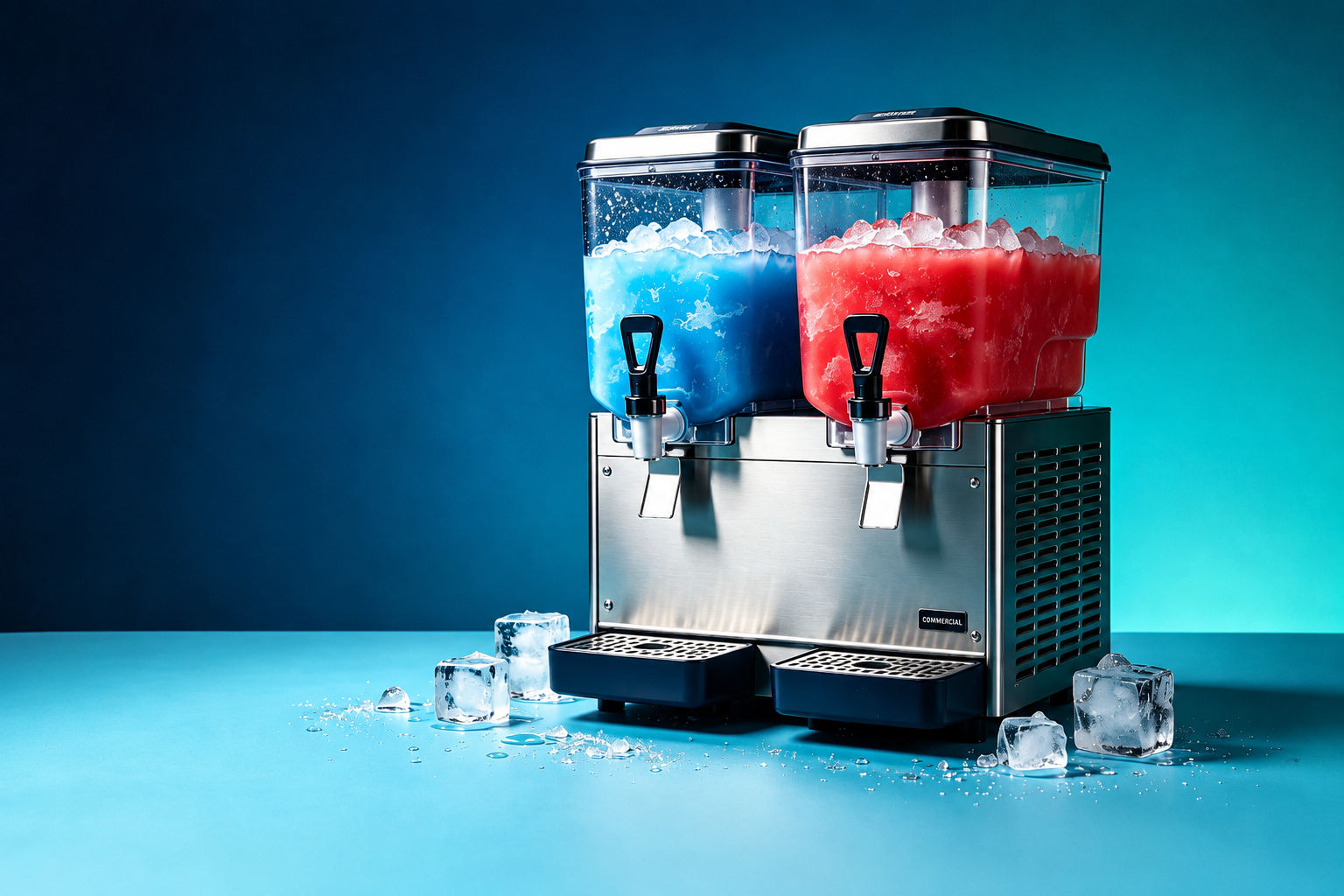
A commercial margarita machine is a refrigerated frozen drink dispenser. It freezes a batch of cocktail mix and holds it at a soft, pourable texture for hours, so bartenders can pull a consistent frozen margarita in seconds instead of running a blender for every order. Choosing one for a bar or restaurant comes down to four things: how the alcohol and sugar in your recipe affect freezing, how many drinks you pour in the busiest hour, how the machine is cleaned, and what your state’s liquor rules say about batching cocktails before service.
How a Commercial Margarita Machine Differs From a Blender
A blender station builds each drink from ice, spirit and mix. Dilution changes with the ice, the noise carries across the bar, and every drink costs a bartender a minute. A frozen drink machine moves that work to prep time. The batch is mixed once, poured into a clear tank, and frozen against a refrigerated cylinder while an auger keeps the ice crystals small. Every pull then comes out at the same strength and texture.
The trade-offs are just as real. You cannot adjust strength drink by drink, a badly mixed batch affects every glass until the tank is drained, and the machine has to be cleaned on a schedule. A machine pays off when frozen drinks are a steady seller, not an occasional request.
Why Alcohol and Sugar Change the Freeze
Alcohol Lowers the Freezing Point
Water freezes at 0 °C (32 °F), and ethanol freezes at a far lower temperature. Mixed together, the blend freezes somewhere in between, depending on alcohol content. The University of Illinois Physics Van explanation of freezing wine notes that the alcohol in wine alone pulls its freezing point from 0 °C to about -6 °C. A stronger batch has to be chilled further before crystals form, and past a certain strength it stays liquid however long the machine runs. That is why frozen margarita recipes use more mix and water than a shaken margarita.
Sugar Sets the Texture
Dissolved sugar also keeps the batch from freezing hard. With too little sugar the product turns icy and strains the auger. With too much it stays soft and runny. Sugar content is measured in degrees Brix, and a refractometer reads a sample in seconds. Washington State University’s refractometer instructions cover the technique. Use the Brix range your mix manufacturer or machine manual specifies, write each reading on the batch label, and treat readings from batches that set well as your house standard.
Batch Strength Worksheet
Knowing the alcohol content of your batch keeps pours consistent across shifts. It also gives you a concrete number to discuss with your supplier if a new recipe will not set. Here is an example one-gallon batch:
| Ingredient | Volume | ABV | Pure alcohol |
|---|---|---|---|
| Tequila | 24 fl oz | 40% | 9.6 fl oz |
| Orange liqueur (use the ABV on your label) | 8 fl oz | 30% | 2.4 fl oz |
| Margarita mix and water | 96 fl oz | 0% | 0 fl oz |
| Total batch | 128 fl oz (1 gal) | 9.4% | 12.0 fl oz |
A 12 oz frozen margarita from this batch contains about 1.1 fl oz of pure alcohol. The NIAAA definition of a US standard drink is 0.6 fl oz of pure alcohol, so each cup pours just under two standard drinks. Rerun the math whenever you change a spirit, a liqueur or a cup size.
Sizing a Commercial Margarita Machine for Your Bar’s Peak
A margarita machine serves from frozen inventory. What sits frozen in the tank when happy hour starts is what you can sell before a refill has time to set. Size the machine to the busiest two hours of the week, not to average nightly sales. The same method appears in our commercial slush machine buying guide.
| Smartool model | Tanks | Frozen inventory at full fill | 12 oz drinks per full load | 16 oz drinks per full load |
|---|---|---|---|---|
| RLC18-1 | 1 × 16.5 L | 558 fl oz | 46 | 34 |
| RL18-2 | 2 × 4.7 gal | 1,203 fl oz | 100 | 75 |
| RL18-3 | 3 × 16.5 L | 1,674 fl oz | 139 | 104 |
Worked example: a restaurant bar sells 60 frozen margaritas in 12 oz glasses over a two-hour happy hour, or 720 fl oz. A dual-tank machine holds 1,203 fl oz in total. If one tank runs a non-alcoholic strawberry slush, though, the margarita tank holds only about 601 fl oz, roughly 50 drinks and 10 short. The fixes are to run margaritas in both tanks, or to move to a three-tank machine with margaritas in two tanks and the mocktail in the third. Our double vs triple tank comparison walks through the same trade-off.
A frozen program still needs ice for rocks margaritas, blended specials and everything else the bar serves. Size ice production separately with our bar ice machine sizing guide.
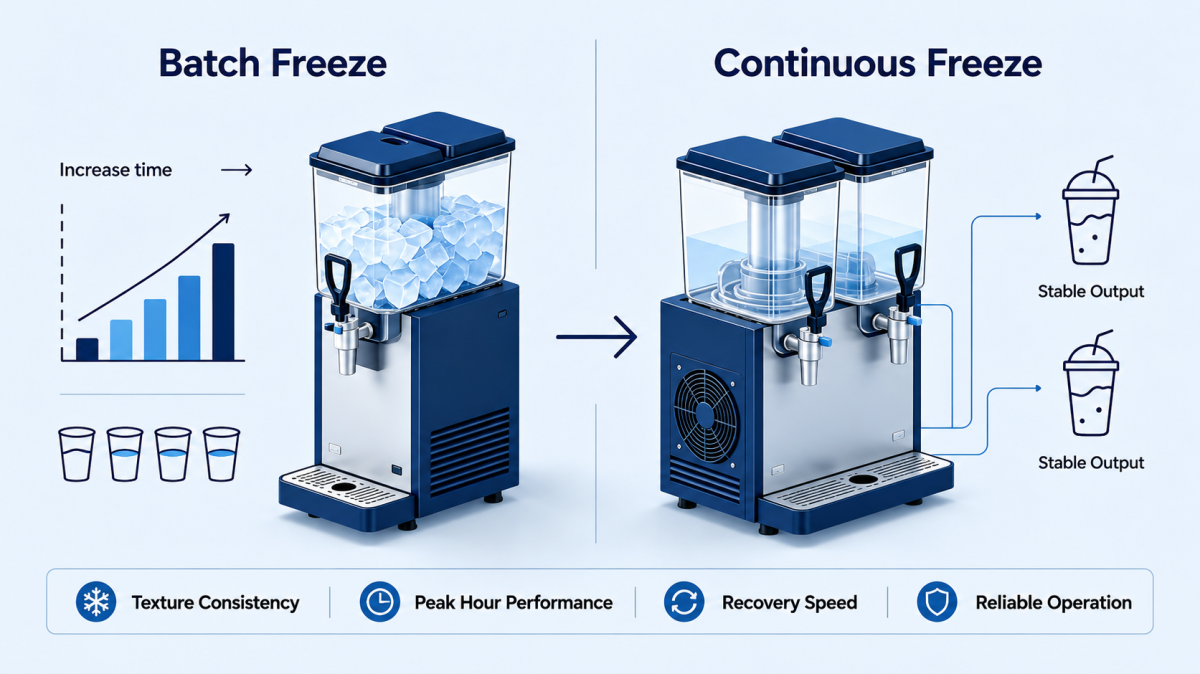
Features That Matter for Frozen Cocktail Service
| Feature | Why it matters for margaritas | What to check |
|---|---|---|
| Compressor cooling capacity | Alcohol batches need colder product, and cooling reserve protects texture through a rush | Cooling capacity in watts, listed separately from rated power |
| Per-tank temperature control | A cocktail tank and a non-alcoholic tank set up differently | Independent controls for each tank |
| First-batch time | Sets how early the machine must start before opening | Minutes from room-temperature mix to serving texture |
| Ambient rating | Patios and outdoor bars run hot in summer | Operating room temperature range |
| Noise | Guests and bartenders talk over it all night | dB rating |
| Drip tray and valve design | Sugary citrus drips attract pests and gum up taps | Removable tray, full-tray indicator, tool-free valve disassembly |
| Merchandising | A visible, colorful product sells frozen drinks on its own | Lit tanks or a light box |
| Electrical draw | Bars already run several compressors and blenders | Rated current compared with the available circuit |
Cleaning a Margarita Machine Between Batches
Citrus acid and sugar leave residue in dispensing valves quickly. The FDA Food Code, adopted in some form by most state and local health departments, links cleaning frequency for beverage dispensing components to the manufacturer’s instructions. The cleaning section of your machine’s manual is therefore what an inspector will check against.
A typical closing routine for a pour-over frozen drink machine:
- Switch the machine off, unplug it and drain the remaining product.
- Remove the hopper, dispensing valve and agitator.
- Wash the parts in warm water with a food-grade neutral detergent, using soft cloths rather than abrasive pads.
- Rinse, sanitize with a food-grade sanitizer diluted to its label directions, and air dry.
- Reassemble with seals seated correctly, lubricating only where the manual specifies.
Never top up an old batch with a new one. Start each batch in a clean tank so the date and time on its label mean something. Smartool’s slushy machine maintenance guide adds weekly condenser cleaning and steps for seasonal storage.
Liquor Rules That Affect Frozen Drink Machines
A cocktail batched in a machine can count as a premixed drink under state law, and some states write rules specifically for frozen drink machines. Two examples show how specific the requirements can get:
- Iowa: the Iowa Department of Revenue rules for premixed drinks require each batch container to carry a label with the date and time the batch was mixed and the words “CONTAINS ALCOHOL.” Batch records must be kept for three years.
- Louisiana: the state’s package-store permit regulation on batch freezer machines requires frozen specialty drinks to be dispensed from batch freezers into lidded containers. No alcohol may be added once a batch is in the machine.
Rules on batching, labeling, to-go frozen drinks and machine placement differ by state and sometimes by city. Confirm the requirements with your state alcoholic beverage control agency and local health department before the first batch goes in.
Smartool Frozen Drink Machines for Margarita Programs
Smartool’s pour-over frozen drink machines run on standard 110–120 V service, and all three include margaritas or frozen cocktails among their intended drinks. You can compare them in the Smartool commercial slushy machine range.
The RL18-2 dual-tank frozen drink maker pairs two 4.7-gallon tanks at 860 W on 110 V, with LED-lit tanks and a drip tray alert. Smartool builds it for mobile bars, restaurants and events, and it fits the one-margarita, one-mocktail setup.
The RL18-3 three-cylinder slushy machine is the bar-volume option. Its three 16.5 L tanks each have independent electronic temperature control, backed by 1,111 W of compressor cooling capacity, and it is rated at ≤ 65 dB. It draws 14.5 A at 1,500 W, so plan a dedicated 20 A circuit.
For a single house frozen margarita, the RLC18-1 single-tank slushie machine holds 16.5 L and draws 5.3 A at 500 W. Restaurant groups and distributors equipping several locations can use the factory-direct frozen drink machine program for multi-unit pricing.
Commercial Margarita Machine Questions
Can any slush machine make frozen margaritas?
No. Use a machine whose manufacturer lists alcoholic drinks as an intended use, and keep batch strength within what its cooling system can freeze. A batch that is too strong stays liquid.
How early should I start the machine before service?
Allow at least the listed first-batch time plus a margin. Smartool lists 40–60 minutes for its single-tank model and 50–75 minutes for its three-tank model, starting from room-temperature mix. Pre-chilled batches set faster.
What causes a frozen margarita to come out runny?
Usually the batch is too strong or too sweet for the setting, the tank was refilled warm in the middle of a rush, or the condenser cannot shed heat in a hot room. Check the batch math and Brix first, then look at airflow around the machine.
Do I need approval to batch frozen cocktails?
It depends on your state. Some states treat machine batches as premixed drinks with labeling and record-keeping rules, and others restrict how frozen drinks can be sold to go. Your state liquor agency is the authority.
Plan Your Frozen Margarita Program With Smartool
Tell us your busiest-hour drink count, glass size, how many frozen drinks you want on the menu and the circuit behind the bar, and we will match a machine to it. Request a commercial margarita machine quote.
Related posts
Are Ice Cream Vending Machines Profitable? Cost & Payback
Work out ice cream vending machine profit cup by cup: mix cost, commission, card fees, power, labor, permits and the daily sales needed to pay back the machine.
Modular Ice Machine vs Undercounter: Which Setup Fits?
Compare modular ice machines, undercounter ice makers and countertop dispensers on height, airflow, drains, bins and cost, with a site decision matrix.
One thought on “Commercial Margarita Machine Guide for Bars and Restaurants”
Comments are closed.