




Blog
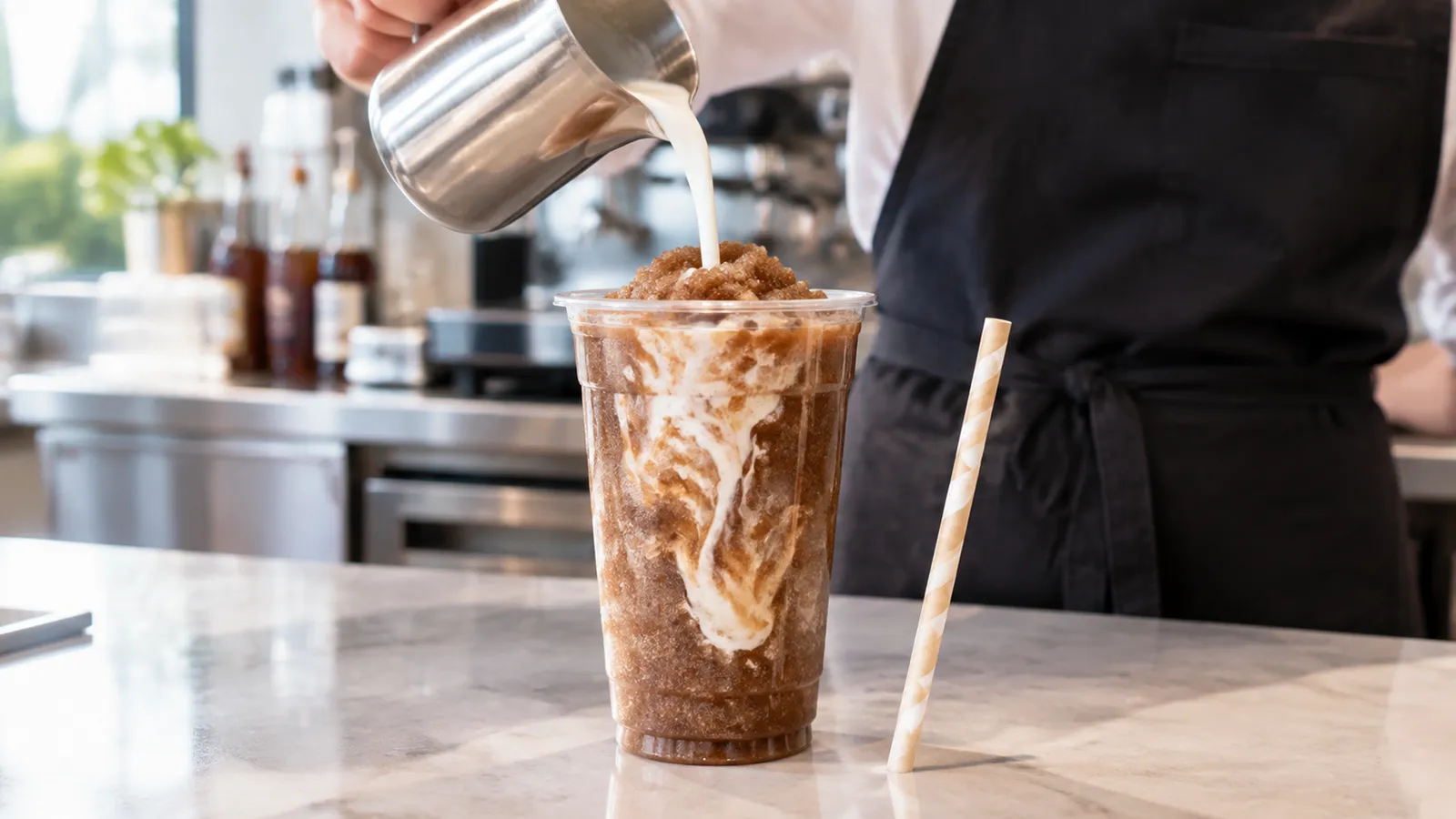
Slushie machine milkshake recipe: why dairy stays out of the bowl, five shake-style bases with milk or soft serve added at the cup, and when to switch.
A commercial slushie machine cannot make a true milkshake, and most are not built to hold milk in the bowl at all. What works in a café or snack bar is a slushie machine milkshake recipe that keeps the dairy out of the machine: freeze a flavored, dairy-free base in the slush bowl, then add cold milk or a swirl of soft serve at the cup. You get a thick, shake-style drink from the slush machine you already own, without putting a perishable dairy mix in a machine that was not designed for it. This guide explains why, gives five bases with cup builds, and shows when a real milkshake needs different equipment.
Part of our commercial slush machine buying guide series.
Slush vs milkshake: what the machine actually makes
A pour-over slush machine chills a liquid against a refrigerated cylinder while an auger scrapes off thin ice crystals. Sugar in the mix keeps some liquid between those crystals, so the drink stays pourable. The result is flavored ice in syrup.
A milkshake starts from ice cream, a frozen dairy food with fat, milk solids and air whipped into it. Federal rules set the bar for what counts as ice cream: under 21 CFR 135.110, it must contain at least 10% milkfat and weigh at least 4.5 pounds per gallon. A slush machine does not build that kind of fat-and-air structure. Even a milk-based mix frozen in a slush bowl comes out as icy milk, not a shake.
Many searches for milkshakes in a slushie machine come from small home countertop frozen drink makers, some of which ship with a milkshake setting. Those are consumer appliances with their own instructions. In a commercial pour-over machine, the manufacturer’s list of approved products is what counts.
Why dairy stays out of a commercial slush bowl
- The manufacturer has to approve it. Smartool’s slush machine pages list what each model is for. The RL18-2 dual-tank slushy machine, for example, lists “slushies, cider slushes, margaritas, frozen cocktails.” None of the three Smartool slush models lists milk, milkshake or other dairy products.
- Milk is a time and temperature controlled food. The FDA Food Code requires cold-held foods like milk to stay at 5 °C (41 °F) or below, and pairs that with tighter cleaning expectations for equipment in contact with them. A bowl that warms during refills, sits through a slow afternoon or runs on a holding cycle overnight is hard to defend to an inspector.
- Dairy films and cleaning. Milk fat and protein cling to bowls, augers, seals and valves. Our buying guide notes that milk-based bases need more frequent full cleaning than fruit slush, and a missed seal is where off-flavors and leaks start.
- Allergen carryover. Once milk has been in a bowl, every flavor that follows in that bowl is a cross-contact risk until the parts are fully cleaned.
None of this means you cannot sell a creamy frozen drink from a slush program. It means the dairy goes in at the cup.
The build-at-the-cup slushie machine milkshake recipe
The method has two parts. First, freeze a dairy-free base in the slush machine using the same sugar rules as any slush. Second, finish each drink at the counter with cold milk, a plant-based milk or a swirl of soft serve.
Step 1: freeze the base
Use a house syrup made from equal weights of sugar and water (about 50 Brix). Three parts of that syrup to seven parts unsweetened liquid by weight comes out near 15 Brix, inside the 12–18 Brix range in Smartool’s slush machine troubleshooting guide. Our slushie machine recipes explain the Brix method and how to correct a batch.
Aim the base slightly sweeter and stronger in flavor than you would serve it on its own. Milk added at the cup dilutes both.
Step 2: finish at the cup
- Shake-style: about 3 parts slush to 1 part cold whole milk, stirred with a long spoon. Less milk keeps it thicker; more turns it into a frozen latte texture.
- Float: fill the cup about two-thirds with slush and top with a scoop of ice cream or a swirl of soft serve.
- Layered: soft serve in the bottom third, slush poured over it, served with a spoon-straw.
Five milkshake-style bases for a slush machine
All ratios are parts by weight and aim for about 15 Brix. Flavorings and fruit vary, so read each new batch with a refractometer before it goes in the bowl.
| Shake-style drink | Base in the slush bowl (by weight) | Finish at the cup |
|---|---|---|
| Vanilla shake-style slush | 3 house syrup : 7 water, with vanilla extract to taste | 3 parts slush : 1 part cold whole milk, or topped with vanilla soft serve |
| Chocolate shake-style slush | 3 cocoa syrup : 7 water (whisk unsweetened cocoa into the warm syrup and strain it fine) | 3 parts slush : 1 part cold milk; a pinch of salt in the syrup rounds the chocolate |
| Coffee frappé-style | 3 house syrup : 7 cold brew at drinking strength | Cold milk or half-and-half at the cup, never in the bowl |
| Strawberry shake-style | 1 house syrup : 5 strained strawberry purée | Vanilla soft serve layered underneath |
| Orange cream | 1 house syrup : 11 pulp-free orange juice | A swirl of vanilla soft serve on top |
Cocoa adds solids that are not sugar, so the chocolate base can read slightly higher on a refractometer than its sugar content alone; judge the first batch by texture as well as the reading, and strain it well so particles do not settle at the tap. The strawberry and orange ratios match the fruit slush ratios in our recipes guide, so you can run one batch for both a straight slush and its cream version.

Handling the dairy you add at the cup
- Keep milk cold: hold it in a reach-in at 41 °F or below, and pour from a small pitcher you return to the fridge between orders. A carton left beside the slush machine through the rush is the most common slip.
- Use soft serve from its own machine: a soft serve freezer is built to hold dairy mix at temperature and has its own cleaning routine.
- Plant-based milks: oat, soy and coconut milks work the same way at the cup. Once opened, most need refrigeration, so treat them like dairy on the line.
- Label the menu: say plainly which drinks contain milk, and keep the slush bowl itself dairy-free so guests who skip the milk can still order the base.
Because the bowl only ever holds a sugar-and-flavor base, your normal slush routine still applies. Our guide on how to clean a slush machine covers the daily drain, wash and sanitize steps.
Naming it on the menu
Call these drinks what they are: “cream slush,” “slush float” or “shake-style slush.” A guest who orders a “milkshake” expects the thick, smooth body of blended ice cream, and a slush with milk stirred in has a lighter, icier texture. Honest names set the right expectation and avoid refunds. They also let you price the cream versions a step above the plain slush, since the milk or soft serve is an added cost per cup that you can work out from your own supplier prices.
When you need a real milkshake machine
If shakes are a core menu item rather than a seasonal special, plan for equipment built around dairy. The usual setup is a soft serve machine plus a spindle mixer: pull soft serve into a cup, add milk and flavor, and spin.
| Approach | What it makes | Dairy in the machine? | Best fit |
|---|---|---|---|
| Slush machine + milk at the cup | Shake-style slush, floats, frappé-style coffee | No | Cafés and snack bars adding a creamy option to an existing slush menu |
| Soft serve machine + spindle mixer | Classic milkshakes, cones, sundaes | Yes, in a machine designed for it | Dessert shops, burger counters, any menu where shakes sell daily |
| Blender station | Shakes from scooped ice cream | No machine holding product | Low volume, where labor per drink is acceptable |
A soft serve machine also covers the floats and layered drinks above, so the two machines work together. Mix choice drives shake texture; Smartool’s soft serve mix selection guide covers powder and liquid mixes. You can browse Smartool’s soft serve and ice cream machines alongside the Smartool slushy machine range to plan both.
Slushie machine milkshake FAQs
Can you put milk in a slushie machine?
Only if the manufacturer says the machine is intended for dairy. Smartool’s slush machine pages list slushies, cider slushes, margaritas and frozen cocktails, not milk. Add milk at the cup instead.
How do you make a milkshake in a slushie machine?
Freeze a dairy-free vanilla, chocolate or fruit base at about 15 Brix, then stir in roughly 1 part cold milk to 3 parts slush at the cup, or top it with soft serve. That gives a thick, shake-style drink without dairy in the bowl.
Can you make ice cream in a slushie machine?
No. Ice cream needs milkfat, milk solids and whipped-in air, which a slush machine does not create. Use a soft serve or batch freezer built for dairy mix.
How do you make a frappé in a slushie machine?
Freeze a sweetened cold brew base (3 parts house syrup to 7 parts cold brew by weight), pour it into the cup, and add cold milk or cream on top. Keeping the milk out of the bowl keeps the machine on its normal cleaning routine.
Adding creamy drinks to a slush menu, or planning shakes and slush across several locations? See our factory-direct slushy machines program, then request a factory-direct quote with your menu and daily cup count.
Factory-direct from Smartool
Planning a commercial equipment purchase?
Share your site conditions, daily output and budget. Our team will match a model, send the spec sheets and quote factory-direct pricing.

Written by
Senior Engineer, Smartool
Jason is a senior engineer at Smartool. He works on the commercial ice machines, soft serve and slushy machines, and refrigerated prep tables Smartool builds for restaurants, bars, hotels and dessert shops. His guides look at equipment from the engineering side: how to size a machine for a site, what it needs for power, water and airflow, and how to keep it running through busy service. He also helps buyers match the right model to their kitchen before they request a quote.
.elementor-76528 .elementor-element.elementor-element-5c7a0d0{--display:flex;--flex-direction:column;--container-widget-width:100%;--container-widget-height:initial;--container-widget-flex-grow:0;--container-widget-align-self:initial;--flex-wrap-mobile:wrap;}.elementor-76528 .elementor-element.elementor-element-5c7a0d1 .elementor-toc__header-title{text-align:start;}.elementor-76528 .elementor-element.elementor-element-5c7a0d1 .elementor-toc__header{flex-direction:row;}.elementor-76528 .elementor-element.elementor-element-5c7a0d1{--item-text-hover-decoration:underline;}
On this page
Need pricing for your project?
Get a factory-direct quote on commercial ice makers, soft serve and slushy machines, and refrigerated prep tables.
✓ Model matching and spec sheets for your site
✓ US office in City of Industry, CA
✓ Talk to an expert: +1 (872) 221-0051
Browse by topic
Ice Machine Guides
Soft Serve & Ice Cream
Slushy & Frozen Drinks
Buying & Sourcing
Compliance & Maintenance
Related posts

Can You Make Milkshakes in a Slushie Machine?
Slushie machine milkshake recipe: why dairy stays out of the bowl, five shake-style bases with milk or soft serve added at the cup, and when to switch.

How Long Does an Ice Machine Take to Make Ice?
A cube ice machine makes a batch in about 10 to 25 minutes, but filling a bin takes hours. See cycle times, refill math and how to time your machine.