




Blog
Refrigerated Prep Table Buying Guide: Sandwich vs Pizza
A refrigerated prep table is a line cooler with a job description: it has to hold every cold ingredient for your menu at a safe temperature, within arm’s reach, on a cutting surface deep enough for the product you build. Most bad purchases come from buying by width and cubic feet alone.
This guide covers how to choose between sandwich, salad, mega-top and pizza configurations, how to read capacity figures so the unit you receive matches the line you planned, and what to check on cold holding, refrigerant, sanitation standards and cleaning before you request quotes.
Sandwich, Mega-Top or Pizza: Matching the Refrigerated Prep Table to Your Menu
All three styles share the same basic layout: a refrigerated pan rail on top, a cutting board in front of it, and a refrigerated cabinet underneath. What changes is the pan size, how many rows of pans sit on the rail, and how much board depth the cook gets. Those three dimensions decide whether a unit speeds up your line or slows it down.
Standard sandwich and salad tops
A standard top usually runs two rows of 1/6-size pans behind a relatively shallow cutting board. That layout suits subs, wraps, breakfast sandwiches and composed salads, where the cook reaches for a small portion of many ingredients and assembles on a narrow footprint. Standard tops are the most common configuration, and they are the easiest to fit under a counter-height line or into a food truck.
Mega-top units for long ingredient lists
A mega-top adds a third (sometimes fourth) row of pans by raising and deepening the rail. The trade is board depth: the extra pans eat into the front work surface. Mega-tops earn their place on build-your-own bowl lines, taco and burrito stations, and delis where the menu carries far more cold ingredients than a standard rail can present. If your cooks are building long subs, check that the remaining board depth still clears the bread.
Pizza prep tables
Pizza tables flip the priorities. They use larger 1/3-size pans for cheese and high-volume toppings, sit the rail higher or further back, and give the cook a much deeper board for stretching and topping a full pie. Because the board is the main work area, pizza units are generally wider and deeper than sandwich units, and they often have drawers or wider cabinets below for dough trays.
| Factor | Standard sandwich/salad top | Mega-top | Pizza prep table |
|---|---|---|---|
| Typical pan size on the rail | 1/6 size | 1/6 size | 1/3 size (some mix in 1/6) |
| Pan rows | 2 | 3–4 | 1–2, raised or recessed rail |
| Cutting board | Shallow | Shallowest of the three | Deep, built for full pies |
| Best menu fit | Subs, wraps, sandwiches, plated salads | Bowls, tacos, burritos, large deli menus | Pizza, flatbreads, calzones |
| Main risk if chosen wrong | Runs out of pan positions | Board too shallow for long bread | Wastes floor space on a sandwich line |
A quick rule: count the cold ingredients a cook touches during one order cycle, then look at the largest product built on the board. The ingredient count points you to standard or mega-top; the product size tells you whether you need pizza-depth board space.
Labeled Capacity vs. What You Can Actually Use
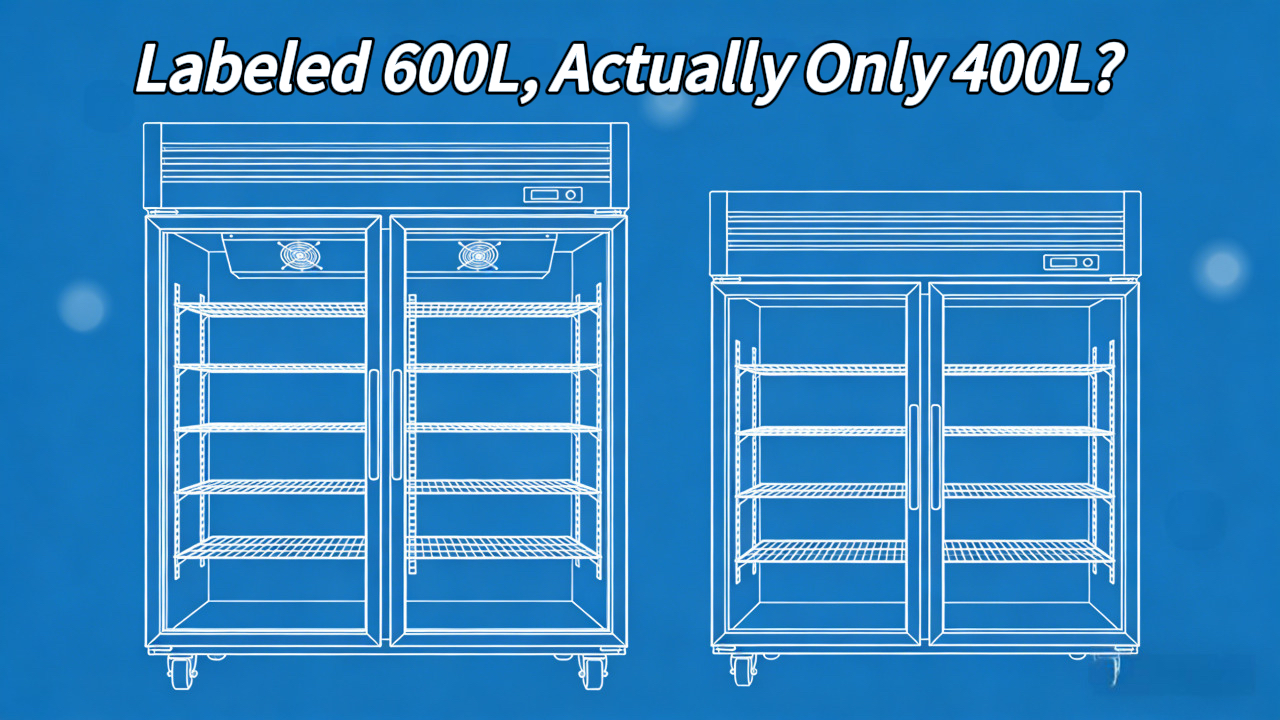
Capacity is where specification sheets and real kitchens drift apart. A buyer sees a large cubic-foot number or a high pan count, orders the unit, and then discovers the pans are smaller than expected, the full-size sheet pans do not fit the cabinet, or the board is too shallow for the product. None of these figures is necessarily wrong. They simply measure different things, and each one needs to be read against your own layout.
Cubic feet measures the cabinet, not the line
The cubic-foot rating describes the refrigerated interior volume. It says nothing about how that space is divided. Evaporator housings, fan guards, shelf clips and door-mounted hardware all occupy part of the volume, and shelf spacing decides whether that space holds tall containers or only low trays. Two units with similar cubic-foot ratings can store very different loads depending on shelf count, shelf load rating and interior width. Ask for interior width, depth and height, and hold your own backup containers up against those numbers.
Pan count means nothing without pan size
“Holds 12 pans” could mean twelve 1/6-size pans or twelve 1/3-size pans, and a 1/3 pan occupies roughly the footprint of two 1/6 pans. Pan depth matters too: a 4-inch-deep pan holds noticeably more than a 2.5-inch pan in the same slot, but it may also sit closer to the lid and warm faster if the rail is overfilled. Confirm the pan size and depth the rail is designed for, whether the pans are included, and whether adapter bars let you mix sizes.
Cutting board depth and rail depth
Overall unit depth is not board depth. On mega-top units in particular, the rail can consume a large share of the top surface. Measure the longest bread, tortilla or pie you build, add room for the cook’s hands and a cutting motion, and compare that with the usable board depth, not the cabinet depth. A removable board also matters for daily sanitation, which is covered below.
Before comparing quotes, request these figures in writing for every unit on the shortlist:
- Interior cabinet dimensions and number of shelves, with the load rating per shelf
- Rail pan count, pan size, pan depth, and whether pans and lids are included
- Usable cutting board depth and board material
- Exterior width, depth and height, including casters and any rear clearance the condenser needs
- Door or drawer configuration and swing direction
- Electrical requirements: voltage, amperage and plug type
These questions belong in any equipment purchase; our commercial kitchen equipment procurement guide covers the wider spec-verification process for refrigeration, ice and frozen dessert equipment.
Sizing Worksheet: From Menu to Pan Layout
Work through the steps below with your own menu before you look at models. The right-hand column shows how the Smartool TSP47FC-2 reads against each step, using its published specifications.
| Step | What to calculate | Your line | TSP47FC-2 reference |
|---|---|---|---|
| 1. Cold ingredients per order cycle | List every chilled item a cook reaches for during service | ___ ingredients | 6 trays on the top |
| 2. Pan size per ingredient | Small-portion items → 1/6; cheese, lettuce, high-volume toppings → 1/3 or two slots | ___ 1/6 slots, ___ 1/3 slots | Ask for tray size and depth on the quote |
| 3. Rail positions needed | Step 2 total, counting a 1/3 pan as two 1/6 positions | ___ positions | 6 positions |
| 4. Backup stock below | Number of refill pans and containers held in the cabinet during a peak period | ___ containers | 15 cu ft cabinet, 2 adjustable shelves |
| 5. Heaviest shelf load | Weight of the densest shelf (sauces, cheese, liquid dressings) | ___ lb | 150 lb (68 kg) per shelf |
| 6. Board depth | Longest product plus working room | ___ in | Full-size cutting board plus removable board included |
| 7. Access | Doors or drawers, swing clearance in the aisle | ___ | Double door, auto-closing, lockable |
| 8. Mobility | Does the unit move for cleaning or layout changes? | Yes / No | Heavy-duty wheels with brakes |
If Step 3 lands well above six positions, look at a wider unit or a mega-top rather than overloading the rail. If Step 3 fits but Step 4 does not, you need more cabinet storage, not more rail. Operators who build out several stations can compare configurations across the full range of commercial refrigerated prep tables before settling on a line layout.
Holding 41°F on the Rail, Not Just in the Cabinet
Sliced tomatoes, cut leafy greens, cooked proteins, dairy and prepared sauces are time/temperature control for safety (TCS) foods. Section 3-501.16 of the FDA Food Code 2022 requires cold-held TCS food to stay at 41°F (5°C) or below. Most US states and local health departments base their retail food rules on a version of the Food Code, so this is the number an inspector’s probe thermometer will be looking for.
The rail is the hardest part of a prep table to keep at that line. Its pans sit open to kitchen air through every service period, the lid is up for hours, and heat from nearby griddles and ovens radiates across the top. A cabinet reading of 38°F does not guarantee the product in the back row of pans is at 41°F. Three habits close that gap:
- Pre-chill ingredients before they go into rail pans; a prep table holds cold food, it is not designed to pull warm food down quickly.
- Do not stack product above the pan rim, where it sits outside the cold air path.
- Close the lid during slow periods and overnight, and probe the product itself, not just the display, at set intervals on your temperature log.
When comparing units, look for a stated operating range whose upper limit does not exceed 41°F, and ask how the rail is cooled. Fan-forced systems move chilled air around the pans; the design and airflow path determine how evenly each row holds.
Refrigerant, Airflow and Clearance on a Busy Line
Many current self-contained prep tables use R-290 (propane). The EPA SNAP listing for stand-alone refrigeration equipment lists R-290 as acceptable subject to use conditions and classifies it A3, the higher-flammability safety class. For an operator, that has two practical meanings: R-290 has a very low global warming potential, and any sealed-system service must be done by a technician trained and equipped for hydrocarbon refrigerants. Staff should never open panels to reach the refrigeration system.
Airflow is the other half of cooling performance. The condensing unit rejects the heat it pulls from the cabinet, and if that heat has nowhere to go, the compressor runs longer and the rail warms up. Check where the unit breathes before you place it:
- Front-breathing units draw and discharge air through the front grille, so they can sit closer to walls and under counters.
- Side- or rear-breathing units need the clearance stated in the installation manual on those sides; pushing them flush against a wall or another appliance restricts airflow.
- Hot-line placement matters: a prep table directly beside a fryer or charbroiler works harder all shift. A heat shield or a short gap helps.
Leave room in front of the grille for cleaning access, and account for door swing in narrow aisles. Units on casters are easier to pull out for floor cleaning, which also keeps grease and debris away from the air intake.
NSF/ANSI 7 and Electrical Listings for Prep Tables
Two separate marks answer two separate questions. Sanitation certification shows the unit can be cleaned and will not contaminate food. Electrical safety certification shows it is safe to plug in at a workplace.
For sanitation, the relevant standard is NSF/ANSI 7. According to NSF’s overview of its food equipment standards, NSF/ANSI 7 sets minimum food protection and sanitation requirements for commercial refrigerators and freezers, and it explicitly includes refrigerated food preparation units. The Food Code treats equipment certified for sanitation under an ANSI-accredited program as meeting its equipment design requirements, which is why plan reviewers commonly ask for it. When a supplier states certification, ask for the listed model number so you can match it to the unit being quoted.
For electrical safety, OSHA requires many types of workplace electrical equipment to be approved by a lab recognized under its Nationally Recognized Testing Laboratory (NRTL) program. In practice that means an ETL, UL, CSA or similar mark on the data plate. For a fuller breakdown of how these marks differ and which inspectors look for each, see our commercial kitchen equipment certifications guide.
Energy Use When Prep Tables Fall Outside ENERGY STAR
Buyers often search for an ENERGY STAR-certified prep table and come up short. That is expected: the ENERGY STAR key product criteria for commercial refrigerators and freezers list refrigerated buffet tables and preparation tables among the product types not eligible under the Version 5.0 specification. A reach-in or chef base can carry the label; a sandwich or pizza prep table cannot.
Without a label to compare, judge efficiency through the design features that drive run time:
- Insulation thickness in the cabinet walls and doors
- Door gaskets and self-closing doors that seal on their own when a cook walks away
- Automatic defrost, which keeps frost from insulating the evaporator
- A lid or night cover for the rail, used every time the line goes quiet
- Clean condenser airflow, maintained on a schedule
Operating habits often move energy use as much as the hardware does. A lid left open through a slow afternoon, a gasket with a torn corner, or a unit wedged against a hot wall will cost more over a year than small differences between models.
Daily Cleaning and Operator Checks
Under Food Code section 4-602.11, food-contact surfaces in constant use with TCS food must be cleaned and sanitized at least every four hours, and whenever the cook switches between raw animal foods and ready-to-eat items.
On a prep table that covers the cutting board, pans, lids and utensils. Design choices that make this faster are worth paying attention to at the buying stage: a removable cutting board that fits your dish machine or three-compartment sink, a lift-off lid, pan rails without deep crevices, and interior corners that can be wiped out.
A workable routine for most lines:
- Every four hours of service: swap or wash, rinse and sanitize the board and in-use pans.
- End of day: transfer rail product to covered containers in the cabinet or a walk-in, wipe the rail and pan wells, clean the lid, and wipe door gaskets.
- Weekly: empty and wipe the cabinet shelves, check that the drain path is clear, and make sure nothing blocks the front grille.
- On a schedule set by the manual: condenser coil cleaning, handled by a trained technician or as the manufacturer directs.
If temperatures start creeping up, frost builds on the interior, or water collects under the unit, operators can run the user-level checks in Smartool’s refrigerator and prep table troubleshooting guide first: door gaskets, hot food loaded inside, blocked vents and drain openings. Anything involving the compressor, refrigerant or electrical components goes to a qualified technician.
Where the Smartool TSP47FC-2 Fits
The Smartool TSP47FC-2 sandwich and salad prep table is a two-door, fan-cooled unit built for operations that want ingredient pans, a cutting surface and cabinet storage in one mobile station. These are the specifications listed on its product page:
| Specification | TSP47FC-2 |
|---|---|
| Configuration | Sandwich/salad prep table, double door |
| Storage capacity | 15 cu ft |
| Trays on top | 6 |
| Shelves | 2 adjustable, 150 lb (68 kg) load each |
| Temperature range | 0–5°C (32–41°F) |
| Cooling system | Fan-cooled |
| Refrigerant | R290 |
| Defrost | Automatic, no additional condensate drain pipe required |
| Construction | Fingerprint-resistant stainless steel, interior and exterior; thickened insulating foam |
| Top and board | Lift-off top cover, removable stainless protective shield, full-size cutting board and removable cutting board |
| Doors | Auto-closing, with standard lock and keys |
| Mobility | Heavy-duty wheels with brakes |
| Warranty | 3-year commercial warranty |
Operations that suit the TSP47FC-2
Six top positions and 15 cubic feet of cabinet space fit a focused cold menu: a café running breakfast sandwiches and wraps, a salad or grain-bowl counter with a tight topping list, a food truck with a short sandwich menu, or a pizzeria that wants a secondary station for salads and sides. The 0–5°C range tops out at 41°F, so setting the control toward the lower end gives rail pans margin during busy periods.
The casters and lift-off cover make it practical to roll out and clean at the end of each shift, and the lockable doors help where the unit sits in a shared or front-of-house space.
When a different configuration makes more sense
If your worksheet shows well over six ingredient positions, a mega-top or wider unit will serve the line better than overfilling a six-tray rail. A dedicated pizza operation building full-size pies usually needs deeper board space than a sandwich-style station provides. Bring your ingredient count and line dimensions to a quote request, and Smartool can confirm fit before anything ships. Buyers who want factory-direct terms can also start from the factory-direct salad prep table page, which carries a specification table and a quote form.
Coverage terms, response expectations and parts support belong in the purchase conversation as much as capacity does. Our commercial equipment warranty and service guide lists the questions to settle before signing.
Prep Table Questions Buyers Ask Before Ordering
Can a sandwich prep table handle pizza?
For occasional flatbreads or small personal pizzas, yes. For a pizza-focused menu, a standard sandwich board is usually too shallow to stretch and top full-size pies comfortably, and the 1/6 pans empty quickly on cheese and high-volume toppings. A pizza prep table or a separate pizza station is the better call.
What temperature should a prep table hold?
The food itself must stay at 41°F (5°C) or below. Set the unit low enough that the warmest rail pan still probes at or below 41°F during service, which typically means running the control several degrees under that limit.
How many prep tables does a line need?
Plan one station per cook who assembles cold product at the same time. Two cooks sharing one rail slow each other down even when the pan count looks sufficient, so high-volume lines often do better with two mid-size units than one very wide unit.
Pricing a Refrigerated Prep Table for Your Line
Bring three things to the quote: your ingredient count from the worksheet, the space available including clearance and aisle width, and your electrical supply at the planned location. With those, the conversation moves straight to fit, lead time and delivery instead of back-and-forth on specs. Request a quote for the TSP47FC-2 or a prep line layout and the Smartool team will respond with pricing and availability.
About Lumi Guo
View all posts by Lumi GuoRelated posts
5 Real Costs of Choosing the Wrong Refrigeration Product Line for Distributors
Many distributors, when reflecting on their operations, often attribute the problems to market chang...
How does Smartool help distributors reduce after-sales disputes?
For distributors, after-sales disputes are often the most underestimated, but most resource-intensiv...