




Blog
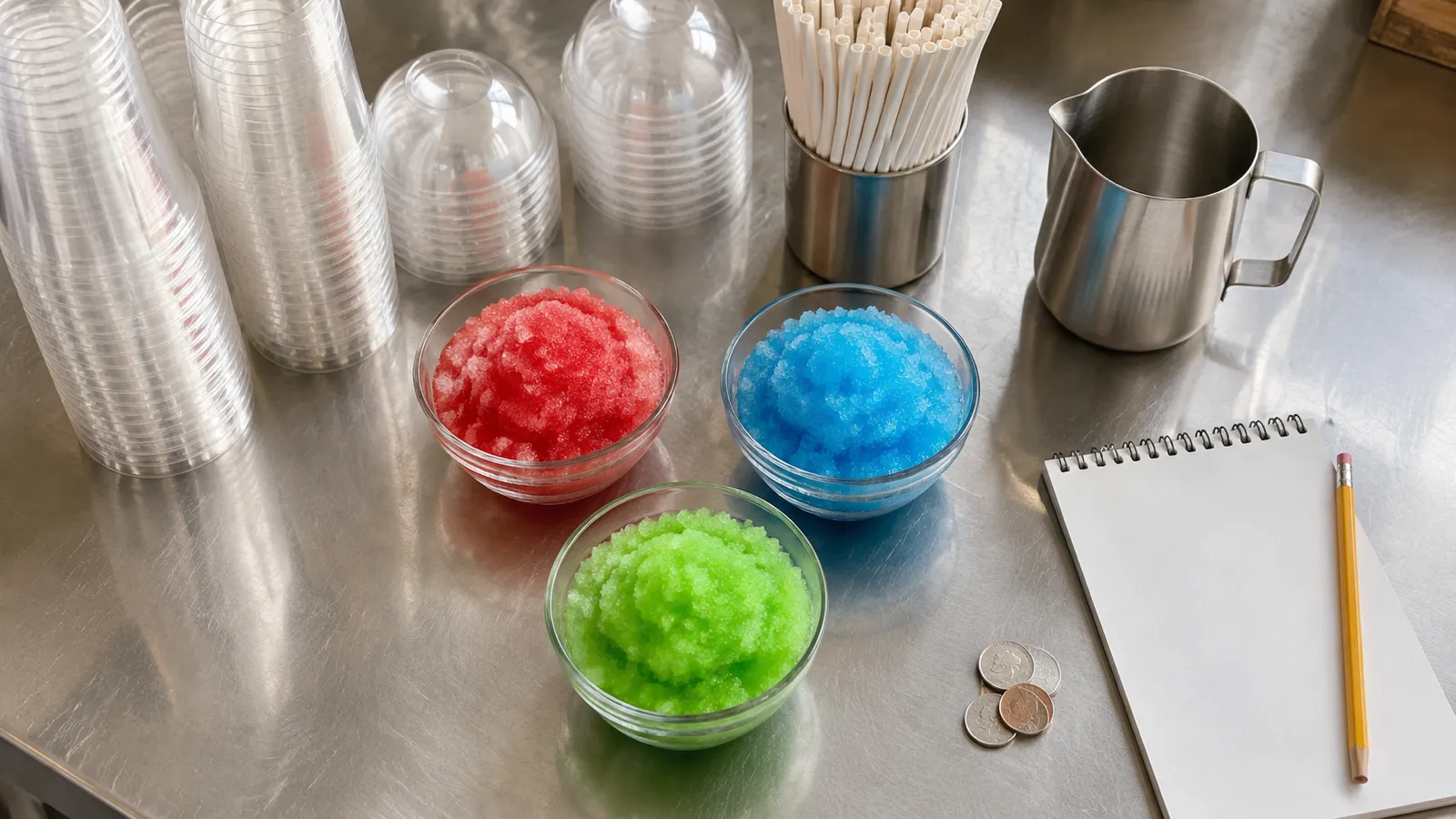
How much a commercial slush machine costs: market price tiers by bowl count, electricity and cleaning formulas, cost per cup and a payback worksheet.
How much does a slushy machine cost? It depends on which machine the search means. Home slushie makers list for about $300 to $400. Light-duty commercial bowl machines with one to three bowls are listed from roughly $900 to $3,100. Heavy-duty two- and three-bowl dispensers run about $2,600 to $6,400, and frozen cocktail machines with freezing cylinders about $4,600 to $7,900. The purchase price is only the first line, though. Electricity, mix, cups and cleaning time come back every month, and they decide whether the machine pays for itself. This guide sets out the price tiers, the running-cost formulas and a simple payback calculation you can fill in with your own numbers.
Part of our commercial slush machine buying guide series.
Slush machine price tiers at a glance
The ranges below come from published list prices from major US suppliers: one consumer-appliance manufacturer’s own store and two large US restaurant-supply retailers, all checked on October 20, 2026. They exclude shipping, sales tax and installation. Online prices change often, and dealer quotes can come in above or below them, so treat them as a guide to the market rather than as quotes.
| Tier | Bowls or cylinders | Typical size | Published list prices (USD) |
|---|---|---|---|
| Home slushie maker | 1 small vessel | 7 to 12+ servings per cycle (maker’s own rating) | About $300–$400 |
| Light commercial, single bowl | 1 | 1.6–3 gal | About $880–$2,080 |
| Light commercial, double bowl | 2 | 1.6–3 gal each | About $1,260–$2,060 |
| Light commercial, triple bowl | 3 | 1.05–3.2 gal each | About $1,740–$3,090 |
| Heavy commercial, double bowl | 2 | 2.6–3.2 gal each, some with autofill | About $2,590–$4,060 |
| Heavy commercial, triple bowl | 3 | 1.6–3.2 gal each | About $4,140–$6,430 |
| Frozen cocktail (cylinder) machine | 1–2 freezing cylinders | 12–20 qt | About $4,600–$7,900 |
Two things stand out. The steps between tiers are bigger than the steps between bowl counts: a heavy-duty double-bowl machine often lists above a light-duty triple. And the bowl sizes are not standard. One three-bowl machine might hold about one gallon per bowl and another more than three, so compare price per gallon of capacity, not price per machine.
Why the first results show $300 machines
Search “how much is a slush machine” and most of the first page is home appliances: retailer listings, kitchen-gadget reviews and countertop makers that freeze one pitcher at a time. That answers a household question. A business buyer is asking something else, and the two machines are built for different jobs:
| Question | Home slushie maker | Commercial slush machine |
|---|---|---|
| Output | One batch of about 7–12 servings, then wait | Holds frozen product all day and is topped up while it runs |
| Serving | Pour from the vessel | Self-serve or staff tap on each bowl |
| Duty | Occasional household use | Many hours a day, every day the doors are open |
| Inspection | Sold as a household appliance | Food equipment in a commercial kitchen is usually expected to carry a sanitation listing; ask your local health department what it accepts |
| Support | Consumer warranty and returns | Commercial warranty, parts supply and technical support |
For scale: a home unit is rated for roughly 7 to 12 servings per cycle by its own maker, while the single tank on the Smartool RLC18-1 holds 16.5 L, which the product page puts at about 34 cups of 16 oz per batch. If you expect to sell more than a few dozen drinks a day, the home tier is not a cheaper option. It is the wrong category.
What moves the price inside each tier
- Bowl count and bowl size. More bowls means more flavors or a backup bowl at the rush. Our comparison of double vs triple slush machines covers when each tank count makes sense.
- Pour-over or autofill. Autofill models draw mix from a bag or jug automatically and list several hundred dollars above the matching pour-over model.
- Bowl or freezing cylinder. Cylinder machines are built for frozen cocktails at bar volume and sit at the top of the price range.
- Refrigeration capacity. A larger compressor recovers faster after a rush. Read the cooling capacity and the first-freeze time, not just the motor wattage.
- Controls. On the same machine, electronic consistency control lists above manual control. It also makes it easier for staff to run the machine the same way every day.
- Distribution. A dealer price carries freight, warehousing and margin. Buying factory-direct removes a layer, but you should still confirm freight terms, parts stock and who handles warranty service.
Running costs: the formulas that repeat every month
The buying guide’s total cost of ownership checklist lists every cost line. Here is how to put a number on the three that matter most.
Electricity
Daily electricity cost (upper bound) = rated power in kW × hours powered per day × your rate per kWh.
Rated power is a ceiling. Once the product is frozen, the compressor cycles on and off, so the real draw is lower. For an example rate, the U.S. Energy Information Administration put the average US commercial electricity price at 14.53 cents per kWh for July 2026. Your utility bill is the number to use.
| Model (rated power from product page) | 12 hours a day, upper bound | At 14.53¢/kWh (example rate) | 30 days |
|---|---|---|---|
| RLC18-1, single tank, 500 W | 0.5 kW × 12 h = 6 kWh | About $0.87 per day | About $26 |
| RL18-3, three tanks, 1,500 W | 1.5 kW × 12 h = 18 kWh | About $2.62 per day | About $78 |
Hours powered is the input operators most often get wrong. Freezing from scratch takes time: the product pages list a first-batch time of 40–60 minutes for the RLC18-1 and 50–75 minutes for the RL18-3. Some sites therefore leave the machine running overnight instead of refreezing each morning. Work out both options with the formula before you decide.
Mix, cups and lids
Ingredients scale with every cup you sell, and their cost depends on the dilution ratio printed on each concentrate. Use the cost per cup worksheet in our slushie machine mix guide to turn a jug price and ratio into mix cost per cup. Then add the cup, lid and straw:
Variable cost per cup = mix cost per cup + cup + lid + straw.
Cleaning labor
Monthly cleaning cost = minutes per full clean ÷ 60 × cleans per month × loaded hourly wage.
Time one complete teardown, wash, sanitize and reassembly with your own staff; do not guess. As an illustration only, if a clean takes 30 minutes, happens 8 times a month and labor costs $20 an hour including payroll costs, the line is 0.5 × 8 × $20 = $80 a month. Replace every input with your own figures and your own cleaning schedule. A three-bowl machine has three sets of parts to wash, so time it separately. Our guide on how to clean a slush machine walks through the full routine.
Wear parts and service
Seals, O-rings and tap valves wear and need replacing. Keep a spare set on hand so a worn seal does not close a bowl for a week. Price the kit when you get the machine quote. Also read the warranty terms: Smartool’s product pages list 3 years on core components (compressor, motor and PCB) and 1 year on all other parts. Most service calls come from a few recurring problems, which our slush machine troubleshooting guide covers.

Cost per cup and payback
Once you have the monthly lines, two formulas tell you whether the machine pays:
- Full cost per cup = variable cost per cup + (monthly electricity + monthly cleaning labor + monthly parts allowance) ÷ cups sold per month.
- Payback in months = delivered and installed equipment cost ÷ [cups sold per month × (menu price − full cost per cup)].
A quicker check is breakeven cups: every $1,000 of equipment cost needs 1,000 ÷ (menu price − full cost per cup) cups to pay back. At a $2.00 margin per cup, that is 500 cups per $1,000. Whether that takes two weeks or two years depends on traffic, so estimate cups per day from your own sales, such as fountain drinks or iced coffee, rather than from a supplier brochure.
| Worksheet line | Where the number comes from |
|---|---|
| Equipment cost, delivered | Written quote including freight and liftgate |
| Cups sold per month | Your sales history or a 2-week trial |
| Menu price | Your menu, before sales tax |
| Mix cost per cup | Mix guide worksheet and supplier price sheet |
| Cup, lid, straw | Packaging supplier invoice |
| Electricity per month | Formula above with your utility rate |
| Cleaning labor per month | Timed clean × schedule × wage |
| Parts allowance | Seal kit price spread over its replacement interval |
Costs that do not appear on the price tag
- Freight and delivery. A three-tank machine is heavy. The RL18-3 product page lists a net weight of 57.2 kg. Ask whether the quote includes liftgate delivery.
- Electrical work. The RL18-3 is rated at 14.5 A on 120 V and the RLC18-1 at 5.3 A. Before delivery, have an electrician confirm whether the counter outlet can carry the load or whether you need a dedicated circuit.
- Counter space and ventilation. The machine needs room to release heat. A hot back corner raises run time and electricity use.
- Startup stock. Opening mix inventory, cups, lids, sanitizer and a refractometer if you check Brix.
- Taxes and write-offs. Sales tax adds to the purchase price. Business equipment may qualify for the Section 179 expense deduction described in IRS Publication 946. Confirm with your tax adviser how it applies to you.
Which tier fits your business
| Operation | Usual starting point | Smartool option to compare |
|---|---|---|
| Office break room, private events at home | Home slushie maker | None; a commercial machine is more than you need |
| Café, snack bar or food truck adding one frozen drink | Single-bowl commercial machine | RLC18-1: one 16.5 L tank, 500 W, 120 V |
| Convenience store, family entertainment center, busy bar | Two or three bowls for flavor choice and rush capacity | RL18-3: three 16.5 L tanks, 1,500 W, 120 V |
| High-volume frozen cocktail program | Cylinder frozen cocktail machine | Confirm the drink recipe and volume with a sales rep first |
To compare tank counts, footprints and power ratings side by side, see the full commercial slush machine range.
Slush machine cost FAQs
How much is a slush machine for a business?
Published list prices from major US suppliers, checked October 20, 2026, start at about $880 for a light-duty single-bowl machine and run to about $6,400 for a heavy-duty three-bowl dispenser. Frozen cocktail cylinder machines go up to about $7,900. Shipping, tax and installation come on top.
How much does it cost to run a slushie machine per day?
For electricity, multiply rated kW by hours powered and by your rate. A 500 W machine powered for 12 hours uses at most 6 kWh, about $0.87 at the July 2026 US commercial average. A 1,500 W machine uses at most 18 kWh, about $2.62. Add mix, cups and cleaning labor to get the full daily running cost.
Is a slushie machine worth it for a small business?
It is worth it when monthly cups × (menu price − full cost per cup) pays back the delivered price within a period you are comfortable with. Run the payback formula above with a conservative cup count before you buy.
Why doesn’t Smartool list slush machine prices online?
Smartool quotes each order directly. Model, quantity, freight destination and delivery options all change the final number, so a quote built for your order is more useful than a single list price.
Get a delivered price for your slush program
Tell us your expected cups per day, number of flavors, counter space and delivery ZIP code, and we will match a single or multi-tank machine to your volume. Request a factory-direct quote and plug the delivered price into the payback formula above.
Factory-direct from Smartool
Planning a commercial equipment purchase?
Share your site conditions, daily output and budget. Our team will match a model, send the spec sheets and quote factory-direct pricing.

Written by
Senior Engineer, Smartool
Jason is a senior engineer at Smartool. He works on the commercial ice machines, soft serve and slushy machines, and refrigerated prep tables Smartool builds for restaurants, bars, hotels and dessert shops. His guides look at equipment from the engineering side: how to size a machine for a site, what it needs for power, water and airflow, and how to keep it running through busy service. He also helps buyers match the right model to their kitchen before they request a quote.
.elementor-76528 .elementor-element.elementor-element-5c7a0d0{--display:flex;--flex-direction:column;--container-widget-width:100%;--container-widget-height:initial;--container-widget-flex-grow:0;--container-widget-align-self:initial;--flex-wrap-mobile:wrap;}.elementor-76528 .elementor-element.elementor-element-5c7a0d1 .elementor-toc__header-title{text-align:start;}.elementor-76528 .elementor-element.elementor-element-5c7a0d1 .elementor-toc__header{flex-direction:row;}.elementor-76528 .elementor-element.elementor-element-5c7a0d1{--item-text-hover-decoration:underline;}
On this page
Need pricing for your project?
Get a factory-direct quote on commercial ice makers, soft serve and slushy machines, and refrigerated prep tables.
✓ Model matching and spec sheets for your site
✓ US office in City of Industry, CA
✓ Talk to an expert: +1 (872) 221-0051
Browse by topic
Ice Machine Guides
Soft Serve & Ice Cream
Slushy & Frozen Drinks
Buying & Sourcing
Compliance & Maintenance
Related posts

How Much Does a Commercial Slush Machine Cost?
How much a commercial slush machine costs: market price tiers by bowl count, electricity and cleaning formulas, cost per cup and a payback worksheet.

Ice Machine Drain Requirements: Air Gap, Floor Drain, Pumps
Ice machine drain requirements: air gap vs air break, floor sinks, 1/4 in per ft slope, separate bin drains, hose size, venting and drain pumps.