




Blog
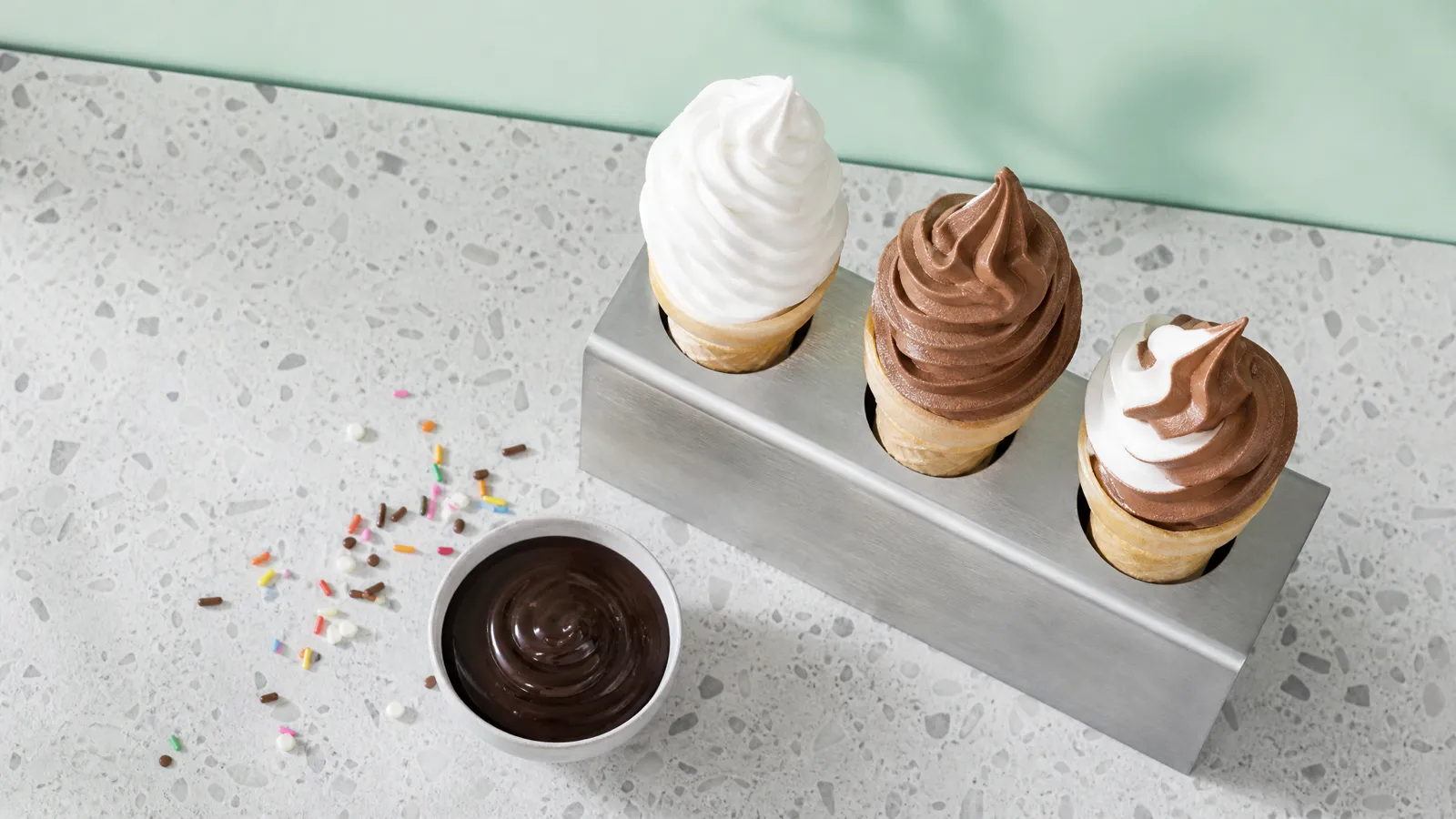
Single-head or 3 flavor soft serve machine? Compare flavors, output, 110 V vs 220 V power, cleaning time and footprint, with real spec examples.
A single-head soft serve machine serves one flavor from one freezing cylinder, usually runs on a standard 110 V circuit and suits shops where soft serve is one item among many. A triple-head machine, often shopped for as a 3 flavor soft serve machine, has three dispensing heads, more output and, on the models compared here, a 220 V supply, and suits shops where soft serve is the main draw. The right choice comes down to five things: how many flavors your menu really needs, how many servings your busiest hour demands, what your electrical panel can supply, how much cleaning time your staff has and how much counter or floor space you can give up.
Part of our commercial soft serve machine buying guide series.
Single-head vs triple-head soft serve machines at a glance
The table uses three Smartool models as real-world reference points. Every figure comes from the model’s product page; check the current page or ask your sales rep before you order, because specs change between production runs.
| Factor | Single head (GT18RELW) | Countertop triple head (BT742SR2JL-F) | Floor triple head, dual system (BT768CRJL-TF) |
|---|---|---|---|
| Dispensing heads | 1 | 3 | 3 |
| Listed output | 18–24 L/h | 42 L/h | 68 L/h |
| Voltage | 110 V / 60 Hz | 220 V / 60 Hz | 220 V / 60 Hz |
| Rated power | 1580 W | 3800 W | 4600 W |
| Refrigeration | One compressor | Single system | Dual compressors, motors and evaporators; the two systems can run separately |
| Hopper / cylinder (as listed) | 6 L hopper, 1.6 L cylinder | 8 L hopper, 2.3 L cylinder | Confirm with sales rep |
| Size (W × D × H) | Compact countertop unit | 570 × 770 × 974 mm (about 22.4 × 30.3 × 38.3 in) | 570 × 770 × 1567 mm (about 22.4 × 30.3 × 61.7 in) |
| Where it fits | Cafés, restaurants and kiosks adding soft serve | Dessert counters that need variety without floor space | High-volume shops where soft serve is the main revenue line |
What “single head” and “triple head” actually mean
The head is the dispensing valve and handle at the front of the machine. Behind each flavor is a freezing cylinder, where a dasher scrapes mix off the chilled wall as it freezes, and a hopper that holds liquid mix. A single-head machine has one of each, so it holds one flavor at a time. Changing flavors means emptying the hopper and cylinder and rinsing them before you add the new mix, which is fine between seasons but not between customers.
A typical triple-head machine carries two flavors and three valves. A common layout puts one flavor on each side and a twist in the middle, where the center valve draws from both cylinders at once. Layouts vary by manufacturer, so ask how a specific model dispenses before you print a menu around it. Smartool’s product pages describe the BT742SR2JL-F and BT768CRJL-TF as triple-head machines; confirm how the center head dispenses with your sales rep.
Head count is a separate question from cabinet format. A triple-head machine can sit on a counter or stand on the floor, and the trade-offs of each are covered in our countertop soft serve machine comparison. This guide stays with heads, flavors and output.
Menu: how many flavors do you really need?
Flavor choice matters to customers. In the International Dairy Foods Association’s 2026 survey with Morning Consult, seven in ten Americans said flavor is very important when they choose ice cream, ahead of price and portion size. Chocolate and vanilla both sit in the survey’s top three favorite flavors, which is why a two-flavor machine with a twist covers the classic soft serve menu.
That doesn’t mean every shop needs a second flavor in the machine. Many operators build variety around a single vanilla base instead:
- Toppings and sauces. The same IDFA survey found hot fudge is the most popular topping, chosen by 31% of respondents, ahead of whipped cream at 27%. Sauces, dips and mix-ins give a single-flavor machine a long menu.
- Shakes, sundaes and floats. A vanilla base feeds all three, so one machine can support a full dessert section.
- Seasonal changeovers. If you want a pumpkin or strawberry flavor for a few weeks, a single-head machine can switch at a planned cleaning, not mid-shift.
A triple-head machine starts to earn its place when the second flavor or the twist is something customers ask for by name, when you sell soft serve as the main product rather than an add-on, or when you want a standing dairy-free or specialty option next to vanilla. Each flavor is a separate mix to buy, store and rotate, so check that your supplier can deliver both reliably. Our soft serve mix guide covers liquid and powder options.
Output: size the machine to your busiest hour
Manufacturers list output in liters per hour (L/h) of finished product. On Smartool’s pages, the GT18RELW single head is listed at 18–24 L/h, the countertop BT742SR2JL-F at 42 L/h and the floor-standing BT768CRJL-TF at 68 L/h. The jump comes from a bigger refrigeration system and, on the BT768, a second one, not from the extra valves alone.

To turn a listed rate into servings, work from your own numbers rather than a rule of thumb:
- Pour a typical cone, cup and sundae as your staff actually serve them, and measure each one’s volume in milliliters.
- Count how many of each you sell in your busiest hour, from POS data or a manual tally on a peak day.
- Multiply and add to get liters per peak hour, then compare that with the machine’s listed L/h.
- Leave headroom. Ask the supplier what mix temperature and room temperature the rating assumes, because a warm kitchen or a back-to-back rush slows recovery between draws.
The GT18RELW page also lists a first batch in 10–12 minutes from start-up, which matters if you switch the machine on just before opening. If your peak-hour figure sits close to a single head’s upper range, a triple-head machine buys you capacity as well as flavors. If it sits well below, extra heads add cost and cleaning without adding sales. For the money side, see soft serve machine cost and ROI.
Power: 110 V single head vs 220 V triple head
The electrical gap between the two formats is often what decides a purchase. The GT18RELW is listed at 110 V / 60 Hz and 1580 W. Both Smartool triple-head models are listed at 220 V / 60 Hz, at 3800 W for the BT742SR2JL-F and 4600 W for the BT768CRJL-TF. As a rough guide, dividing rated watts by volts gives about 14 A for the single head, 17 A for the BT742 and 21 A for the BT768 at full rated power. Give your electrician the nameplate figures, not these estimates, to size the circuit, breaker and receptacle.
Two practical checks before you order a 220 V machine:
- Your building’s actual voltage. Many US commercial buildings supply 208 V or 240 V rather than exactly 220 V. Ask your sales rep to confirm the machine runs on the voltage your panel delivers, and which plug it ships with.
- Panel capacity. Adding a high-draw 220 V circuit may mean a new run from the panel, and in a leased space it may need landlord approval. Get the quote for that work before you compare machine prices.
A single head on 110 V is the simpler install, which is why it is the usual first machine for a café or restaurant testing soft serve. A triple head is a planned install: budget the electrical work alongside the machine.
Cleaning: every head adds parts to strip down
Cleaning time grows with head count. Foodservice Equipment & Supplies notes that, apart from machines with heat-treatment systems, soft serve machines need to be taken completely apart, cleaned and sanitized each night. On a typical triple-head machine that means two hoppers, two cylinders and three valve assemblies, each with its own seals and O-rings to wash, inspect, lubricate and refit.
Plan staff time for the larger machine. Foodservice Equipment Reports advises stopping the machine between rinse and sanitizer steps in wash mode so the scrapers don’t run without liquid, and using a manufacturer-approved sanitizer. Features on the spec sheet can help. The GT18RELW lists one-touch cleaning, and both triple-head models list one-touch defrost, night preservation and a low-mix alarm. None of these replaces the full teardown your local health code requires, so ask your inspector how often your area expects it.
For a day-by-day task list, see our soft serve machine maintenance schedule.
Footprint and redundancy
Smartool lists both triple-head models at the same 570 × 770 mm base (about 22.4 × 30.3 in). The difference is height and where they stand. The BT742SR2JL-F is 974 mm (about 38.3 in) tall and sits on a counter, so measure from the counter surface to any shelf, hood or cabinet above, and check the counter can carry a loaded machine. The BT768CRJL-TF is 1567 mm (about 61.7 in) tall and stands on the floor, which frees the counter but takes a floor spot near the service line. Both list side air intake and exhaust, so keep the sides clear and follow the manual’s clearance figures.
Redundancy is the other footprint question. A single-system machine has one refrigeration circuit behind every head, so a fault stops all three. The BT768CRJL-TF lists dual compressors, motors and evaporators with independent power control that can run separately, so one side can keep serving while the other waits for service, or sit idle on a slow day. Some operators get similar resilience from two single-head machines instead of one triple head. That uses more counter and two outlets, but either unit can be moved or serviced without stopping sales.
Which machine fits your business?
| Your situation | Likely fit | Why |
|---|---|---|
| Café, restaurant or kiosk adding soft serve, with 110 V only | Single head | Standard circuit, one mix to stock, simplest cleaning |
| Vanilla base with toppings, shakes and sundaes | Single head | Variety comes from add-ons, not the machine |
| Dessert counter that wants two flavors and a twist, limited floor space | Countertop triple head | More flavors and output on a counter; needs 220 V |
| Soft serve is the main product, long peak lines | Floor triple head, dual system | Highest listed output; one side can run alone |
| Uncertain demand, want a backup | Two single heads | Split risk and add the second machine when sales justify it |
Feed system is a separate choice from head count. If you are also weighing gravity-fed against pump-fed models, read gravity-fed vs pump soft serve machines before you shortlist.
Single and triple head soft serve questions
What is a 3 flavor soft serve machine?
It is the usual shopping term for a triple-head machine: two flavor cylinders and three dispensing valves. On many models the two side valves each serve one flavor and the center valve serves a twist of both, but layouts differ, so confirm with the supplier.
Can a single flavor ice cream machine make two flavors?
Not at the same time. A single-head machine holds one mix. You can change flavors by emptying and cleaning the hopper and cylinder, which suits seasonal rotations, or add variety with sauces, dips and mix-ins.
Is a twist ice cream machine the same as a triple-head machine?
Usually, yes. A twist needs two flavors and a valve that draws from both, which is what a typical three-valve layout provides. Ask the supplier whether the center head on a given model dispenses a twist.
Do triple-head soft serve machines need 220 V?
Both Smartool triple-head models are listed at 220 V / 60 Hz, while the GT18RELW single head runs on 110 V. Other brands vary, so check the nameplate rating and confirm it matches the 208 V or 240 V your building supplies.
Compare single and triple head models
Start with your peak-hour volume and your panel, then pick the head count. Review the GT18RELW single head, the BT742SR2JL-F countertop triple head and the BT768CRJL-TF floor-standing triple head, or browse every commercial soft serve machine in the range. Send us your menu, peak-hour volume and available voltage, and request a factory-direct quote sized to your shop.
Factory-direct from Smartool
Planning a commercial equipment purchase?
Share your site conditions, daily output and budget. Our team will match a model, send the spec sheets and quote factory-direct pricing.

Written by
Senior Engineer, Smartool
Jason is a senior engineer at Smartool. He works on the commercial ice machines, soft serve and slushy machines, and refrigerated prep tables Smartool builds for restaurants, bars, hotels and dessert shops. His guides look at equipment from the engineering side: how to size a machine for a site, what it needs for power, water and airflow, and how to keep it running through busy service. He also helps buyers match the right model to their kitchen before they request a quote.
.elementor-76528 .elementor-element.elementor-element-5c7a0d0{--display:flex;--flex-direction:column;--container-widget-width:100%;--container-widget-height:initial;--container-widget-flex-grow:0;--container-widget-align-self:initial;--flex-wrap-mobile:wrap;}.elementor-76528 .elementor-element.elementor-element-5c7a0d1 .elementor-toc__header-title{text-align:start;}.elementor-76528 .elementor-element.elementor-element-5c7a0d1 .elementor-toc__header{flex-direction:row;}.elementor-76528 .elementor-element.elementor-element-5c7a0d1{--item-text-hover-decoration:underline;}
On this page
Need pricing for your project?
Get a factory-direct quote on commercial ice makers, soft serve and slushy machines, and refrigerated prep tables.
✓ Model matching and spec sheets for your site
✓ US office in City of Industry, CA
✓ Talk to an expert: +1 (872) 221-0051
Browse by topic
Ice Machine Guides
Soft Serve & Ice Cream
Slushy & Frozen Drinks
Buying & Sourcing
Compliance & Maintenance
Related posts

Single vs Triple Head Soft Serve Machines: How to Choose
Single-head or 3 flavor soft serve machine? Compare flavors, output, 110 V vs 220 V power, cleaning time and footprint, with real spec examples.

Ice From Ice Machine Tastes Bad? Causes and Fixes by Symptom
Ice from your ice machine tastes bad or smells off? Match the symptom (stale, plastic, metallic, cloudy, absorbed odors) to its cause and the right fix.