




Blog
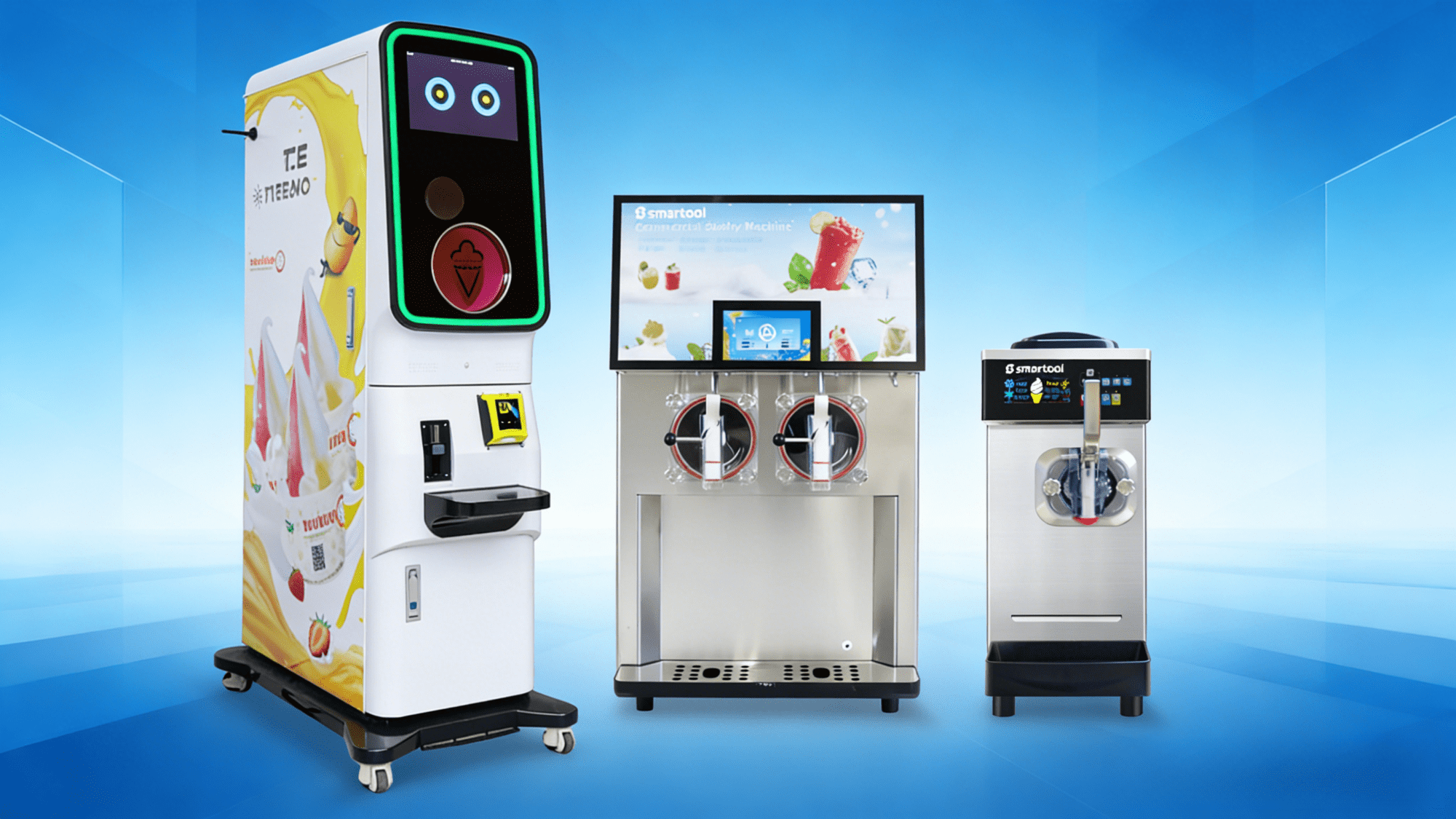
Choosing a commercial ice machine distributor partner, or the manufacturer behind your own dealership, comes down to five things: whether the product line fits your customers, what will drive returns and warranty disputes, how inventory and freight are handled, what support keeps service calls off your books, and whether the supplier’s policies are published and specific. Margin on the first order matters less than what happens on the fiftieth unit. Dealers who add soft serve and slush machines alongside ice equipment face the same questions, multiplied across more SKUs.
This guide is for foodservice equipment dealers, hospitality supply distributors and regional resellers evaluating a new ice machine, soft serve or frozen drink supplier. It ends with the questions to put to any manufacturer and how Smartool answers them from its published terms.
Commercial Ice Machine Distributor Scorecard
| Criterion | Evidence to request | How it hits your margin |
|---|---|---|
| Product-line fit | Capacity steps, voltage options and footprints against your customer mix | Gaps send customers to competitors; overlaps tie up inventory |
| Specification accuracy | Spec sheets with test conditions and high-ambient output | Overstated capacity becomes returns and complaints |
| Compliance | Listing numbers per model; federal efficiency compliance for ice makers | Non-compliant units fail inspections and bids |
| Warranty and service | Written terms by component; on-site coverage; claim procedure | Vague terms leave the dealer paying for disputes |
| Logistics | Processing time, carriers, freight terms, damage-claim window | Slow or damaged deliveries cost reorders |
| Technical support | Troubleshooting tools, documentation, remote diagnosis | Every call the manufacturer resolves is one your team does not |
| Commercial terms | Pricing structure, territory and order minimums, in writing | Undefined terms invite channel conflict |
Product-Line Fit: Build Around Your Customer Mix
Dealers sell to cafés, bars, restaurants, hotels and convenience stores that buy ice, frozen drinks and desserts together. A line with clear capacity steps is easier to sell than a line with many near-identical models, because each quote maps to a customer size.
- Ice: separate medium and high-volume accounts. A 360 lb/24h unit and a 500 lb/24h unit on the same 110–120V supply cover most cafés, bars and mid-size restaurants without electrical upgrades. The guide to types of commercial ice machines helps match cube style and configuration to the account.
- Frozen drinks: single, dual and triple tanks map to one signature drink, two-flavor counters and bar programs. See the comparison of single, double and triple tank slush machines for the selling logic.
- Soft serve: countertop 110V units for cafés and dessert shops, high-output or multi-head machines for food courts. Know which models need 220V before quoting.
- Adjacent lines: automated vending and refrigerated prep tables let you serve the same account’s unstaffed locations and cold prep line.
The Real Cost of Choosing the Wrong Product Line
A poor product line rarely fails in the first month. The costs accumulate as slow-moving stock, repeat small service issues and a sales team spending more time explaining than closing. Track these early warning metrics during the first two quarters with any new supplier:
| Hidden cost | How it shows up | Metric to watch |
|---|---|---|
| Inventory overstock | Units sit while buyers compare alternatives | Days in inventory by SKU |
| Service drag | Repeated minor faults during peak season | Service tickets per units sold |
| Cash flow squeeze | Paid inventory and open warranty claims tie up capital | Open claim value and age |
| Team time | Sales staff handle objections and callbacks | Quote-to-close time |
| Reputation | Customers blame the dealer, not the brand | Repeat orders from existing accounts |
What Drives Returns and Warranty Disputes
Most returns in commercial refrigeration are fit problems rather than defects. They are cheapest to prevent at the quote stage.
| Return or dispute driver | Prevention at quote stage |
|---|---|
| Capacity mismatch | Size from the customer’s peak hour and summer room temperature, using high-ambient output where published |
| Electrical mismatch | Confirm voltage, amperage and a dedicated circuit before ordering |
| Environment outside rated range | Check the model’s operating temperature range against the installation site |
| Installation errors | Provide clearance, drain and water supply requirements in the quote pack |
| Freight damage | Train receivers to inspect before signing; know the claim window |
| Unclear responsibility | Separate equipment faults, installation faults and operating errors in writing |
Two regulatory points belong in every ice machine supplier review. Manufacturers of cube-type commercial ice makers with 50 to 2,500 lb daily harvest capacity have had to meet DOE energy conservation standards for automatic commercial ice makers since 2010, so ask how compliance is documented for the models you will stock. And if your team installs or services units, sealed-system work requires EPA Section 608 technician certification for equipment that could release ozone-depleting refrigerants.
Efficiency also sells. ENERGY STAR data shows certified batch-type ice makers save businesses about 700 kWh a year compared with standard models, a figure your sales team can use when customers weigh upfront price against operating cost. Certification and listing questions are covered in the commercial kitchen equipment certifications guide.
Inventory, Freight and Delivery Terms
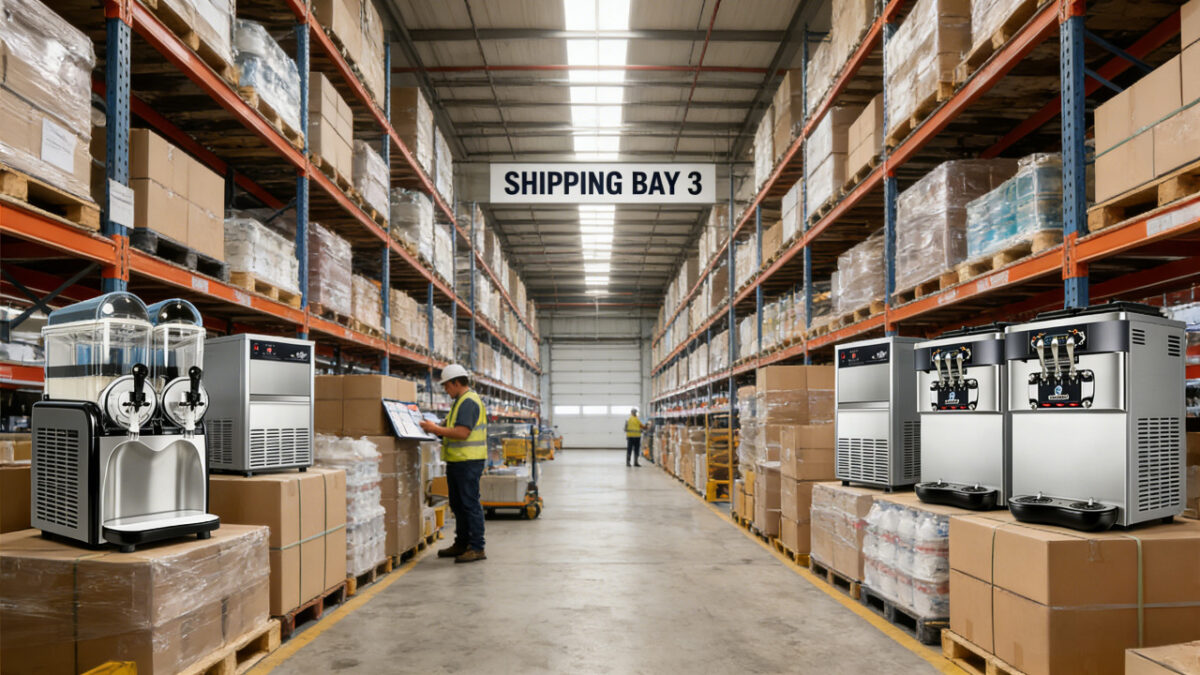
Inventory risk depends on how fast replacement stock arrives and who carries damage risk in transit. Settle these points before the first order:
- Stocking model: which SKUs you hold, which ship direct to the end customer, and minimum order quantities.
- Processing and transit time: in writing, by region.
- Risk of loss: under the UCC, when a contract authorizes shipment by carrier without requiring delivery to a particular destination, risk of loss generally passes to the buyer when goods are delivered to the carrier. Agree whether that default applies.
- Damage claims: who files, within what window, and whether replacement ships before the claim settles.
For reference, Smartool’s shipping policy states that orders are processed within 1–2 business days and ship via FedEx and UPS to the contiguous 48 states, with free Standard Ground delivery in 3–7 business days. Lost or damaged shipments are reported to the carrier first and escalated to Smartool within 7 days.
Support and Training That Keep Service Off Your Books
Every service call a manufacturer resolves remotely is a truck roll your business avoids. Ask what the supplier provides for your technicians and your customers’ staff: operating and cleaning documentation, troubleshooting tools, remote video diagnosis, and a clear route for parts.
Smartool’s published support includes a fault diagnosis system covering ice cream machines, ice makers and freezers, and maintenance guides such as ice machine maintenance that dealers can pass to end users.
For dealers, the terms to pass on to customers come from Smartool’s after-sales policy: in North America the machine and compressor are covered for three years and parts and labor for one, video guidance and phone consultation are free, on-site service is available in major cities by reservation, and original parts are sold at cost after warranty.
When a customer does report a fault, the overview of common commercial refrigeration problems helps your team separate site issues from equipment faults, and the warranty and service guide explains what to document for a claim.
Questions to Ask Any Commercial Ice Machine Manufacturer
- What is each model’s output at high ambient temperature, not just at rated conditions?
- Which listing marks does each model carry, and what are the listing numbers?
- How is DOE efficiency compliance documented for your cube ice makers?
- What are the warranty terms for full machine, compressor, parts and labor, and who performs warranty labor in my territory?
- Where is on-site service available, and how are sites outside that area handled?
- How fast do warranty parts ship, and who pays freight?
- What are processing times, carriers and the damage-claim window?
- Which return reasons are accepted, and who pays return freight and restocking?
- What training, documentation and troubleshooting tools do dealers receive?
- How are pricing, order minimums and territory defined, and are they in the dealer agreement?
Working With Smartool as a Dealer or Distributor
Smartool supplies five commercial lines that sell into the same foodservice accounts:
- Ice makers: BF360 (360 lb/24h) and BF500 (500 lb/24h), both 110–120V/60Hz square-cube machines with published high-ambient output. Details are on the Smartool commercial ice makers page.
- Soft serve machines: from the countertop GT18ERLW-F (18–24 L/h) to the SW52REL-TF (48–52 L/h) on 110V/60Hz, shown on the Smartool soft serve ice cream machines page.
- Slushy machines: RLC18-1 single tank, RL18-2 dual tank and RL18-3 triple cylinder, compared on the Smartool slushy and frozen drink machines page.
- Automated vending: the BA18-100C3 and the vending truck, presented on the automatic ice cream vending machine page.
- Cold prep: the TSP47FC-2 sandwich and salad prep table, listed with other commercial refrigerated prep tables.
Dealer pricing, territory and stocking terms are set with each partner. To start that conversation, reach the team through the Smartool contact page, where email inquiries receive a response within 24 hours. If you already have customer projects in hand, request a project quote with models, quantities and delivery cities.
Related posts
5 Real Costs of Choosing the Wrong Refrigeration Product Line for Distributors
Many distributors, when reflecting on their operations, often attribute the problems to market chang...
How does Smartool help distributors reduce after-sales disputes?
For distributors, after-sales disputes are often the most underestimated, but most resource-intensiv...