




Blog
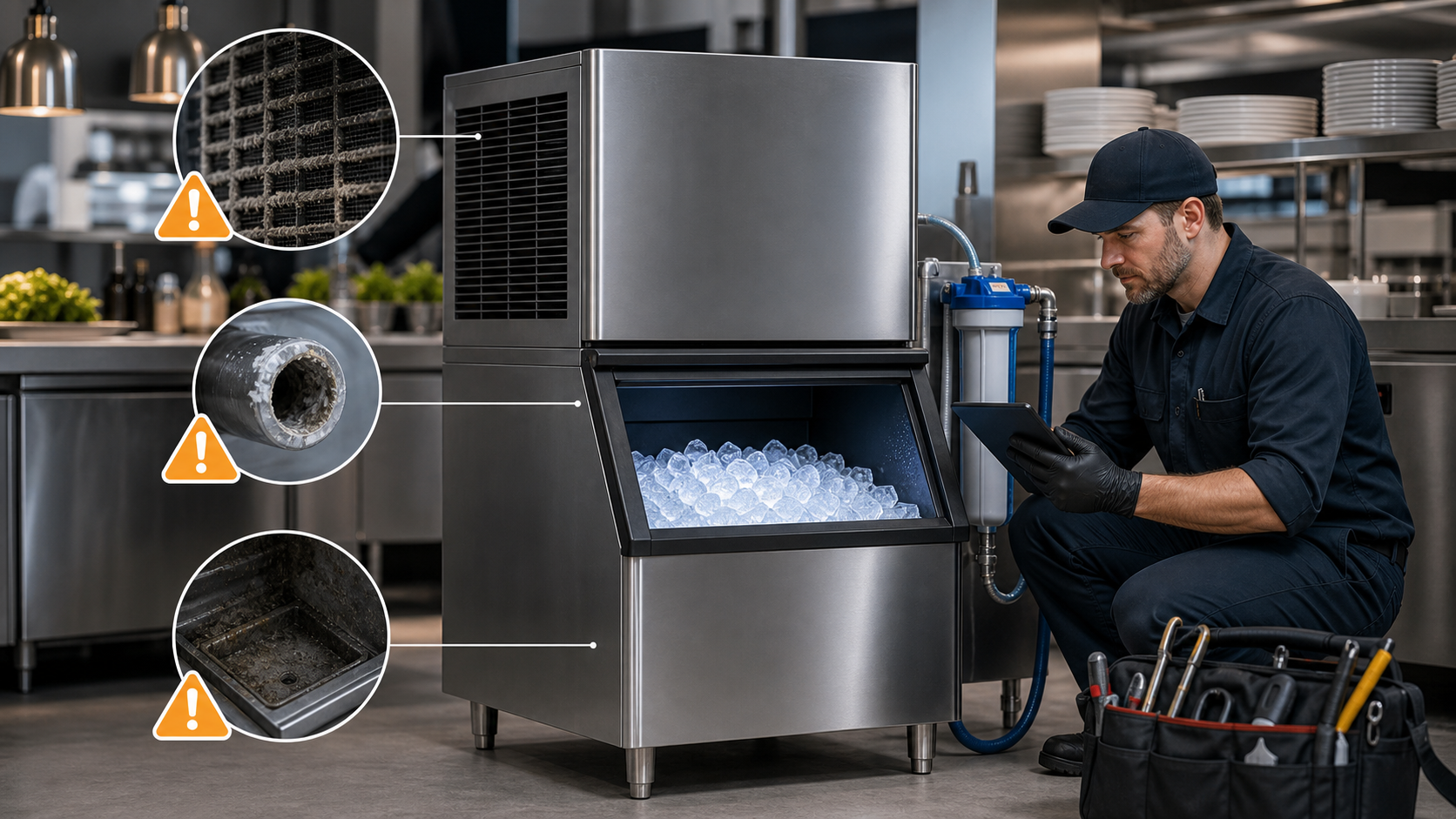
Ice machines run 24 hours a day, 7 days a week. Because these units operate continuously in the background, many owners ignore them until a complete breakdown happens. There is a wide gap between what owners think they save by skipping regular service and what poor upkeep actually costs over time. Neglecting your system brings financial penalties that go far past a basic repair bill. The hidden costs of neglecting ice machine maintenance go far beyond a repair bill — they impact energy, health, compliance, reputation, and equipment lifespan. This information targets owners of restaurants, cafes, hotels, hospitals, and any food service establishment that relies on a steady, safe supply of ice daily.
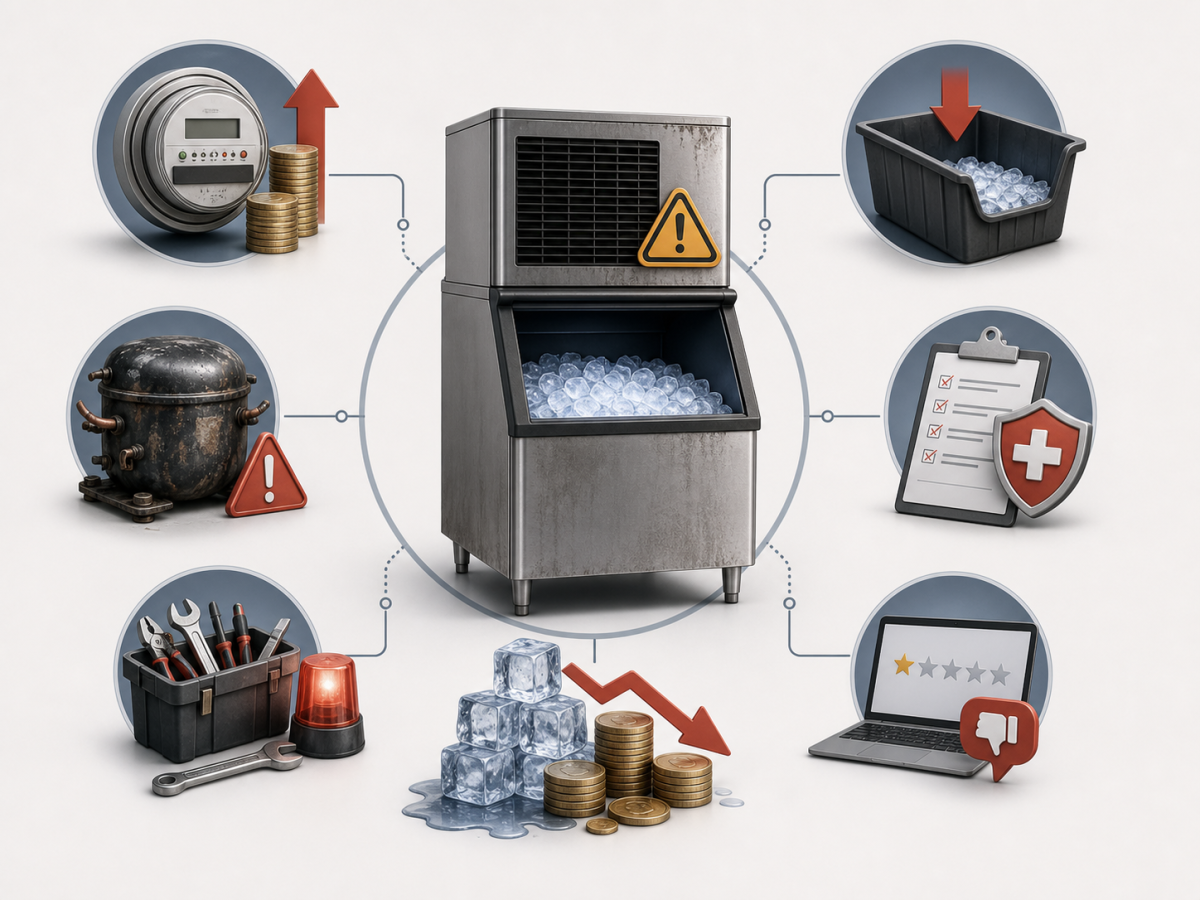
Hidden Cost #1 — Skyrocketing Energy Bills
Mineral scale buildup on evaporator coils acts as an insulating layer. This layer prevents efficient heat transfer during the freezing cycle. As a result, the commercial ice machine must run longer cycles to create the same amount of ice, which consumes significantly more electricity. When calcium and magnesium deposits coat the metal surfaces, the cooling system works much harder than designed.
Blocked filters and poor airflow compound this problem by putting added strain on the compressor. When dust fills the air intake, the fan cannot cool the internal parts properly. This restriction increases the operational temperature, causing the machinery to draw extra power with every passing week. A poorly maintained commercial ice maker can consume 20% to 30% more energy than a clean, well-serviced unit. This waste accumulates silently on your monthly utility bill, draining cash that could support other areas of your business.
Hidden Cost #2 — Reduced Ice Output & Performance Degradation
When system parts get dirty, the total volume of ice drops. Limescale, biofilm, and debris accumulation directly reduce the ice production capacity of your system. This buildup restricts the water flow through internal lines, resulting in slower output, misshapen cubes, and ice that melts faster than expected. When water cannot distribute evenly across the freezing plate, the cubes form unevenly or hollowly, reducing the weight of usable ice produced per cycle.
For high-demand operations like fast-food chains, busy bars, and medical facilities, even a partial drop in daily output disrupts service quality. Employees must deal with ice shortages during peak hours, forcing costly workarounds like buying expensive bags of ice from local retail stores. This performance decline is gradual and often goes unnoticed until the system is severely compromised. Routine monitoring is critical to catch these capacity losses before they trigger a major shortage.
Hidden Cost #3 — Accelerated Equipment Wear & Premature Failure
A properly maintained industrial ice machine lasts 10 to 15 years or more. In contrast, a neglected unit can suffer major component failure much earlier than expected after installation. Scale buildup clogs internal water lines and valves, which overworks the water pump. When the pump struggles against restriction, it overheats and burns out prematurely.
This added strain ultimately stresses the compressor, which is the single most expensive component to replace inside any system. Repairing or replacing a failed compressor can cost several thousand dollars, depending on unit size and system complexity. Furthermore, neglect voids many manufacturer warranties. If factory technicians find heavy scale buildup inside a broken machine, they will deny coverage, leaving your business fully liable for the entire replacement bill.
Hidden Cost #4 — Health Code Violations & Food Safety Liability
Dirty ice poses a direct threat to public health and corporate safety.
The warm, moist interiors of ice storage bins and cubers serve as ideal breeding grounds for mold, biofilm, and dangerous bacteria. Without regular sanitizing, harmful bacteria, including E. coli and Salmonella, may contaminate the ice supply. Ice is legally classified as a food product, meaning it must be handled with the exact same sanitation standards as fresh meat or dairy.
A single failed health inspection can result in heavy fines, mandatory operational shutdowns, and severe business disruption. Healthcare facilities and hospitality settings face the strictest consequences because their patrons are highly vulnerable to infections. Beyond regulatory penalties, a foodborne illness incident tied to dirty ice triggers serious legal liability and irreversible reputational damage that no repair bill can fix.
Hidden Cost #5 — Business Downtime & Emergency Repair Premiums
Equipment breakdown during peak hours, such as a summer rush at a busy restaurant or an event night at a hotel, brings operations to a sudden halt. This interruption creates cascading losses in revenue because staff cannot serve cold drinks properly, which severely damages the customer experience. Waiting for a technician during these moments hurts morale and stalls service.
Emergency repair calls cost significantly more than scheduled maintenance visits. A single peak-season breakdown can cost between $2,500 and $4,500 when you combine emergency technician rates, lost food service revenue, and guest dissatisfaction. Businesses must also purchase emergency bagged ice supplies and pay staff to transport those bags, adding further unplanned expenses to a difficult situation.
Hidden Cost #6 — Brand Reputation & Customer Trust Erosion
Customer perception drives long-term profitability in the competitive hospitality industry. Customers who receive cloudy, off-tasting, or foul-smelling ice notice the problem immediately. In the digital age, negative reviews spread fast across online platforms, warning other community members away from your establishment. When a guest sees visible slime or specks in their beverage glass, they lose confidence in the cleanliness of your entire kitchen operation.
A poor health inspection score or a publicized food safety incident tied to ice quality erodes community trust. This erosion reduces repeat business in ways that are incredibly difficult to quantify over time. Reputation loss is the highest-impact hidden cost because it permanently reduces long-term revenue, whereas a mechanical breakdown is merely a one-time repair expense.
The True Cost Comparison: Maintenance vs. Neglect
Comparing numbers helps clarify the financial choices available to business owners. Review the structural comparison table below to see the clear long-term savings of prevention. The table below outlines the financial differences between keeping a strict service schedule and ignoring your ice equipment. Regular investments keep operational costs low and predictable.
| Cost Category | With Regular Maintenance | With Poor/No Maintenance |
| Annual Energy Bills | Baseline (optimized performance) | 20% to 30% higher electricity costs |
| Equipment Lifespan | 10 to 15+ years of reliable service | 18 to 36 months until major breakdown |
| Repair Costs | Routine, planned, low-cost maintenance | Emergency rates, $8,000 to $15,000+ replacement fees |
| Health Risk | Minimal risk of contamination | Severe bacteria, mold growth, and legal liability |
| Downtime | Rare, scheduled during off-hours | Unpredictable, high-risk breakdowns during peak hours |
| Warranty Coverage | Fully maintained and honored by factory | Often voided due to evidence of user neglect |
How to Avoid These Hidden Costs: A Simple Maintenance Checklist
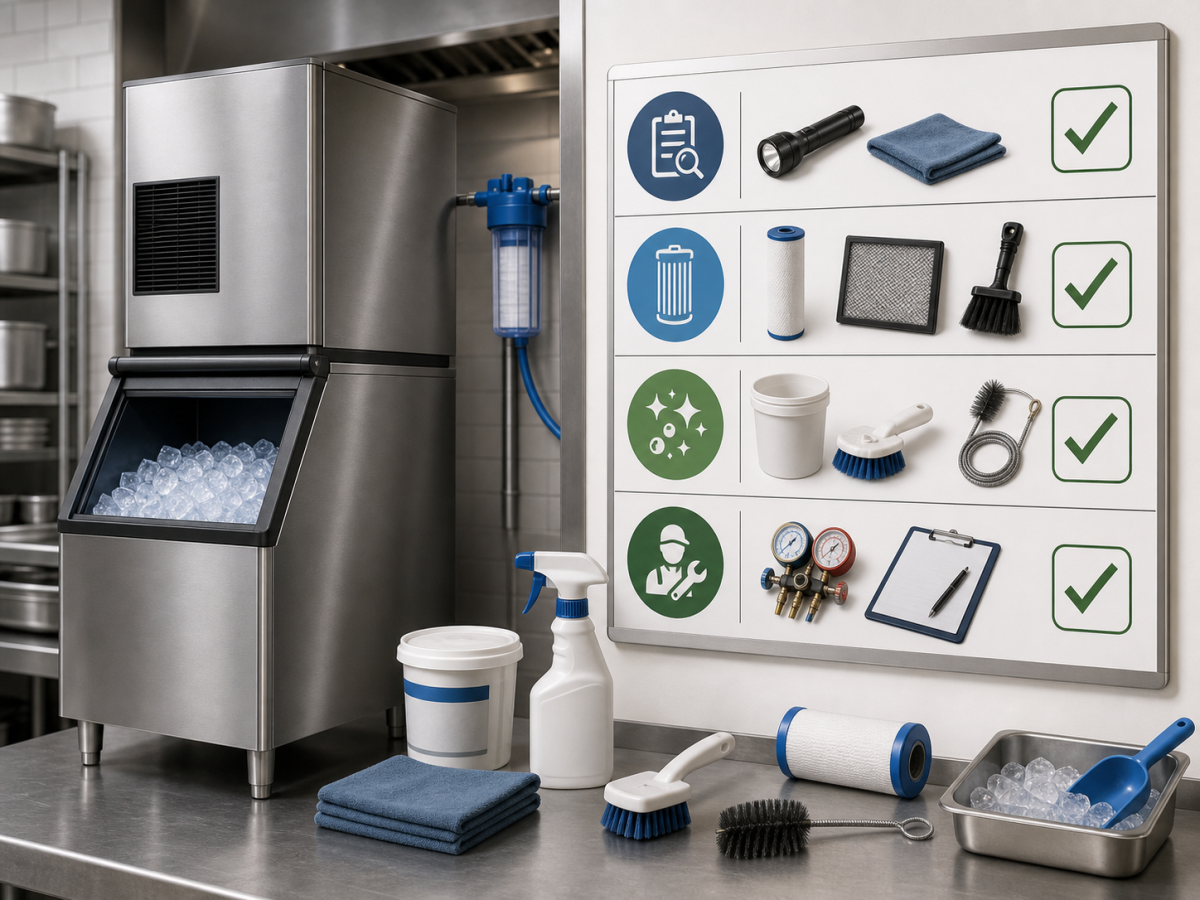
To keep your system clean, you must install high-quality ice machine water filtration systems. Using proper ice machine filters protects sensitive internal parts from scale. Additionally, replacing the ice maker filter regularly prevents sediment from clogging valves. Use this checklist to manage your restaurant ice machine:
Weekly Tasks
- Inspect ice physical quality for signs of cloudiness or unusual odor.
- Check drainage lines to ensure water flows away freely without pooling.
- Wipe down exterior surfaces with a food-safe sanitizing solution.
Monthly Tasks
- Clean and replace water filters to maintain proper water line pressure.
- Ensure adequate ventilation clearance around the air intake vents.
- Inspect the air filters and rinse out accumulated dust or grease.
Every 6 Months Tasks
- Deep clean evaporator coils using approved scale remover solutions.
- Sanitize the storage bin completely to eliminate biofilm and mold.
- Inspect water lines and inlet valves for physical wear or mineral blocks.
Annually Tasks
- Schedule a full professional inspection by a certified technician.
- Test all internal safety switches and operational control boards.
- Check refrigerant charge levels and assess components for wear.
Setting up a structured schedule keeps your machinery running efficiently for years. Follow these daily, monthly, and seasonal steps to protect your facility from unexpected losses.
Conclusion
Skipping routine maintenance does not save your business money. Instead, delaying this work multiplies your long-term costs significantly. The small annual price of a professional care plan is a tiny fraction of a single emergency repair bill, a voided warranty, or a heavy health code fine. Take action today to protect your bottom line. Audit your current kitchen cleaning schedule, inspect your water filters, or schedule a comprehensive maintenance visit with a certified technician to keep your system running smoothly.
FAQs
Q1: How often should a commercial ice machine be professionally serviced?
Most manufacturers and industry experts recommend a professional deep clean and inspection every 6 months. Basic in-house cleaning duties should be performed on weekly and monthly intervals to keep performance high.
Q2: Can a dirty ice machine actually make customers sick?
Yes. Neglected systems harbor E. coli, Salmonella, airborne mold, and thick biofilm that contaminate ice directly. Ice is classified legally as a food item and faces the exact same health safety rules as other ingredients.
Q3: Does skipping maintenance void my ice machine warranty?
In many cases, yes. Most manufacturer warranties require documented proof that you followed the recommended cleaning schedules. Failure to comply leaves your business fully liable for all replacement part costs.
Q4: What’s the most expensive repair caused by poor ice machine maintenance?
Compressor failure is the costliest issue, with repairs running between $8,000 and $15,000. Evaporator plate damage from heavy scale buildup is the second most expensive issue and can cost between $7,000 and $12,000 to fix.
Related posts
How to Clean a Commercial Ice Machine Step by Step (2026 Guide)
Get rid of slime and mold in your commercial ice maker. Follow our step-by-step instructions to ensure health compliance and clear ice quality.
The Hidden Costs of Cheap Ice Machines Every Business Owner Should Know
High repair costs and emergency bagged ice wipe out any upfront savings on budget ice makers. Discover the true 5-year total cost of ownership here.