




Blog
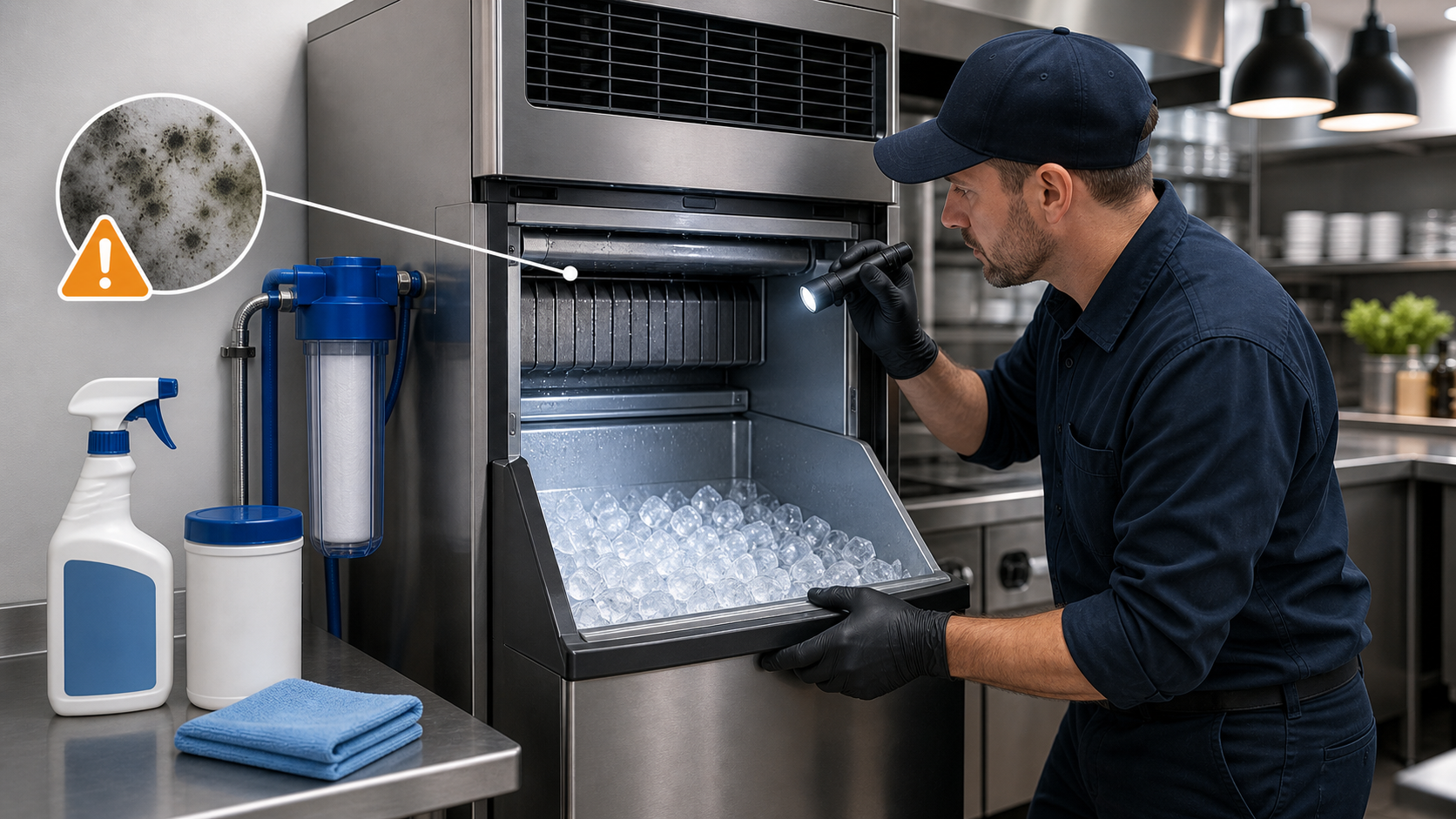
Mold growth inside a commercial ice maker creates severe operational issues. It is a serious biological hazard that compromises consumer health and triggers strict regulatory penalties. For any food service operation, clean ice is a legal and business necessity. This discussion covers the root causes of contamination, daily operational risks, early detection signs, concrete prevention strategies, and a standard cleaning protocol you can use to protect your facility.
Why Commercial Ice Machines Are Prone to Mold
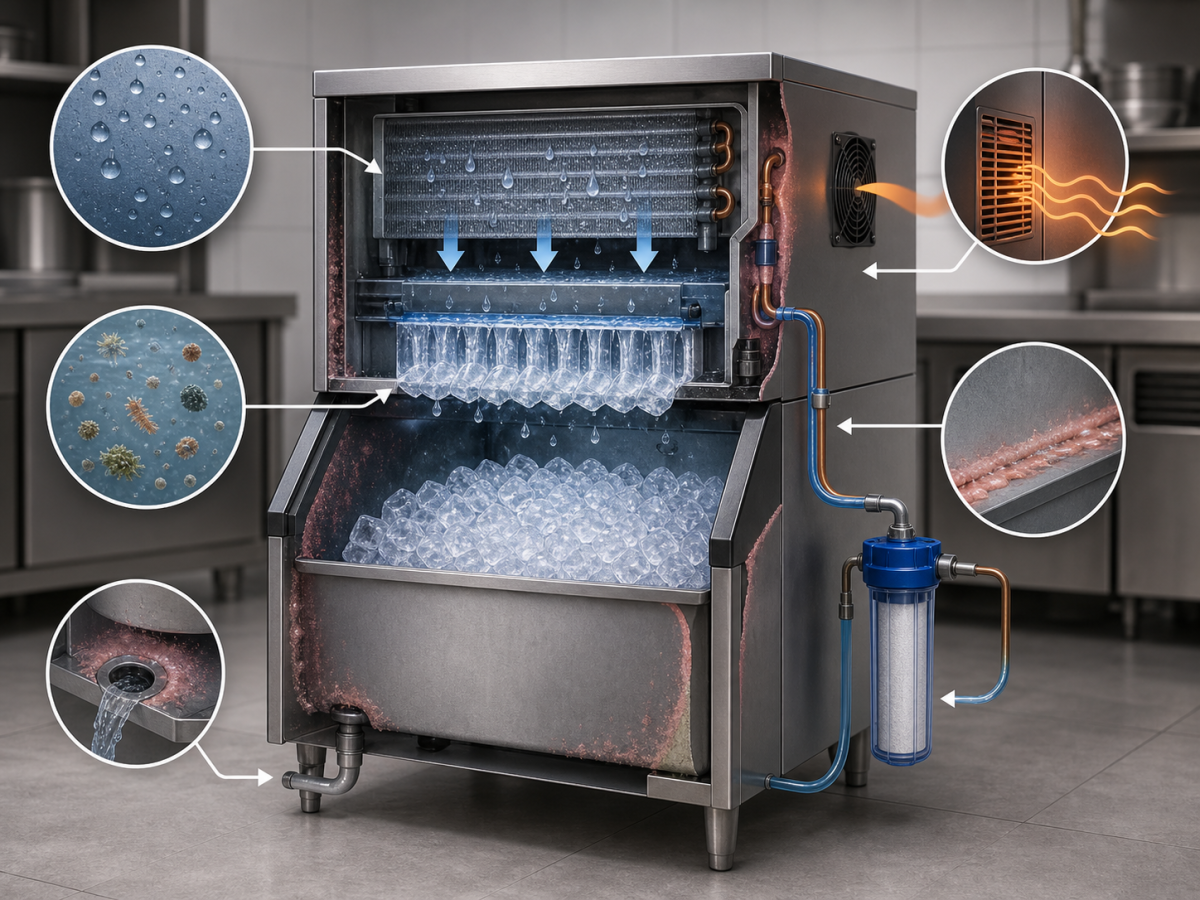
An ice machine creates an ideal environment for biological growth due to its physical design and operational settings. Three main conditions promote the growth of mold and bacteria inside the unit:
- Constant Moisture: The internal compartments are continuously wet during operation, giving fungal spores the water they need to live and multiply.
- Ambient Temperature Fluctuations: While the freezing plate stays cold, the surrounding areas inside the cabinet often sit within a moderate temperature range that allows microbes to thrive.
- Organic Matter in Water Supply: Incoming water carries small amounts of organic compounds and minerals. These materials settle on internal parts, forming a food source for microorganisms.
Key Operational Risk Factors
Several day-to-day practices increase the likelihood of contamination.
- High daily usage volume means the machine stays in constant motion, drawing in fresh air and airborne spores.
- Infrequent cleaning cycles allow small deposits to grow into thick layers of biofilm.
- Poor ventilation around the unit traps heat and raises internal cabinet temperatures.
- Additionally, aging ice machine water filtration systems fail to remove organic matter, accelerating the contamination process.
High-Risk Environments
Certain food service settings face higher contamination risks due to airborne particles.
- Bakeries utilize large quantities of yeast and flour, which easily enter the air and settle inside nearby equipment.
- Breweries have high concentrations of wild yeast and fermentation byproducts.
- Open bar setups often feature airborne sugars from spilled drinks and garnishes.
In these specific environments, an industrial ice machine requires much more frequent attention to remain sanitary.
The Business Cost of Ignoring Ice Machine Mold
Ignoring the cleanliness of your ice equipment leads to severe financial and operational consequences that can damage your entire business structure. Failing to maintain clean ice equipment impacts multiple areas of a food service operation. The most direct effects include:
Health & Safety Compliance
Local health departments enforce strict sanitation codes for ice production. Finding mold or bacteria during an inspection results in immediate demerits, public grade reductions, or operational shutdowns. Regulatory penalties cost money and require documented proof of correction before you can serve customers again.
Operational Downtime
When a commercial ice machine is contaminated, you must stop using it immediately. Staff must discard all existing ice, shut down the power, perform a deep clean, and wait for re-certification. During this downtime, the business must buy bag ice from outside vendors, which increases daily labor and ingredient costs.
Reputational Damage
Customers notice foul odors and off-tasting ice quickly. A single negative online review mentioning dirty ice or food poisoning can ruin a brand. Recovering from public complaints regarding basic hygiene is extremely difficult for any restaurant or bar.
Equipment Lifespan
Unchecked mold and biofilm accumulate on sensors, water plates, and pumps. This buildup restricts water flow and forces the compressor to work harder. Over time, this extra strain accelerates wear on internal components, causing frequent breakdowns and expensive premature equipment replacement.
How to Identify Mold and Biofilm Early
Catching biological growth early prevents widespread contamination and allows kitchen managers to fix issues before they impact food safety or customer satisfaction. Operators must know what to look for during daily routines. Early warning signs of contamination appear in three distinct categories:
Inspect the Internal Surfaces Regularly
Fungal growth and bacterial biofilms usually appear as pink, orange, or black discoloration. Look closely at the storage bin walls, the flexible water curtain, and the interior of the dispenser nozzle where moisture collects.
Pay Attention to Smell and Taste
A musty or earthy odor coming from the ice bin indicates advanced biological growth. If customers complain that the ice has an unusual off-taste, inspect the internal water system immediately.
Watch How the Machine Runs
An unexplained drop in ice production efficiency often means slime is insulating the freeze plate or blocking water flow. Frequent drain blockages also indicate that thick biofilm is sloughing off and clogging the exit lines.
Recommended Action: Establish a written, weekly visual inspection protocol. Include this step on kitchen opening and closing checklists so staff members examine the bin interior and dispensing components on a regular schedule.
7 Proven Strategies to Prevent Mold in Commercial Ice Machines
Implementing proactive defense methods reduces the reliance on emergency cleaning and ensures your ice remains pure between scheduled service visits. To keep your system clean, combine operational discipline with proper hardware maintenance using these seven strategies:
- Establish a Documented Cleaning Schedule: Do not guess when the machine was last washed. Use monthly deep cleans for standard operations, and switch to bi-weekly cleaning cycles for high-volume or high-risk settings like bakeries.
- Install and Replace Water Filtration Systems: Effective ice machine water filtration serves as the first line of defense against incoming contaminants. High-quality ice machine filters remove organic matter, chlorine, and sediment, preventing the foundational layer that microbes use to anchor themselves. Replace the ice maker filter cartridge every six months or sooner if water pressure drops.
- Use EPA-Approved Ice Machine Cleaners and Sanitizers: Avoid generic kitchen detergents or abrasive scrubs. Use food-safe formulations certified by the EPA specifically for ice equipment to protect the plating on the evaporator grid.
- Deploy UV or Antimicrobial Inhibitor Systems: Install continuous passive protection devices inside the unit. These tools use specific light wavelengths or slow-release materials to disrupt microbial growth between manual cleanings.
- Ensure Proper Ventilation Around the Unit: Maintain the manufacturer-specified clearance space around all sides of the machine. Good airflow prevents heat buildup and reduces condensation inside the cabinet.
- Train Staff on Hygiene Protocols: Human error introduces bacteria daily. Train employees to store the ice scoop in a dedicated external holder, handle the scoop only by the handle, and keep the bin door closed tightly whenever it is not in use.
- Keep Drainage Systems Clear and Functional: Perform routine checks on all drain lines. Clear out any debris or standing water promptly, as backed-up drains create a direct pathway for airborne mold spores to enter the storage area.
Step-by-Step Commercial Ice Machine Deep Clean Protocol
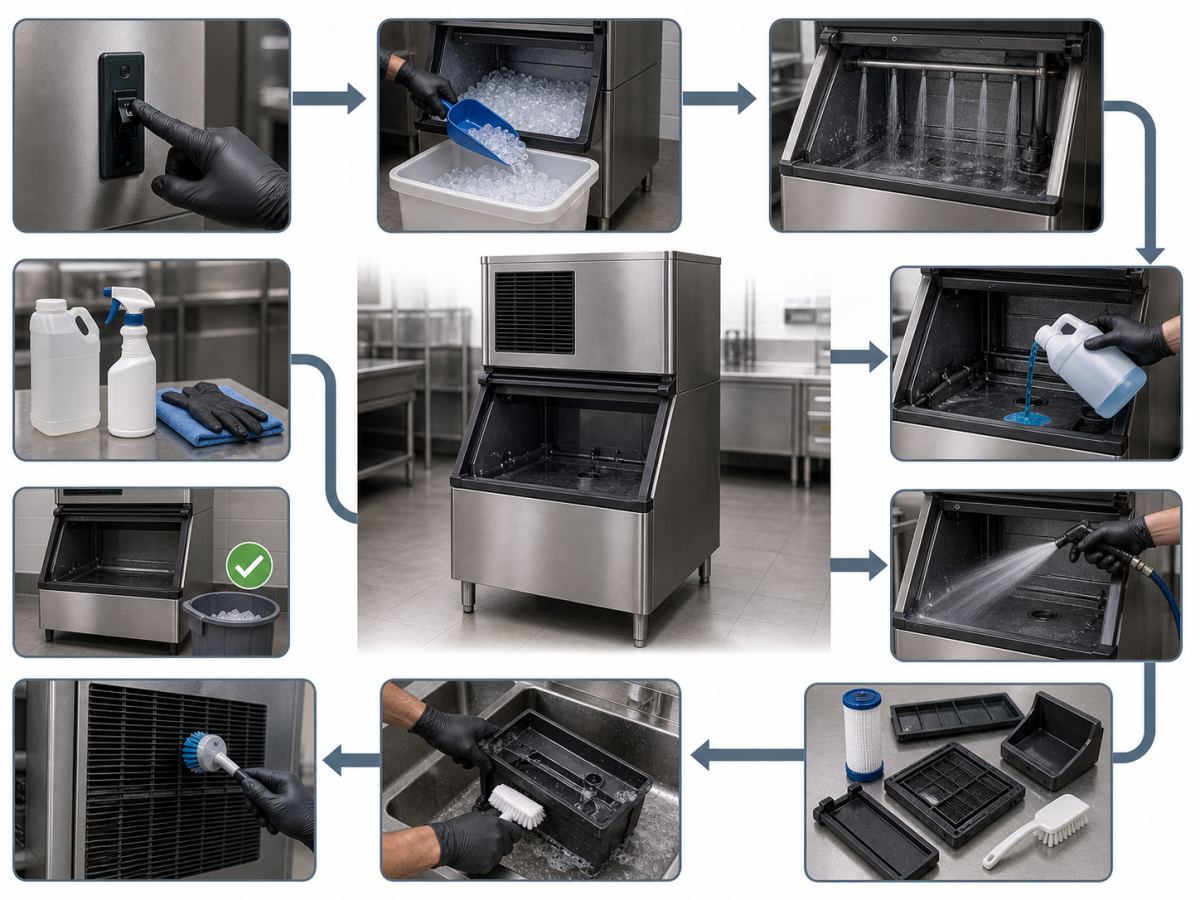
Following a precise, systematic sanitation sequence ensures that all chemical agents work effectively and that no hazardous residue remains in the ice supply. When performing a deep clean on a commercial ice machine, follow these steps exactly to achieve full sanitation:
Step 1: Power Down and Empty
Turn off the machine’s electrical power supply. Discard all existing ice from the storage bin entirely so no cleaning chemicals contaminate the consumer supply.
Step 2: Activate Wash Cycle
Turn the power back on and press the built-in wash or clean button. This allows the water reservoir to fill and prepares the water system for chemical distribution.
Step 3: Add Approved Cleaner
Pour the manufacturer-recommended or EPA-certified ice machine cleaner directly into the water reservoir. Let the machine run its full internal circulation cycle, which typically takes around 25 minutes.
Step 4: Drain and Flush
Drain the chemical solution from the reservoir completely. Flush the entire water system with clean water for a minimum of 3 complete rinse cycles to remove all chemical traces.
Step 5: Clean Removable Parts
Power down the unit again. Remove internal components like the water curtain, bin liner, water distribution tubes, and dispenser parts. Manually scrub these components with sanitizer and a soft brush, then rinse them thoroughly.
Step 6: Clean Condenser Coils
Locate the exterior condenser coils. Clear away dust, grease, and lint using a soft brush or compressed air to maintain optimal cooling efficiency.
Step 7: Reassemble and Restart
Put all clean components back into place carefully. Turn the machine back on, run one full ice-making cycle, and discard the entire first batch of ice to ensure safety before returning the unit to daily service.
Recommended Maintenance Schedule for Commercial Operators
This structured reference table helps kitchen managers organize and delegate sanitation tasks to ensure no preventive steps are missed.
| Frequency | Maintenance Task Details |
|---|---|
| Daily | Perform a visual inspection of the bin interior. Check for unusual odors, slime, or early discoloration on components. |
| Weekly | Wipe down the interior bin walls and lid with sanitizer. Inspect the floor drain and clean the ice scoop storage container. |
| Monthly | Execute a full deep clean and sanitization cycle using EPA-approved chemicals. Increase frequency in high-volume settings. |
| Every 3 Months | Replace antimicrobial inhibitor rods or cartridges. Inspect the door gaskets and flexible seals for cracks or leaks. |
| Every 6 Months | Replace the water filter cartridge to maintain ice machine water filtration efficiency. Schedule a professional condenser service. |
| Annually | Schedule a comprehensive inspection with a certified technician. Review and update manufacturer maintenance guidelines. |
Protect Your Business by Maintaining Clean Ice Equipment
Regular sanitation keeps your ice machine safe and running efficiently. Consistent care prevents surprise health inspection failures and saves money on early equipment replacements. Instead of waiting for slime to appear, make cleaning a permanent part of your kitchen routine.
FAQs
Q1: How often should a commercial ice machine be professionally cleaned?
Most food service businesses should schedule a professional deep clean every 3 to 6 months. The exact interval depends on your daily ice usage volume, local water hardness, and environmental factors like nearby baking or brewing processes. Busy kitchens often require monthly professional servicing to remain completely clear of microbial buildup.
Q2: What is the pink or orange slime inside my ice machine — is it mold?
This discoloration is usually not a traditional mold. The pink or orange film is a biofilm caused by airborne bacteria known as Serratia marcescens. This bacterium thrives in wet, room-temperature environments. It creates identical sanitation risks as mold and requires the exact same EPA-approved disinfection steps to eradicate safely.
Q3: Can I use bleach or vinegar to clean a commercial ice machine?
Do not use bleach or vinegar for commercial equipment. Bleach reacts aggressively with internal metals, strips away defensive nickel coatings, and can leave toxic residues in consumer ice. Vinegar lacks the required strength to eliminate industrial-strength bacteria and biofilm. Always use specialized cleaners formulated specifically for commercial ice makers.
Q4: Does water quality affect mold growth in ice machines?
Water quality directly impacts how quickly microbes grow. Raw water carrying high mineral loads creates rough scale deposits inside the water lines. These rough surfaces give mold spores and bacteria an ideal texture to grab onto and build thick colonies. Utilizing dedicated ice machine water filtration systems helps eliminate these minerals, making it much harder for biofilm to develop.
Related posts
How to Clean a Commercial Ice Machine Step by Step (2026 Guide)
Get rid of slime and mold in your commercial ice maker. Follow our step-by-step instructions to ensure health compliance and clear ice quality.
The Hidden Costs of Cheap Ice Machines Every Business Owner Should Know
High repair costs and emergency bagged ice wipe out any upfront savings on budget ice makers. Discover the true 5-year total cost of ownership here.