




Blog
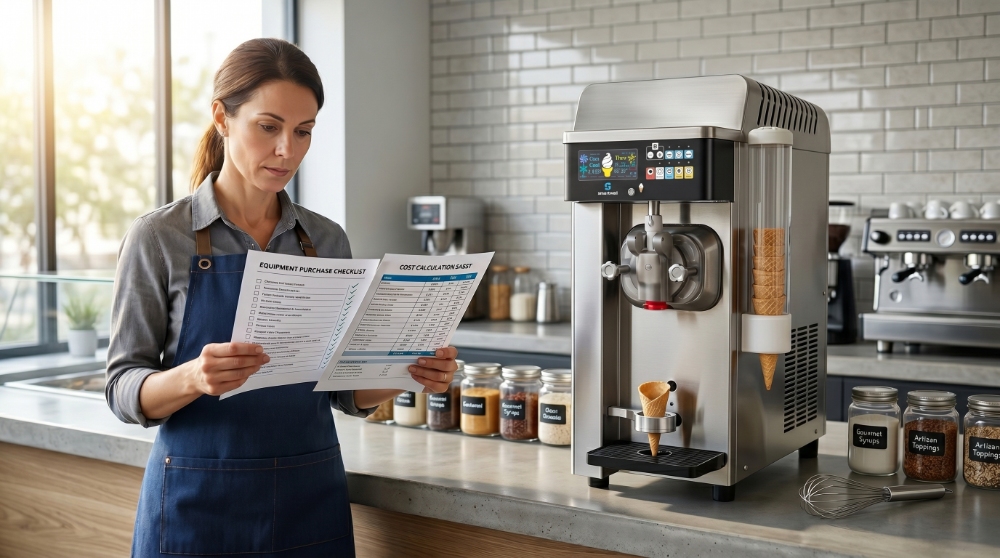
Buying a commercial ice cream machine involves more than just hunting for a low price or a shiny exterior. It is easy to overlook how much a machine affects your dessert quality, power bills, and service speed during a rush. Choosing a model that is a nightmare to clean or prone to breaking down can quickly turn a busy summer into a financial drain. Here is how to avoid common traps and pick equipment that actually helps your business grow.
Why So Many First-Time Buyers Choose the Wrong Machine
Many mistakes happen because people fall in love with a machine before they actually look at their own menu or store capacity. A machine might have great reviews, but if it cannot keep up with a rush of fifty people on a Saturday afternoon, it is the wrong choice for you. Most buyers focus on the hardware specs instead of thinking about how the staff will move around the machine, how often it needs a deep clean, or if the shop’s wiring can even handle the power load. Selecting the right commercial ice cream maker machine requires a balance between what you want to sell and what your shop can realistically handle.
Success in the frozen dessert business depends on matching your equipment to your specific goals and physical store layout rather than just buying the most popular model available.
10 Common Mistakes to Avoid When Buying a Commercial Ice Cream Machine
Avoiding these ten pitfalls ensures you invest in a tool that helps your business grow instead of a heavy piece of metal that causes constant stress.
Mistake #1: Not Defining Your Menu, Product Type, and Business Model First
Starting your search by looking at equipment lists is a backwards approach. You need to know exactly what you are serving before you look at a single spec sheet. Soft serve, traditional hard scoops, gelato, and frozen yogurt all behave differently inside a cylinder.
A soft serve ice cream machine is built to incorporate air and maintain a specific light texture, whereas a gelato machine focuses on density and lower temperatures. If your business model relies on high-volume self-service, your needs will differ wildly from a high-end restaurant serving a single signature dessert. Decide on your flavors, your desired texture, and your serving style first so the machine supports your vision.
Mistake #2: Underestimating Peak Demand and Real Production Capacity
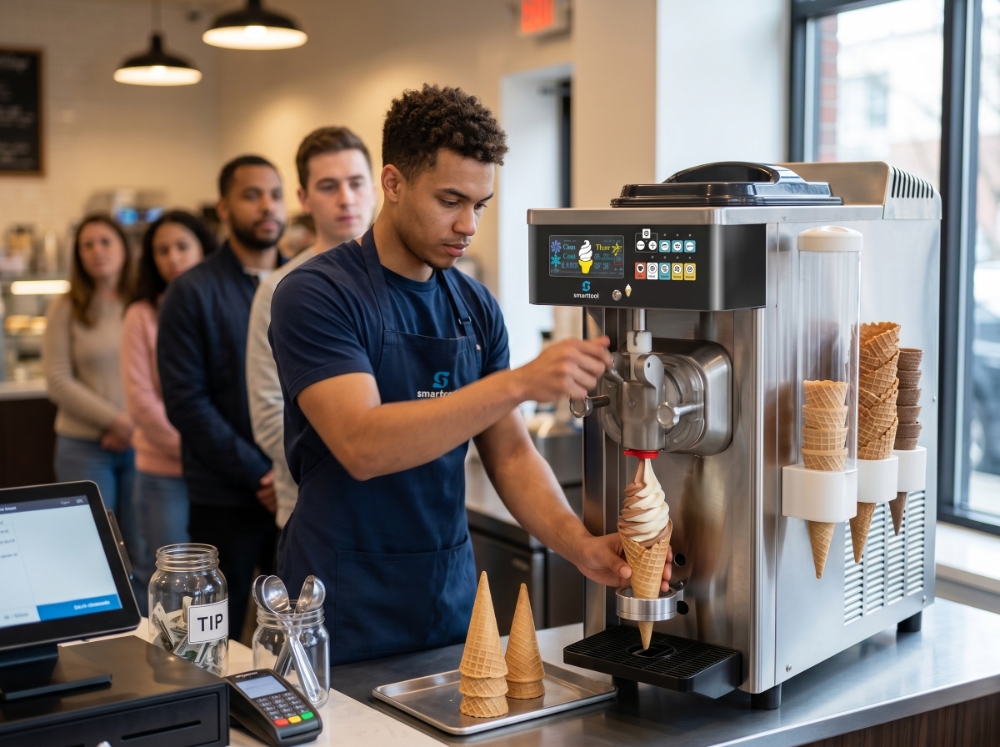
A common error is buying a machine based on how many cones you expect to sell in a whole day. In reality, you need to worry about how many you sell in twenty minutes. If a long line of customers shows up and your machine cannot freeze the mix fast enough, the ice cream will come out soupy and unappealing.
Slow recovery times lead to frustrated customers and lost money. Always look at the “output per hour” and “recovery time” specs. If your shop is in a busy tourist area or near a school, your peak demand will be much higher than a quiet neighborhood cafe. Choose a commercial soft serve ice cream machine that can handle your busiest hour without losing product consistency.
Mistake #3: Choosing the Wrong Machine Type for the Product You Want to Serve
Not every commercial ice cream maker can produce every type of frozen treat. Some owners try to save money by using a machine meant for one product to make another. This usually results in a poor customer experience.
For example, an industrial ice cream machine meant for batch production of hard scoops will not give you the smooth, continuous flow needed for soft-serve cones. Pushing a machine to do something it wasn’t designed for also puts extra strain on the motor and cooling system. Make sure the category of the machine matches the viscosity and temperature requirements of your specific recipe.
Mistake #4: Focusing Only on Purchase Price Instead of Total Cost of Ownership
The cheapest machine often becomes the most expensive over time. A low-priced unit might use more electricity, require more water for cooling, or break down frequently. When you calculate your budget, look past the initial check you write.
Think about the cost of replacement parts and how much labor it takes to run the unit. If a cheaper machine takes an extra hour to clean every night, that labor cost adds up to thousands of dollars over a year. Reliable, energy-efficient equipment might cost more today but will save you significant amounts of money on utility bills and repair fees in the future.
Mistake #5: Ignoring Utility Requirements Like Power, Water, Drainage, and Ventilation
Many business owners buy a machine only to find out their shop doesn’t have the right electrical outlet. High-capacity machines often require three-phase power or specific voltage that standard wall plugs don’t provide. Hiring an electrician to rewire your shop after the machine arrives is a huge, unplanned expense.
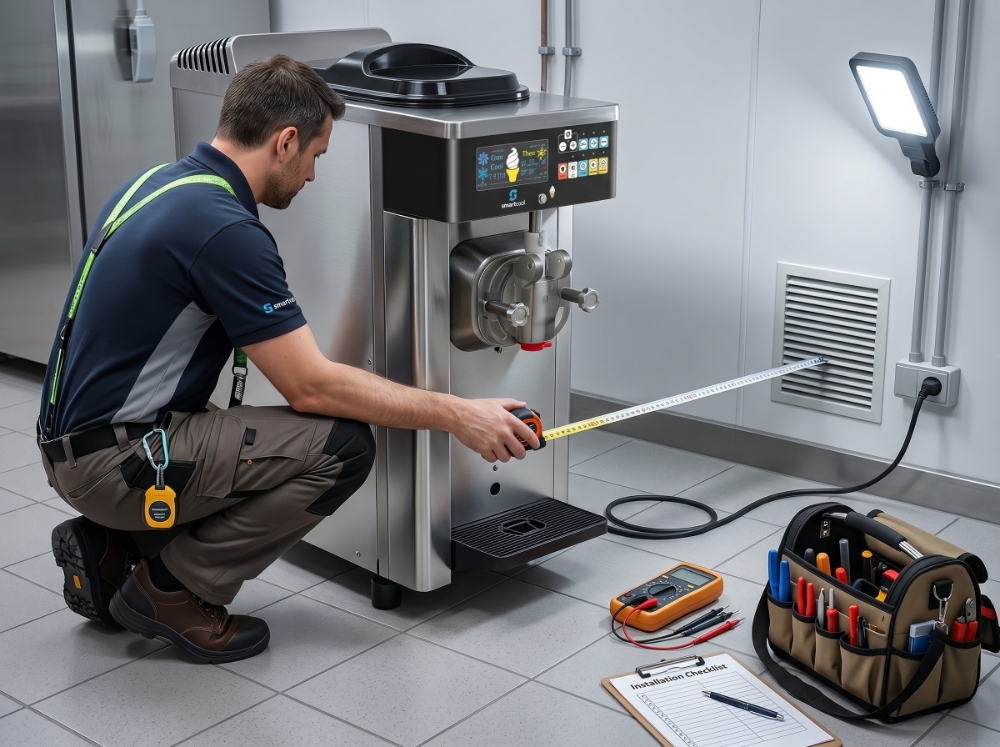
Water-cooled machines need a steady water supply and a way to drain the waste. Even air-cooled machines need plenty of space for ventilation. If you tuck a machine into a tight corner without airflow, it will overheat and stop working. Always verify your voltage, amperage, and plumbing setup before you hit the buy button.
Mistake #6: Overlooking Space, Workflow, and Installation Constraints
Measuring the spot where the machine will sit is only half the job. You also need to measure every doorway, hallway, and elevator it has to pass through to get there. If the machine is too wide for your front door, you have a major problem on delivery day.
Inside the shop, think about the workflow. Is there enough room for a staff member to stand in front of the machine while someone else walks past? Is the counter strong enough to hold hundreds of pounds of equipment? A machine that blocks a path or makes it hard for staff to move will slow down your service and cause accidents.
Mistake #7: Underestimating Cleaning, Maintenance, and Daily Labor Requirements
Food safety is the most important part of running a dairy-based business. If a machine is a nightmare to take apart, your staff might cut corners, leading to health code violations or spoiled products. Some modern machines have “heat treatment” cycles that reduce the frequency of full tear-down cleanings, while others must be cleaned every single day.
Look for a commercial ice cream machine with fewer small parts and easy-to-reach surfaces. A design that simplifies the sanitizing process saves you hours of labor every week and ensures your customers stay safe. Easy maintenance also means your seals and gaskets will last longer because they aren’t being handled roughly during a difficult cleaning process.
Mistake #8: Failing to Check Certifications and Food Safety Compliance
In many regions, health inspectors require commercial kitchen equipment to meet specific sanitation standards. If you buy a machine that lacks these certifications, the city might not allow you to use it at all. This is a common issue with machines purchased from overseas sellers that don’t follow local regulations.
Check for recognized safety marks like NSF or ETL that prove the machine is easy to sanitize and built with food-grade materials. Using non-certified equipment can lead to heavy fines or the permanent closure of your business. It is always better to pay for a compliant machine than to risk your legal right to operate.
Mistake #9: Not Evaluating After-Sales Support, Warranty Terms, and Spare Parts Availability
Every machine will eventually need a new belt, seal, or sensor. If the manufacturer is located across the ocean and has no local technicians, your machine could be sitting broken for weeks while you wait for a part. During the peak of summer, two weeks of downtime can ruin your yearly profit.
Before buying, ask who will fix the machine if it breaks. Is there a service center in your city? Are the common wear-and-tear parts kept in stock locally? A strong warranty is only useful if there is a qualified person nearby who can actually perform the repairs.
Mistake #10: Buying Without Testing the Machine or Checking Real Customer Feedback
Spec sheets can be misleading. A machine might claim to produce a certain amount of ice cream, but it might be incredibly noisy or vibrate so much that it moves across the counter. Whenever possible, see the machine in action.
Watch videos of the machine being cleaned and operated. Read reviews from other shop owners who have used that specific model for at least a year. These “real-world” stories tell you about the little annoyances that a salesperson will never mention, such as how loud the compressor is or how difficult it is to find the right settings for a specific mix.
What Smart Buyers Do Instead
Taking a structured approach to your purchase turns a risky gamble into a smart business move that sets you up for long-term success.
Successful owners start with a clear plan by defining their menu, serving volume, and business model before they ever look at a catalog. They verify that a machine fits the store’s specific utility setup, physical layout, and the cleaning capacity of their staff. Instead of rushing, they carefully compare machine types, real production output, and long-term operating costs. By checking certifications and after-sales support before making a final decision, they ensure the equipment fits the reality of the daily job.
Pick Your Perfect Commercial Ice Cream Machine
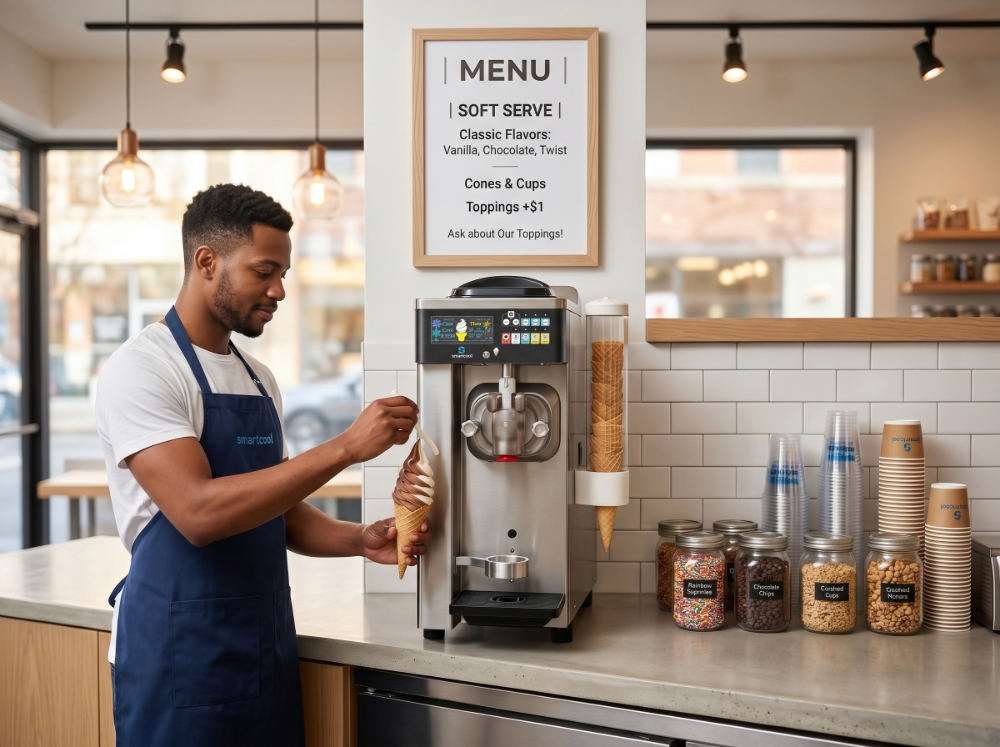
The best machine fits your specific business needs and budget without overcomplicating your daily routine. Focus on these points to ensure a smart purchase:
- Measure your space: Confirm the unit fits your layout and staff can clean it easily.
- Match peak demand: Base your choice on your busiest hour.
- Watch hidden expenses: Track power, water, and labor costs.
- Secure local help: Choose brands with nearby repair technicians.
- Confirm certifications: Stick to safety-tested equipment to stay legal.
FAQs
Q1: How do I choose the right commercial ice cream machine for my business?
Start with your product type, store utilities, and busiest service window. Figure out if you need soft serve or batch frozen ice cream. Then, look at your shop’s power outlets and how many customers you expect to serve during your busiest time of the week.
Q2: What is the most common mistake when buying a commercial ice cream machine?
The most common mistake is buying before you have a clear menu or layout plan. This leads to buying equipment that is either too small for the demand or doesn’t fit the electrical setup of the building.
Q3: Is the cheapest commercial ice cream machine a good option for a new business?
It is rarely a good idea. Cheap machines often use more power, break down more often, and are harder to clean. You might save money on the first day, but you will spend more on repairs and electricity over the next few years.
Q4: What should I check before installing a commercial ice cream machine?
You must verify the voltage, plug type, drainage, and ventilation space first. You also need to check for proper drainage if it’s water-cooled and ensure there is enough empty space around the machine for air to circulate so it doesn’t overheat.
Related posts
How to Clean a Commercial Ice Machine Step by Step (2026 Guide)
Get rid of slime and mold in your commercial ice maker. Follow our step-by-step instructions to ensure health compliance and clear ice quality.
The Hidden Costs of Cheap Ice Machines Every Business Owner Should Know
High repair costs and emergency bagged ice wipe out any upfront savings on budget ice makers. Discover the true 5-year total cost of ownership here.