




Blog
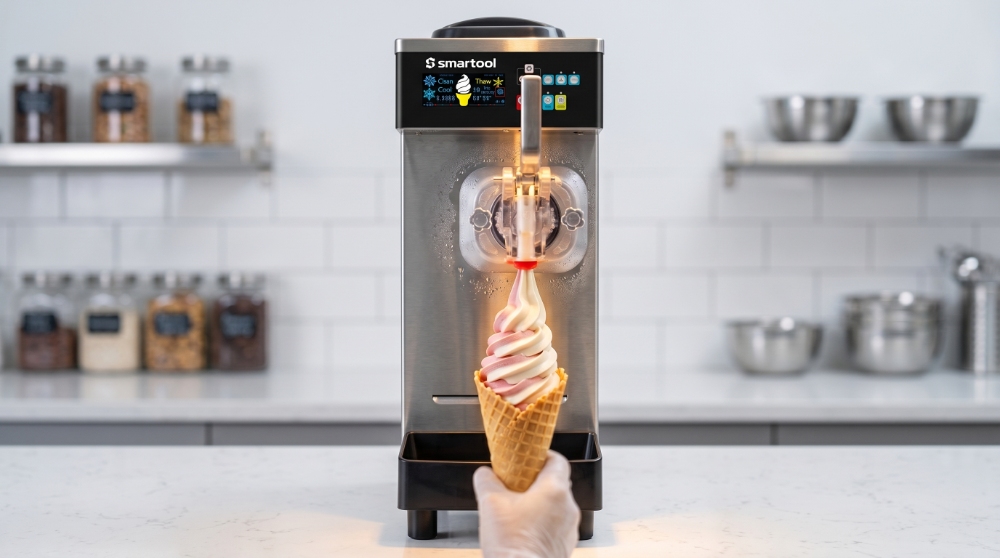
You finally found the perfect location, finished your menu, and hired a great team. Opening a food business is a huge milestone, but that dream can quickly turn into a stressful situation if a health inspector walks in and tells you your equipment isn’t legal for use. Buying a commercial freezer or a soft serve machine is a major investment. If you pick a model without the right safety labels, you risk heavy fines, forced closures, or expensive replacements. To keep your business running safely, you need to look for the “Big Three” regulatory standards: NSF, ETL, and FDA. These labels prove your equipment is safe for food and for your building.
Why Equipment Certifications Matter for Your Business
Buying certified equipment protects your budget and your professional reputation. These marks prove to officials and insurers that your industrial kitchen equipment meets high safety standards.
Health Inspector Approval
In the US and Canada, local health departments hold the power to grant or deny your operating permit. When an inspector visits, they look for specific badges like the NSF mark on your commercial upright freezer or prep tables. If your machines lack these labels, the inspector might assume they are “residential grade,” which isn’t allowed in a professional kitchen.
Liability and Insurance
Operating a business involves risk, but uncertified equipment makes that risk much higher. If a commercial chest freezer without an ETL mark causes an electrical fire, your insurance company might refuse to pay the claim. They often argue that using non-compliant gear violates the terms of your policy. Similarly, if a customer gets sick from food stored in a non-certified unit, you could face a massive legal battle without the protection of industry-standard safety proof.
Long-term ROI
Quality equipment costs more upfront, but it pays off over time. Certified machines undergo testing to ensure they can handle the heat and constant use of a busy kitchen. Because they are built better, a commercial refrigerator freezer combo usually lasts years longer than a cheap, unverified alternative. You also spend less on repairs because the parts are designed to be durable and easy for technicians to fix.
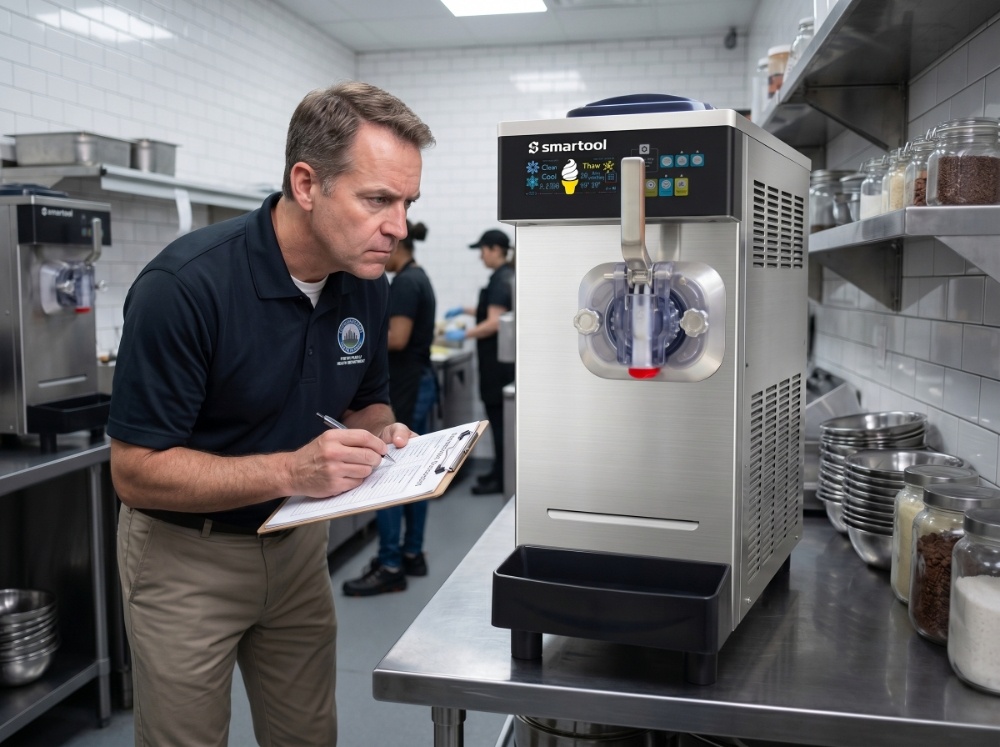
NSF Certification Explained: The Gold Standard for Sanitation
The NSF mark is arguably the most important label for food safety. It focuses entirely on how easy a machine is to clean and whether it keeps food at the right temperature to prevent spoilage.
What Does NSF Stand For?
NSF stands for the National Sanitation Foundation. It is an independent organization that writes the rules for food safety and sanitation. They don’t just take a manufacturer’s word for it; they put equipment through rigorous testing to see if it meets their high standards for public health.
Why Commercial Freezers Need NSF
Bacterial Prevention
Bacteria love tiny cracks and porous surfaces. NSF standards ensure a commercial freezer has no hidden crevices where milk, juice, or food particles can get stuck. In machines like soft serve dispensers, this is vital. If the internal paths aren’t perfectly smooth, old dairy can rot inside, leading to dangerous outbreaks of Listeria or E. coli.
Ease of Cleaning
Labor is one of your highest costs. NSF-certified machines are designed to be taken apart quickly. Staff can remove valves, seals, and hoppers without needing special tools or hours of training. This design ensures that daily cleaning is thorough, which keeps the health department happy and your food tasting fresh.
Material Durability
Commercial kitchens use strong chemicals to kill germs. NSF testing guarantees that the metals and plastics in your machine won’t rust, crack, or peel when exposed to these sanitizers. It also ensures the surfaces won’t absorb food odors or stains over time, keeping your equipment looking professional for years.
ETL Certification Explained: Ensuring Electrical Safety
While NSF focuses on the food, ETL focuses on the power. This certification ensures that your heavy-duty cooling equipment won’t pose a fire hazard or an electrical shock risk to your employees.
What Is the ETL Mark?
The ETL mark comes from Electrical Testing Laboratories. It is a symbol that shows a product has been tested by Intertek, which is a Nationally Recognized Testing Laboratory (NRTL) approved by OSHA. This means the federal government trusts their testing process to keep workers safe in a commercial environment.
ETL vs. UL: What’s the Difference?
Many buyers ask if they should look for ETL or UL. Both labs test products to the exact same safety standards (such as UL 471 for commercial refrigerators). The main difference is the company doing the testing. ETL is often preferred by manufacturers because their testing process is faster, helping new machines get to the market sooner. For a business owner, an ETL mark is equal to a UL mark in the eyes of a fire marshal or building inspector.
Why It Matters for Freezers
Commercial freezers are power-hungry. They use high-voltage compressors and fans that run 24 hours a day, 7 days a week. This constant stress on the electrical system can lead to overheating if the components are low-quality. ETL certification proves the machine can handle the electrical load without short-circuiting or starting a fire. It provides peace of mind that your kitchen is safe even when no one is there overnight.
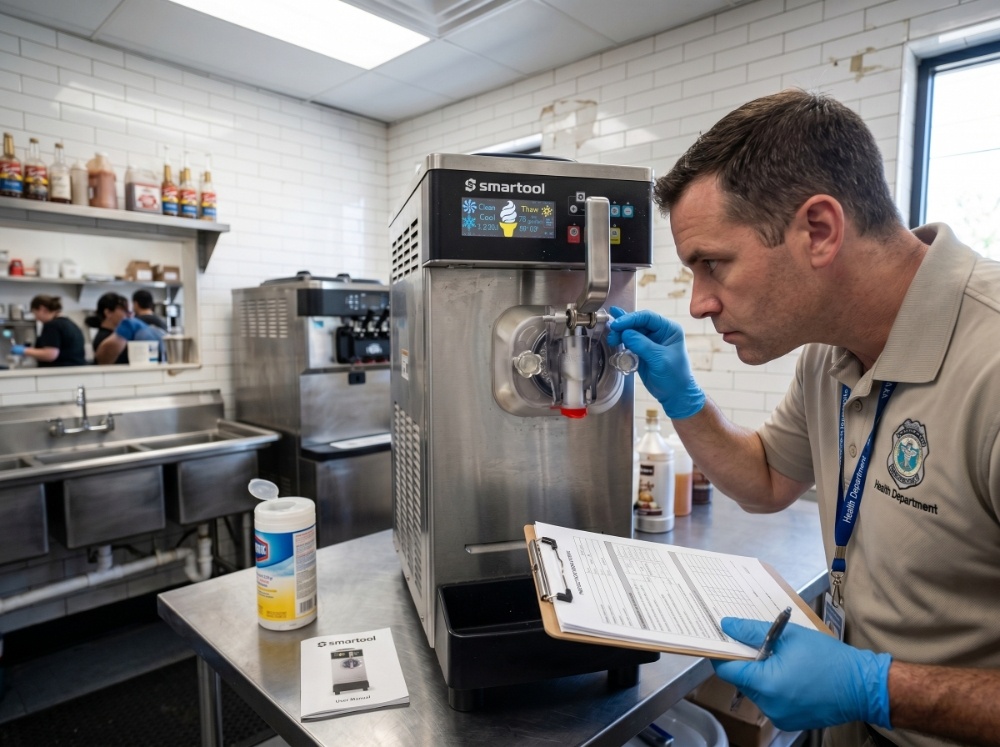
FDA Compliance: Safe Food-Contact Materials
FDA compliance is often misunderstood, but it is a critical piece of the puzzle. It ensures that every part of the machine that touches your food is made from safe, non-toxic materials.
FDA Approval vs. FDA Compliance
It is important to note that the FDA does not “approve” a specific commercial upright freezer or ice cream machine. Instead, they set rules for the materials used to build them. When a manufacturer says their machine is “FDA compliant,” they mean the stainless steel, rubber O-rings, and plastic tubes inside the unit meet FDA safety guidelines for food contact.
Safe Materials for Freezers
The FDA’s 21 CFR (Code of Federal Regulations) lists which materials are safe for food. For example, the stainless steel used in a freezing cylinder must be a specific grade that won’t leach heavy metals into the food. Similarly, the rubber seals and plastic dispensing handles must be “food grade.” This prevents harmful chemicals from migrating from the machine into the ice cream or frozen vegetables you serve to customers.
Quick Comparison: NSF vs. ETL vs. FDA
To help you remember what to look for, use this table as a quick reference when shopping for new industrial kitchen equipment.
|
Certification |
Primary Focus |
Who Looks for It? |
Key Benefit |
|
NSF |
Sanitation & Food Safety |
Health Inspectors |
Prevents bacteria & easy to clean |
|
ETL |
Electrical Safety |
Fire Marshals / OSHA |
Prevents fires & electrical shorts |
|
FDA |
Material Safety |
Federal Regulators |
Non-toxic food-contact parts |
How to Verify Certifications Before You Buy
Avoid assuming any equipment is certified just because the salesperson says so. Do your research to ensure the business chest freezer or soft serve machine you buy is legal.
Check the Spec Sheet
Before you hit the “buy” button, download the product specification sheet (often called a “cut sheet”). Look for the NSF and ETL logos at the bottom of the page. If the listing only says “meets standards” but doesn’t show the actual logos, ask the seller for proof. Real commercial freezers will always have these documents ready for you.
Look for the Physical Badges
When the machine arrives at your shop, check the physical data plate. This is usually a silver or white sticker located on the back or side of the unit, often near the serial number. You should see the NSF and ETL marks printed directly on that plate. If the machine arrives with no stickers or just a plain “CE” mark (a European conformity standard that is not a substitute for NSF or ETL in the US market), you might have an issue with your local inspector.
Beware of Counterfeits
Unfortunately, some cheap, unbranded machines use fake logos to trick buyers. If the price of a commercial refrigerator freezer combo seems too good to be true, it might be an unverified import. You can verify a manufacturer by searching the official NSF or Intertek (ETL) online databases. Simply type in the brand name to see if their certifications are active and real.
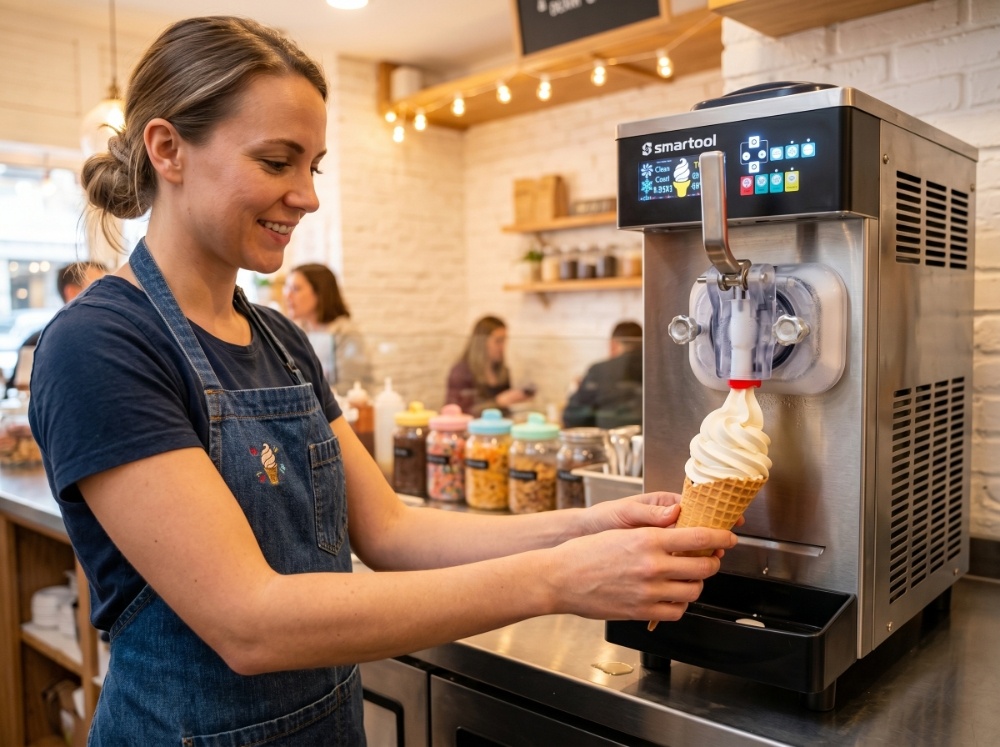
Pick Certified Commercial Freezers to Protect Your Growth
Checking for safety labels is a smart move for your bottom line. NSF keeps your food clean for inspectors, ETL stops electrical hazards, and FDA compliance ensures non-toxic parts. Choosing a commercial freezer with all three seals guards your staff and customers. Buying verified equipment means you can focus on serving great food instead of worrying about fines or broken machines.
FAQs
Q1: Can I use a non-NSF freezer in a commercial kitchen?
In almost all cases, no. Most local health codes require equipment to be “commercial grade,” which is usually defined by having an NSF or equivalent sanitation mark. Using a residential freezer meant for a home garage can result in a failed inspection and a requirement to remove the unit immediately.
Q2: Is ETL certification just as good as UL?
Yes. Both ETL and UL are recognized by OSHA as Nationally Recognized Testing Laboratories. They use the same safety standards to test products. As long as the machine has an ETL or UL mark, it is legally compliant for electrical safety in a professional kitchen.
Q3: How do I know if my ice cream machine is FDA-compliant?
Check the manufacturer’s documentation for a statement regarding “food-grade materials.” Most high-quality brands include this in their NSF testing reports. If the parts touching the food are made of 304 or 316 stainless steel and food-grade plastics, the machine likely meets FDA standards.
Q4: Do I need all three certifications for my business?
Yes, it is best to have all three. While one focuses on health and another on electricity, they work together to cover all your legal bases. Having NSF, ETL, and FDA-compliant materials ensures you won’t have any trouble with health inspectors, fire marshals, or insurance providers.
Related posts
How to Clean a Commercial Ice Machine Step by Step (2026 Guide)
Get rid of slime and mold in your commercial ice maker. Follow our step-by-step instructions to ensure health compliance and clear ice quality.
The Hidden Costs of Cheap Ice Machines Every Business Owner Should Know
High repair costs and emergency bagged ice wipe out any upfront savings on budget ice makers. Discover the true 5-year total cost of ownership here.