




Blog
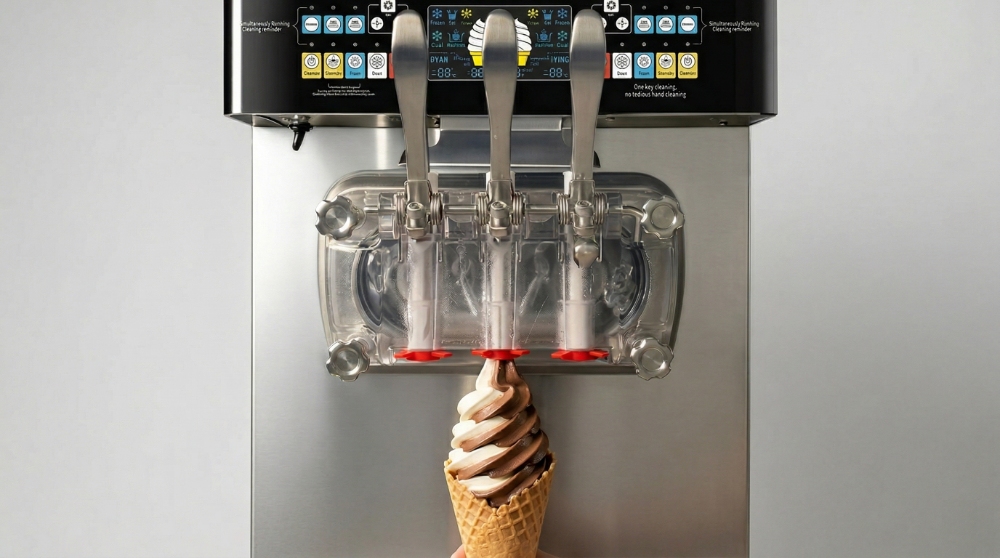
Adding a soft serve option to your menu is a proven way to boost profits and attract a wider variety of customers. Your success depends on the equipment you pick. A high-quality soft serve ice cream machine keeps every cone smooth, even during a busy rush. The right model controls your serving speed, product texture, and repair costs.
Buying the most expensive unit is often a mistake. Instead, find a machine that matches your shop size and daily demand. A small machine causes long lines, while a huge one wastes power. The best choice balances your specific menu needs with your actual floor space.
Start with Your Business Needs
Your business type and the number of customers you have will determine the size and power of the commercial soft serve machine required for your space.
- Start by defining your business type. Is this for a dedicated ice cream shop, a cafe, a restaurant, a buffet, a food truck, or a convenience store? Each environment has different needs. For example, a soft serve ice cream machine for cafe use might be smaller since coffee is the main focus. Conversely, a buffet needs a machine that is simple enough for customers to use themselves without constant staff supervision. If you are looking for a soft serve ice cream machine for food truck setups, you must prioritize a compact footprint and power efficiency.
- Next, estimate your expected daily sales volume and peak-hour demand. Output capacity is one of the most important buying factors. If you serve 50 people in ten minutes after a local school event, your machine needs a high “recovery” rate.
- You should also consider how many flavors you want to offer. Machine configuration affects menu flexibility; if you want to offer vanilla, chocolate, and a twist, you will need a twin-cylinder model rather than a single-flavor unit.
Understand the Main Types of Soft Serve Machines
The physical size of the unit is a major factor in your decision. You need to decide if you have enough floor space for a large unit or if you need to keep it on a sturdy table or counter. There is a significant difference between countertop and floor-standing models.
Countertop Soft Serve Machines
A countertop soft serve ice cream machine is a popular choice for small shops, cafes, or bars where space is at a premium. These units are compact and fit on standard commercial counters. They are great if you have a small menu or if soft serve is just a secondary item. While they take up less room, they usually have smaller motors and hoppers, meaning they produce fewer servings per hour than larger models.
Floor-Standing Soft Serve Machines
Floor-standing models are much bigger and usually sit on heavy-duty wheels. These are built for high-volume operations like busy restaurants or dedicated ice cream parlors. A floor model can hold more mix and keep up with a constant line of customers without slowing down. If you have the floor space and a high volume of sales, the larger unit is usually a better investment because it won’t struggle to stay cold when things get busy. Once the size is clear, the next step is choosing the right feeding system.
Choose Between Gravity-Fed and Pump-Fed Machines
The way the liquid mix moves through the machine changes the texture of the ice cream and how much profit you make on each serving. There are two main ways this happens: gravity or a pressurized pump.
Gravity-Fed Machines
Gravity-fed machines are generally simpler and easier to maintain. In these units, the mix sits in a hopper at the top and falls down into the freezing cylinder. Because they have fewer moving parts, they usually cost less to buy and are cheaper to fix if something breaks. They produce a dense, creamy ice cream with less air. These are ideal for businesses that prioritize a rich, heavy texture and want a machine that staff can learn to operate quickly.
Pump-Fed Machines
Pump-fed machines use a mechanical pump to force the mix and a specific amount of air into the freezing cylinder. These machines can produce more “overrun,” which is the air that makes ice cream light and fluffy. Pump-fed units support high-volume service because they can process the mix faster. Because air is free, more overrun means you use less liquid mix per serving, which can help increase your profit margins — as long as the lighter texture still meets your customers’ expectations.
You need to decide which option fits your priorities: richer texture and simplicity, or faster output and lighter texture.
Check Production Capacity and Recovery Time
Production capacity is a measurement of how many gallons or servings a machine can handle in an hour. It is a critical spec to check before you spend any money on a commercial soft ice cream machine.
In practical terms, a high production rate means you can serve a line of customers without the ice cream becoming liquid or “soupy.” If a machine is underpowered for your business, it will struggle to freeze the mix fast enough during a rush. This leads to frustrated customers and inconsistent product quality. You should always look at the “servings per minute” rating to ensure the machine can keep up with your fastest employee during peak hours.
Recovery time is equally important, especially for stores with heavy foot traffic. This is the amount of time the machine needs to get the mix back to the right temperature after you have dispensed several servings in a row. High-end machines have better cooling systems and can recover in just a minute or two. Suggest matching machine performance to real serving patterns instead of buying based only on price; a cheaper machine that takes ten minutes to recover will cost you more in lost sales during rush hours.
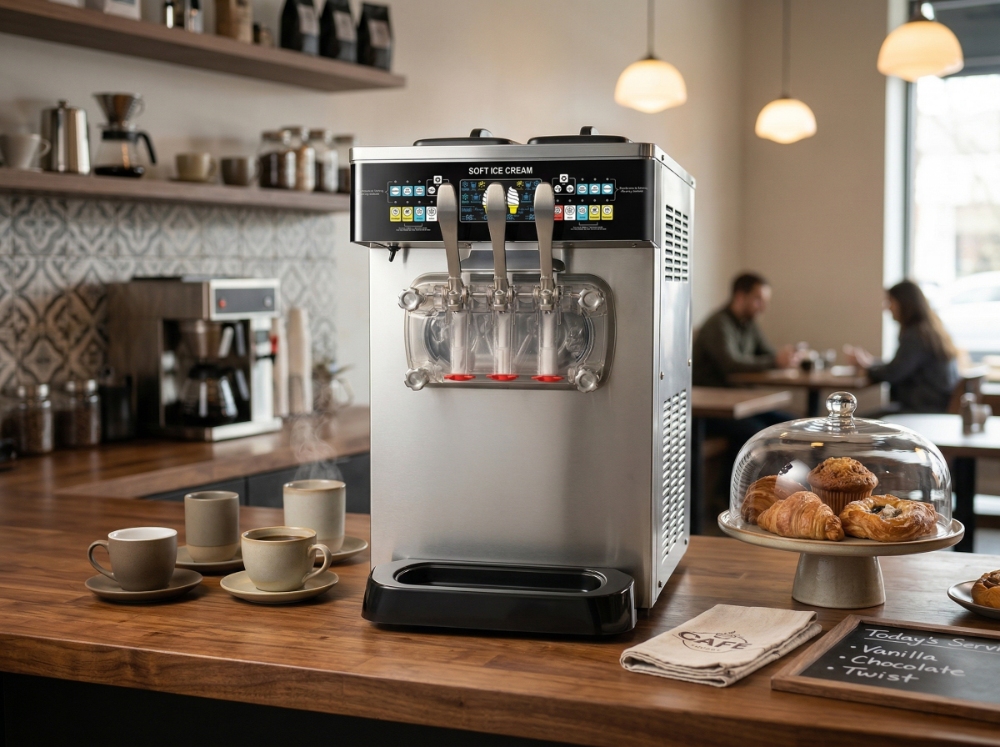
Review Space, Ventilation, and Utility Requirements
A soft serve ice cream maker is a heavy piece of equipment that requires specific environmental conditions to work correctly. You must plan your workspace before the machine arrives at your door.
First, cover the physical footprint of the machine and available workspace. You need enough room for your staff to move and for the machine to “breathe.” This leads to the difference between air-cooled and water-cooled systems. Air-cooled units are the most common but need significant clearance on all sides to pull in cool air and exhaust heat. If you put an air-cooled machine in a tight corner, it will overheat. Water-cooled units require proper plumbing and a constant water supply, but they can be tucked into tighter spaces and run more quietly.
Finally, remind yourself to confirm voltage and electrical setup before purchase. Many commercial models need higher-capacity power connections, such as 208-volt or 240-volt circuits. A standard 110-volt wall outlet is usually not enough for a commercial soft serve machine. You may need to hire an electrician to install a dedicated circuit to ensure the machine runs safely and efficiently without tripping breakers.
Think About Cleaning, Maintenance, and Staff Workload
Owning a soft serve machine involves daily cleaning and sanitation. Since you are working with dairy, keeping the system free of bacteria is a top priority for food safety.
Maintenance and Training
Different models require different levels of work from your team:
- Simple Machines: These have fewer parts and gaskets. They are faster to take apart, which makes staff training much easier.
- Complex Machines: High-volume units often have more internal pieces. These require more time to scrub and lubricate correctly every day.
Impact on Operations
Easier maintenance reduces downtime and keeps your product consistent. If a machine takes 30 minutes to clean instead of 90, you save significant labor costs. Choosing a user-friendly design helps your staff avoid mistakes, helping the equipment last longer and stay reliable.
Compare Costs Beyond the Purchase Price
The price tag on a new unit is only part of your investment. To find a good deal, focus on the total cost of ownership instead of the sticker price.
Common Operating Costs
Consider these expenses when planning your budget:
- Upfront Costs: The price of the machine and professional installation.
- Daily Labor: The time staff spends cleaning and sanitizing.
- Supplies: Cleaning chemicals, lubricants, and replacement O-rings.
- Utilities: Monthly electricity and water bills.
- Repairs: Future costs for parts like motors or scraper blades.
An energy-efficient, reliable machine often pays for itself through lower utility bills and fewer service calls. A cheaper machine may cost more in the long run if it slows service or needs frequent repairs. After reviewing your budget, look for specific features that fit your menu.

Look for Features That Match Your Menu
Pick features that support your sales goals rather than choosing gadgets for novelty. Your machine should help your team work faster and keep the ice cream consistent.
Key Features to Consider
- Twin Twist: Allows you to serve two separate flavors or a mix of both.
- Standby Mode: Keeps mix at a safe temperature overnight to reduce waste.
- Digital Controls: Provides alerts for low mix levels to prevent motor damage.
- Texture Adjustment: Lets you change settings for thick custards or light sorbets.
Prioritize options that improve speed and profitability. For example, a “low mix” light is more useful than a fancy screen because it stops the machine from breaking. Choose a commercial soft serve machine with tools that solve your daily shop problems.
Evaluate the Supplier Before You Buy
The company you buy from is as important as the equipment itself. High-quality commercial support ensures your machine stays running for years without long interruptions.
What to Check
- Warranty Coverage: Review what parts and labor the manufacturer covers.
- Parts Availability: Confirm they keep common seals and motors in stock locally.
- Response Time: Ask how fast a technician can arrive for on-site repairs.
Support Services
Choose a brand or dealer known for dependable commercial service. Before paying, ask if they provide training on how to prime the machine and adjust air settings. Good suppliers offer installation guidance and help you troubleshoot minor issues over the phone. A reliable partner protects your investment by preventing lost sales from avoidable downtime.
Final Buying Checklist
Make sure you’ve thought of everything you need for your new soft serve ice cream machine before making your final choice by going through this short list:
- What is your daily and peak-hour serving target?
- How much space and power capacity do you have available?
- Do you need one flavor, two flavors, or a twist option?
- Is easy cleaning more important than maximum output for your staff?
- What is your real total budget, including maintenance and utilities?
Pick the Best Soft Serve Machine for Your Success
The right soft serve machine matches your daily volume, shop layout, and staff workload. Focus on more than just the price tag. Compare feeding systems, cooling methods, and long-term energy costs to find your best fit. A smart choice creates a reliable workflow that keeps your customers happy and your profit margins high. Taking the time to pick a quality unit ensures your business grows steadily for years.
FAQs
Q1: What size soft serve machine does my business need?
Choose based on peak-hour demand, not just average daily sales, because underpowered machines can slow service during busy periods. If you serve 30 cones in an hour but 20 of them are in a 10-minute window, your machine must be able to handle that burst.
Q2: Is a gravity-fed or pump-fed soft serve machine better?
A gravity-fed model is usually simpler and easier to maintain, making it great for beginners. A pump-fed model is often better for higher output and greater overrun, which can increase your profits per serving.
Q3: Should I choose an air-cooled or water-cooled machine?
Air-cooled machines are easier to install and move. Water-cooled models can work better in hotter environments or tight spaces if plumbing and drainage are available, as they do not discharge heat into the room.
Q4: What hidden costs should I consider before buying?
Beyond the machine price, consider installation, electrical upgrades, cleaning labor, routine maintenance, replacement parts, and monthly energy use.
Related posts
How to Choose the Right Soft Serve Ice Cream Machine for Your Business
Maximize menu profits with the right commercial soft serve equipment. Master output capacity, maintenance needs, and hidden costs to make a smart investment.
Varying customers demand entirely different selection logic for refrigeration equipment.
When it comes to B2B commercial refrigerators, many enterprises tend to fall into the "parameter bli...