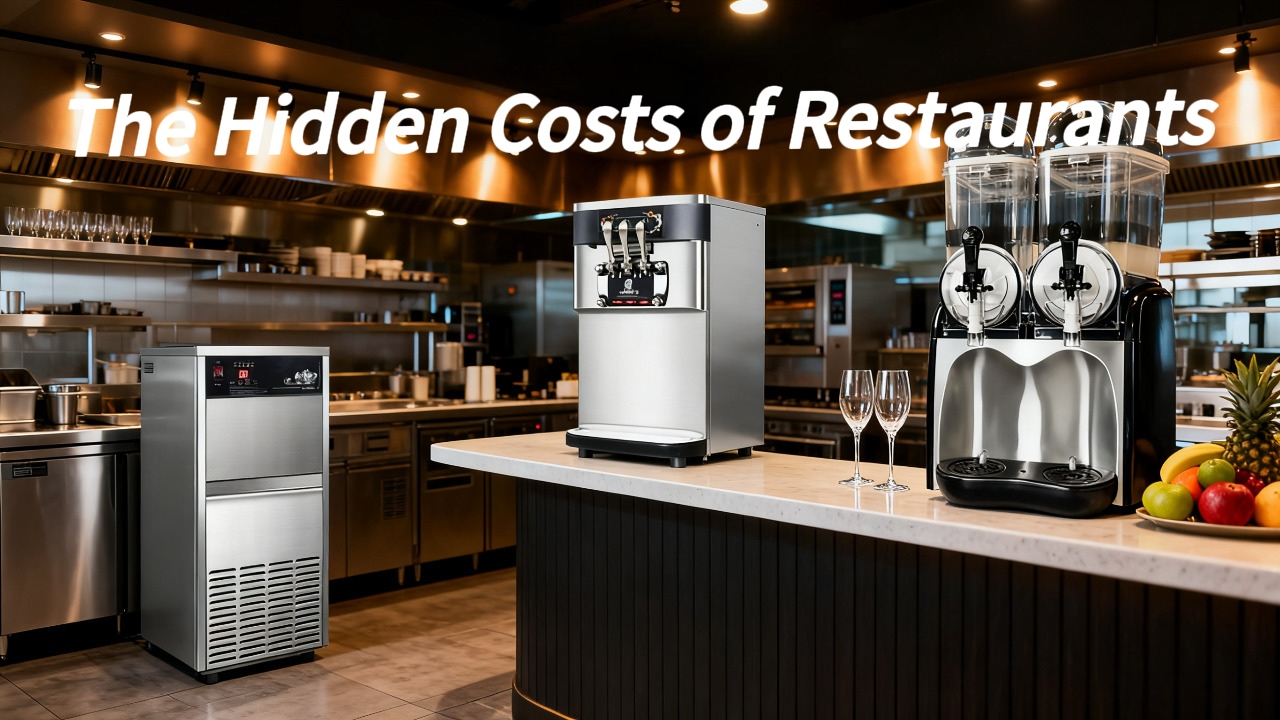
In the restaurant business, the owners often know clearly the price for a pound of beef or the profit margin from a cup of milk tea.
But very few ever take a close look at their electricity bills.
Truth is, how fast your meter spins often determines how much profit you actually keep.
And the biggest “power thief” hiding in your kitchen?
Your refrigeration equipment
1. The equipment isn’t broken — but it’s no longer efficient
Many restaurant owners say, “My fridge still works, my ice maker hasn’t broken, no need to replace them.”
But working doesn’t mean efficient.
Inside the compressor, on the condenser fins, around the door seals — small signs of wear and aging are quietly raising your energy use every single day.
Old equipment can lose 20–30% of its energy efficiency.
That doesn’t sound huge on paper, but on your bill, it can mean hundreds of dollars every month.
You might not notice it, but your power meter does.
2. Why does refrigeration get more power-hungry over time?
It is all down to reduced heat exchange efficiency.
As soon as the compressor has to work harder because the condenser is coated with dust and cannot release heat properly,
The system runs constantly trying to catch up as cold air leaks when the door gasket ages.
Even a few degrees of temperature sensor drift or a dusty fan running slower can snowball into a hidden energy drain.
All these little inefficiencies add up quietly and eat into your profit margin.
3. Energy saving isn’t marketing — it’s profit
Some people consider “energy-saving equipment” as just a name for publicity.
But the math says otherwise.
A commercial refrigerator that is ETL- or ENERGY STAR-certified usually consumes about 30% less power compared to the standard unit.
If your kitchen’s electricity bill is $1,000 per month, that’s over $3,000 saved per month year — without changing a single menu item.
Not to mention the indirect advantages: more stable temperature, fresher ingredients, and longer compressor life.
In other words, energy saving isn’t an environmental slogan — it is a financial strategy.
4. Signs your refrigeration might be an “energy monster”
The refrigerator’s outer shell or top is always hot.
The compressor runs nearly continuously.
Frost on the door gasket, gaps, or weak suction
Food temperature fluctuates between highs and lows.
Your power bill continues to go up for no apparent reason.
If you recognize two or three of these, it’s time to inspect, service, or even replace your equipment.
5. Don’t let your electricity meter eat into your profits
After all, in this business, everyone wants to earn more, but saving often has a faster impact compared to selling more.
The amount of electricity you could save from one efficient unit would cover half a month’s wage for an employee.
Many restaurants lose their profits not because of poor sales but due to unseen energy waste.
While you’re stressing over margins, the real problem might be those silent, overworked freezers humming in the corner. Conclusion Your kitchen equipment is not just a tool, but part of your cash flow system. Replacing inefficient machines resembles plugging the leaks in your profit line. Your electricity bill doesn’t lie. It quietly reminds you: “Every kilowatt saved is pure profit in your pocket.