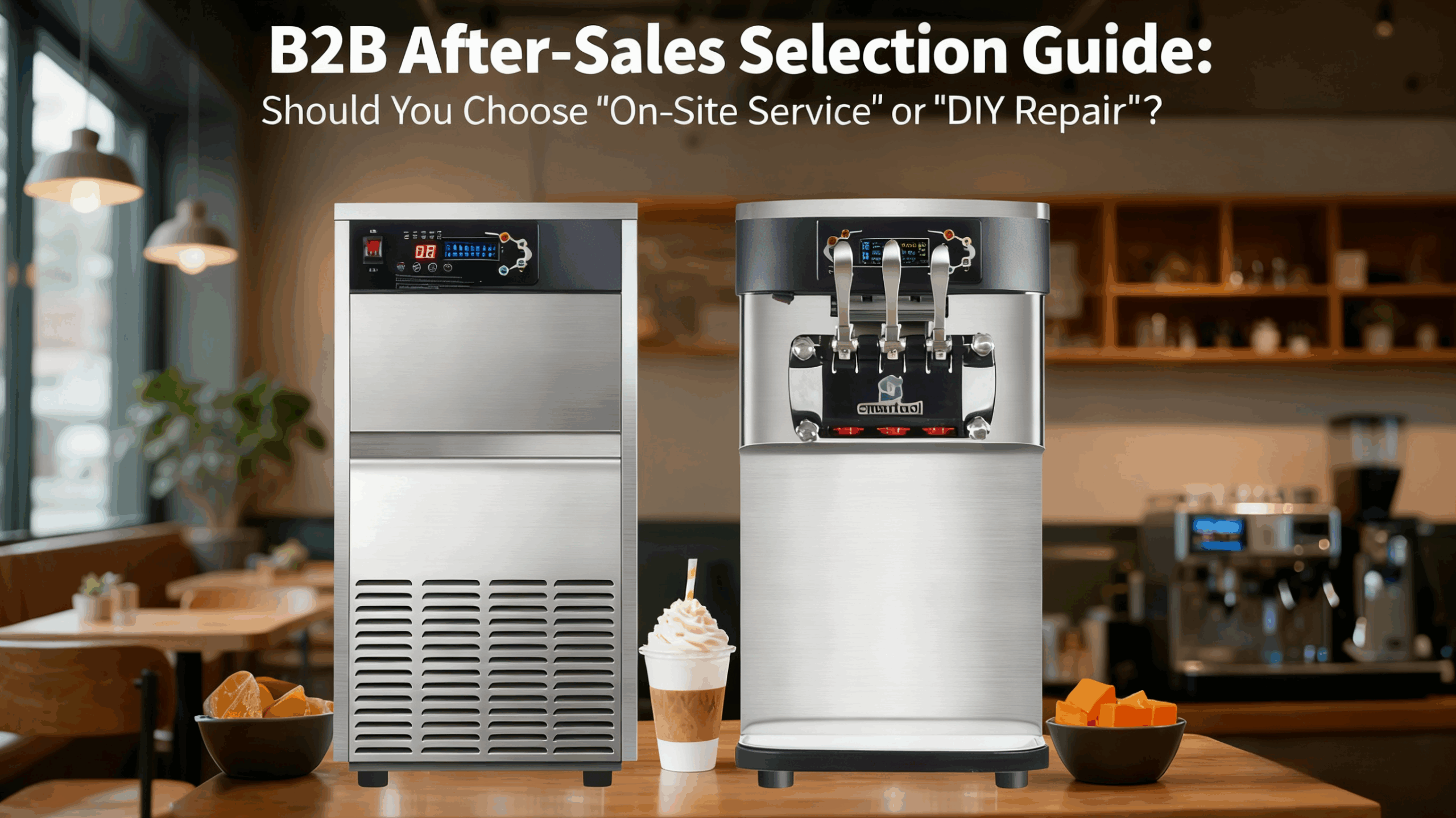
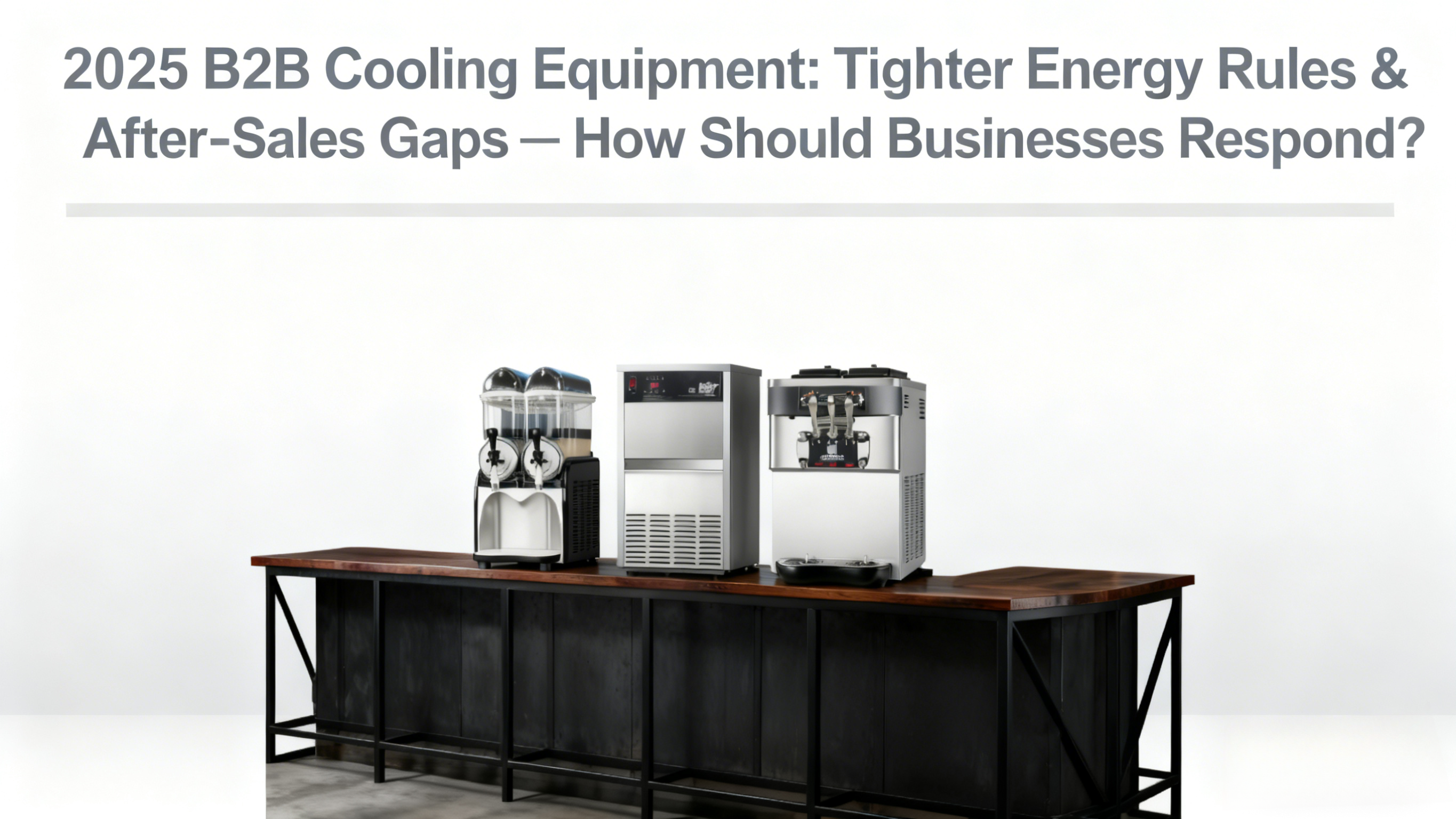
In the industry of commercial refrigeration equipment, after-sales service is never just an “add-on after purchase” but a very important factor for the stability of an enterprise’s operation. Especially for B2B clients like restaurants, convenience stores, and beverage shops, equipment downtime often results not just in a “wait-and-see” situation but in direct revenue loss.
So, what should you prioritize when selecting equipment? Is it the “cheaper DIY model” or the “more hassle-free on-site service”?
We shall look at each model in detail.
1. The Advantages and Disadvantages of the Two After-Sales Models Compared
01 DIY repair: inexpensive, but you take the risk upon yourself
Thus, in order to keep prices low, many brands offer after-sales service in the form of “sending parts + remote guidance.”
For minor problems, this indeed is enough: a button that has stuck, a loose drain pipe, or dust accumulation on fans. With B2B equipment, however, the problems are bigger: compressors that are not responding, abnormal cooling speed, refrigerant leakage, electronic board error, and many more.
These are not matters that can be solved with video conferencing but require experience, tools, and even diagnostic equipment.
When customers are queuing up in their stores but the machines aren’t cooling down, many business owners realize that while DIY is cheaper, the time cost is much higher.
02 On-site Service: Higher Cost, But Timely Loss Mitigation
Most brands that are truly serious about the B2B market provide on-site service from local technicians.
Because the issues are handled by professional engineers, the advantages are significant: more accurate fault diagnosis, no guesswork, and root cause resolution in one go. Faster repairs minimize business disruption, and also negate the need for store staff to disassemble the machines themselves, reducing the risk of secondary damage.
For store owners, this means not just providing a “better experience,” but minimizing potential losses.
2. Why B2B customers need professional on-site service more:
In other words, there is no “try and see” option for B2B clients.
Consider any everyday scenario where, for instance, if the freezer in one’s kitchen stops working for two hours, meats start overheating, cold drinks stop chilling, and ice cream simply melts.
The result of this is not only an instant loss but can also affect customer reviews, supply chain planning, and even food safety.
The truly effective solution is usually singular: get a professional technician on site to fix the equipment and return it to normal operating status as soon as possible.
This has made increasing numbers of companies factor “after-sales responsiveness” into the buying decision, rather than merely the specifications of the equipment and its price.
To put it succinctly, commercial refrigeration equipment is not some small household appliance; it is expected to bear the responsibility for the continued operation of a store.
If possible, when selecting equipment, after-sales service should be a “core indicator,” and especially whether local on-site service is available.
DIY is appropriate for applications that have low intensity, frequency, and demand, but a real B2B customer needs predictable and reliable professional support. After all, stable profits are more important than saving a little on equipment price differences.